

CLEAR GLASS STARTS WITH CLEAR ACCESS
Window Cleaning Watford
Ground-floor panes, a high bay and internal glass need different working arrangements. For window cleaning in Watford, describe the windows, which faces need attention and how they can be reached. Frames, sills and specialist glazing should be named in the brief rather than assumed to follow one standard method.
Internal and external work distinguished
Frames and sills identified in the list
Safe reach considered before the appointment
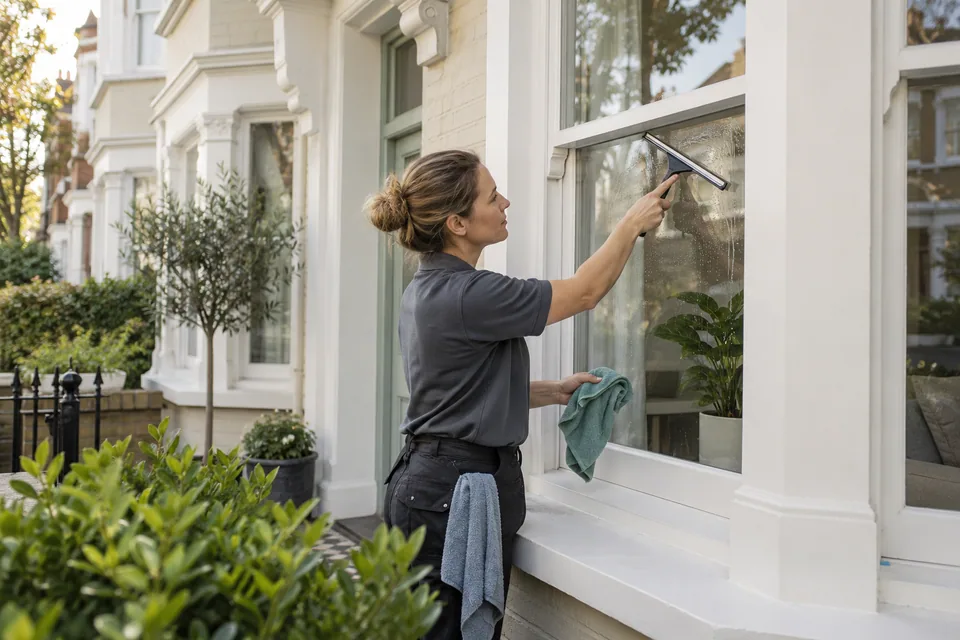
Describe the glazing and the faces to be cleaned
List the windows and explain whether you want the inside, outside or both. Give floor levels and mention bays, roof glazing, fixed panes or other unusual arrangements. A window counted as one unit can contain several panes and frames, so photographs or a short description can make the scope clearer than a bedroom count alone.
Identify relevant finishes, coatings, films, leaded details or fragile glazing before work. The cleaner needs to know about scratches, loose putty, damaged seals or frames that do not operate normally. A material can look like plain glass while having care requirements that affect the tools used. Cleaning should not be expected to repair a frame or reverse a permanent change within the glazing.
Agree the access before choosing the method
A squeegee-based approach, a suitable water-fed pole or another safe arrangement may be proposed according to the glazing and reach. Ask how the particular windows will be accessed. Work from the ground or another safer arrangement should be considered where practical; a domestic window does not automatically make improvised ladder work or leaning from an opening appropriate.
Tell us about locked side passages, conservatories beneath upper windows, sloping ground and anything that blocks a safe route. For flats, explain entry systems and building-management restrictions. High or unusual glazing may need a different specialist service. If a pane cannot be reached safely under the proposed plan, the scope should be revised rather than treating access as the cleaner’s problem to solve on arrival.
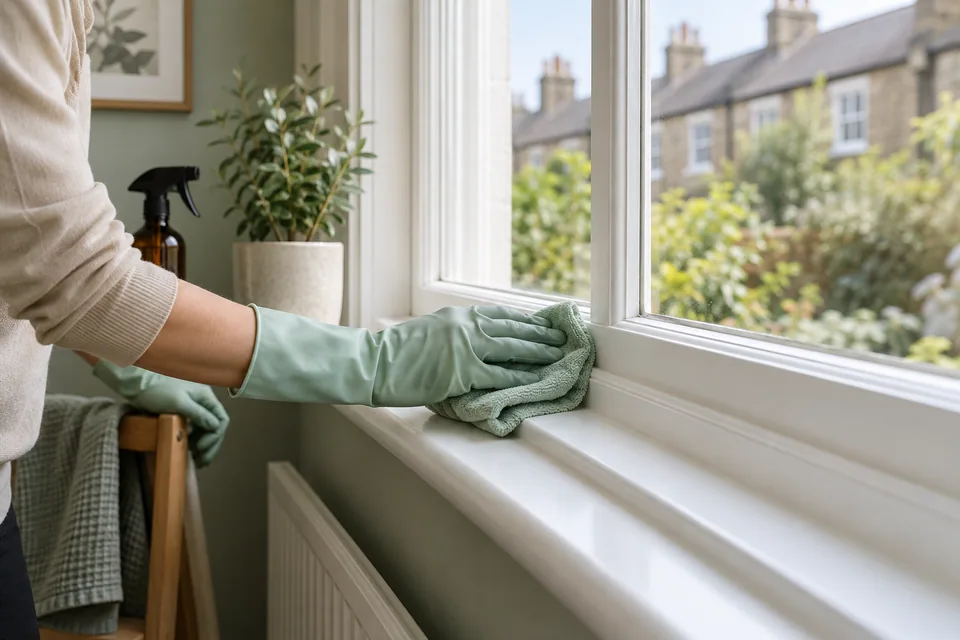
Glass, frames, sills and tracks are distinct tasks
Name the parts you want included. Cleaning the visible glass is different from detailing frames, sills or accessible tracks. The amount of accumulated dirt and the frame material influence the work. Painted timber, uPVC and metal finishes may need different handling, and damaged or deteriorating areas should be pointed out before the appointment.
For internal work, clear windowsills and protect or move fragile items nearby. Explain blinds, curtains and furniture that restrict access. If a window must be opened to reach an agreed area, make sure its operation is understood and report faulty catches or hinges. Repairs, dismantling frames and opening sealed glass units are not ordinary window-cleaning tasks.
Different marks need different expectations
Everyday surface dirt, fingerprints and suitable weather deposits can form part of a normal glazing brief. Paint spots, adhesive, construction grit or other building residues need a separate assessment before any scraping or product use is considered. Tell us if work has recently been completed and read about after builders cleaning when renovation dust and residue are involved.
Marks can also result from scratches, mineral damage or a failed sealed unit. Condensation or clouding between panes is not a surface that a routine clean can reach. Ask which marks are likely to improve and which need a glazing or repair assessment. Cleaning is not a promise to restore every pane to a new condition, regardless of its history or material.
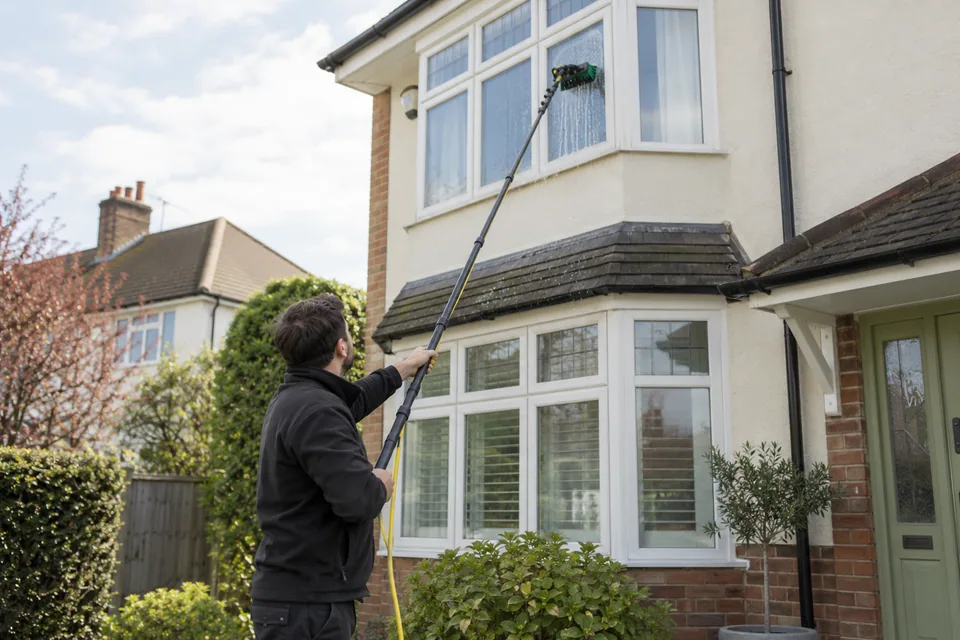
Prepare a usable route and allow for conditions
Leave agreed entrances and side gates accessible, move small obstacles from the working route and explain where equipment can be placed. Keep pets away from the area and tell us about rooms that will be occupied during internal work. Water, electrical or other practical requirements should be confirmed for the method proposed rather than assumed from a general description of window cleaning.
The number of panes, size, floor level, frame detail and access determine the appointment allowance. A small group of reachable panes can be a short task, while internal and external work across a larger property needs a longer plan. Weather and site conditions can affect safe feasibility. Ask how an affected appointment would be handled instead of assuming a universal rule for every type of rain or wind.
Clarify the quotation and related exterior work
Ask for the faces, panes and frame-related tasks to be stated in the quote. Explain unusually dirty areas, delicate finishes and any awkward access that could change the method. If the condition or reach differs from the original brief, the proposed work may need to be reviewed. Extra tracks, building residues or inaccessible glazing should not be presumed to fit the same allowance.
A glazed extension has its own roof, framework and access questions under conservatory cleaning. Blocked rainwater channels belong in a separate gutter cleaning brief. For a seasonal household reset, spring cleaning can coordinate nearby accessible surfaces without implying that specialist glazing and exterior work are automatically included. Naming each scope makes the combined plan more useful.
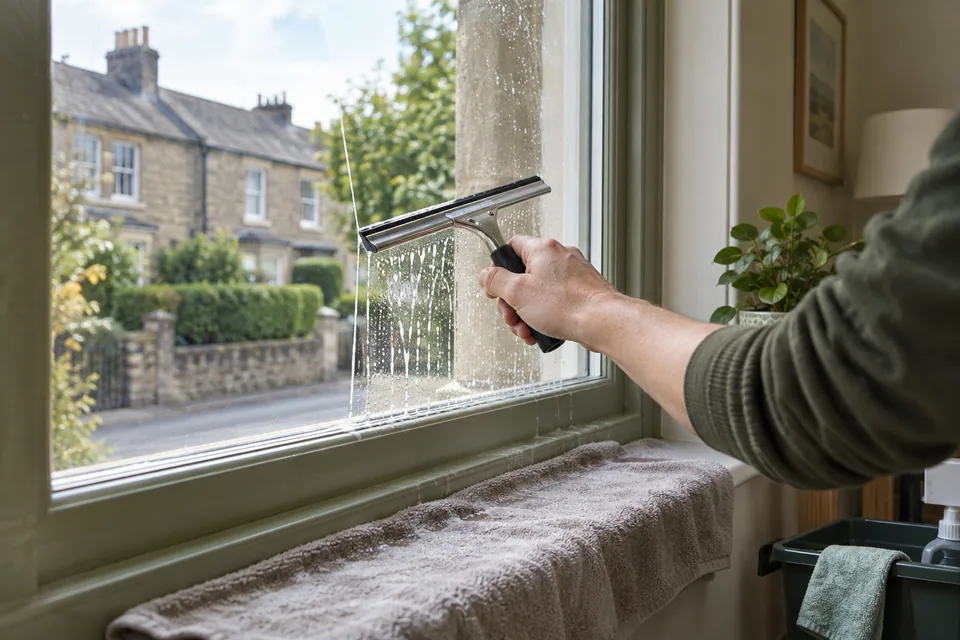
BEFORE YOU ARRANGE THE VISIT
Questions about window cleaning.
Does a window quote include both sides of the glass?
Only if both have been agreed. Specify internal, external or combined work, along with the panes, frame areas and access details. The two faces can involve different preparation and working arrangements.
Can cleaning remove clouding between double-glazed panes?
A routine surface clean cannot reach inside a sealed glazing unit. Clouding or condensation between panes may need a glazing assessment rather than additional wiping of the accessible glass.
Should I mention a film or specialist coating on the glass?
Yes. Coatings, films and decorative details can affect tools and products. Share the relevant care instructions before work so the method is selected for the actual surface.
Will every upper-floor window be accessible?
Not automatically. Reach, ground conditions and the building arrangement need assessment. Some glazing requires a different specialist access plan, and unsafe or improvised access should not be assumed.
Are paint and adhesive residues part of ordinary window cleaning?
They need to be described separately. Construction residue and grit can change the risk of surface damage, so any proposed removal should be assessed rather than treated as an automatic extra.
What happens if weather makes the work unsuitable?
Ask about the arrangement when booking. Safe feasibility depends on the site, method and conditions, so an affected appointment may need to be reviewed rather than relying on one rule for every property.
A PRACTICAL NEXT STEP
Window Cleaning.
Start with the details.
Call with your postcode, the areas or items involved and a preferred appointment. Discuss the scope and quote before arranging the visit.