

THE FINISH MATTERS AS MUCH AS THE FLOOR
Hard Floor Cleaning Watford
A tiled kitchen, sealed wooden hall and vinyl workspace can all be called a hard floor, yet their care requirements differ. Hard floor cleaning in Watford begins by identifying the material and finish, then looking at soil, joints and wear. A stronger product or wetter treatment is not automatically a better clean.
Material and protective finish identified
Moisture and product compatibility considered
Cleaning separated from sanding and restoration
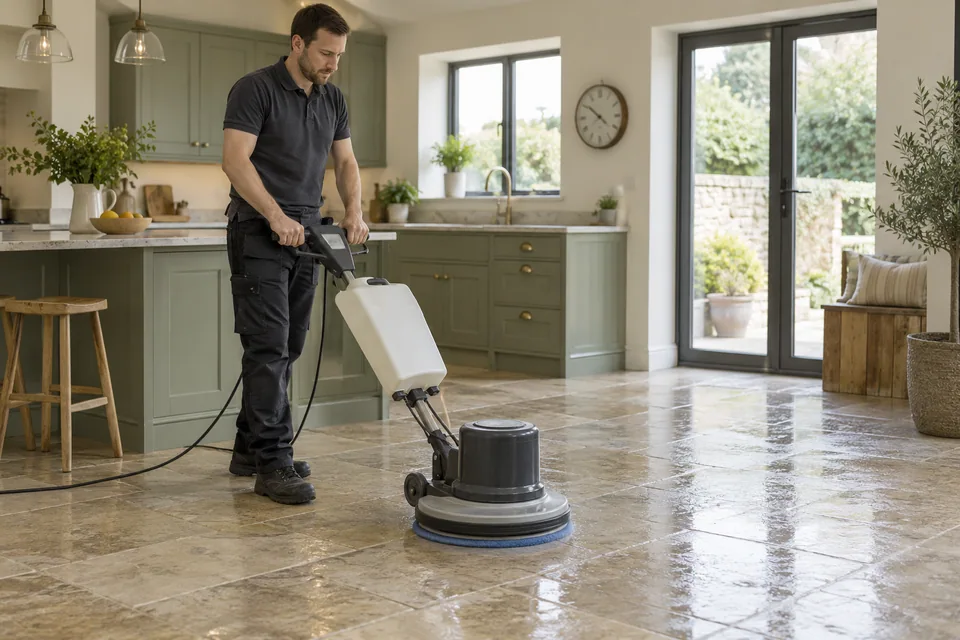
Identify the surface before choosing a treatment
Share the floor material, approximate area and any care information from the installer. Ceramic and porcelain tiles, natural stone, timber, laminate, vinyl and other resilient surfaces should not be grouped into one method. A photograph may help explain the room, but appearance alone does not always establish what a floor or its coating is made from.
Tell us about previous sealants, polish, wax or maintenance products where known. Surface residue can look like ingrained dirt, while a worn protective layer may need restoration rather than cleaning. Mention loose tiles, lifting edges, open joints or damaged boards before the appointment. Those details affect what moisture, pressure and equipment can reasonably be considered.
Distinguish a routine wash from a deeper floor clean
A maintenance clean addresses loose soil and everyday marks using a suitable approach for the finish. A more detailed appointment may examine accumulated residue, grout lines or dirt around edges that ordinary mopping has left behind. Define the areas and the result you want so the allowance matches the condition. Whole-room floor treatment is different from a quick mop during a general house visit.
Some floors may suit controlled agitation and recovery of cleaning solution; others need much more restrained moisture and handling. Equipment and products should follow the material and manufacturer’s guidance. Do not assume machine scrubbing, steam or an acidic descaler is appropriate across every surface. Discuss a suitable test where there is uncertainty about a finish or previous treatment.
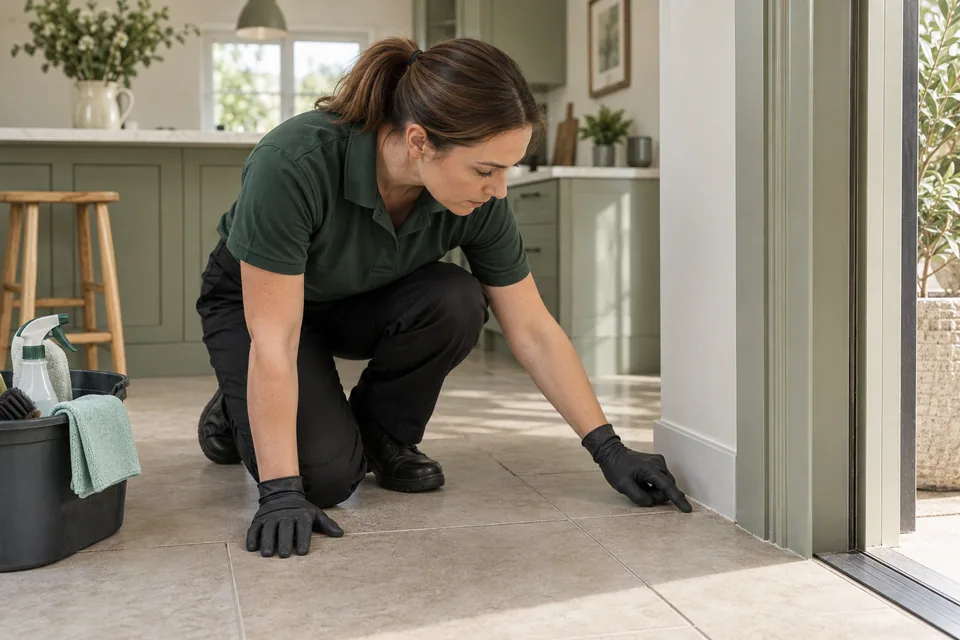
Joints, coatings and wear need separate attention
Grout can hold dirt differently from the tile face, and damaged or missing joints need identifying before wet work. Cleaning may improve removable deposits without restoring the original colour of every joint. Natural variation, old staining and failed sealant are different issues. Ask which edge and grout detailing is included, particularly around kitchen units or bathroom fittings.
On wood and laminate, excessive moisture can affect joins and vulnerable edges. A compatible surface clean will not remove deep scratches or replace a worn finish. Similarly, marks on vinyl may be wear rather than soil. Sanding, polishing, stripping and resealing are specialist processes to quote explicitly; they should not be implied by an ordinary hard floor cleaning appointment.
Make the working area practical
Lift small loose items and identify furniture that restricts access. Agree what can safely be moved, where it will stand and which heavy items will remain in place. A dining table, desk system or kitchen appliance may change the usable floor area considerably. Emptying a room and moving heavy furniture are not automatic inclusions in a floor-only quote.
Plan another route through the property while a treated floor is damp or temporarily out of use. Keep people and pets off the working area until the agreed return conditions have been met. Drying depends on the material, treatment, ventilation and room conditions. Ask for specific advice at completion rather than treating a generic drying estimate as permission to replace rugs or furniture immediately.

Build a useful brief for a home or workplace
Measure or estimate the area and describe the rooms, floor types and main concerns. Kitchen grease, tracked-in soil and product build-up may require different attention. For a mixed commercial property, commercial cleaning can coordinate the surrounding facilities while the floor treatment remains a defined task. Explain access hours and any need to keep a route available during the work.
In a home, domestic cleaning provides a broader maintenance brief, while deep cleaning can address detailed room surfaces around the floor. If adjoining areas are textile, use carpet cleaning to plan their separate treatment. Different flooring should retain its own material assessment even when the visits are coordinated.
Allow for condition, drying and realistic results
The quotation depends on area, material, finish, level of build-up, obstacles and any agreed detail work. A small floor with heavy residue can take longer than a larger maintained surface. Ask how time is divided between preparation, treatment and any checks. Mention deadlines before booking so the proposed work and subsequent drying can fit the room’s next use.
Expect removable dirt to be assessed separately from etched stone, scratches, wear paths and discolouration within the material. Cleaning cannot guarantee the appearance of a new floor. If restoration is more appropriate, it should be discussed before unsuitable cleaning is attempted. Keep the care instructions afterwards and agree a maintenance approach that does not immediately reintroduce incompatible products or excess moisture.

BEFORE YOU ARRANGE THE VISIT
Questions about hard floor cleaning.
Can natural stone be cleaned with ordinary limescale remover?
Do not assume it is suitable. Some stone and finishes are sensitive to acidic products. Identify the material and follow its care guidance before any cleaner or descaler is selected.
Will floor cleaning include sanding wooden boards?
Sanding and refinishing are restoration processes, separate from surface cleaning. Describe worn coatings, scratches or damaged boards so the correct type of assessment can be arranged.
Does a darker grout line mean it can be restored to white?
Not necessarily. Removable soil, permanent staining, ageing and failed grout can look similar. The likely improvement and limits should be discussed without guaranteeing an original colour.
Should I remove rugs before the floor appointment?
Lift smaller rugs and loose objects where practical. Discuss larger or heavy items and when they may return after treatment; placing them on a damp surface can interfere with drying.
Is steam suitable for every hard floor?
No single method suits every material, joint or protective finish. Heat and moisture restrictions need checking against the floor’s construction and care instructions before a method is agreed.
How do I request a quote for several floor types?
List each material, room and approximate area separately, with known finishes and photographs of the condition. Include access restrictions and furniture so the estimate reflects the actual work.
A PRACTICAL NEXT STEP
Hard Floor Cleaning.
Start with the details.
Call with your postcode, the areas or items involved and a preferred appointment. Discuss the scope and quote before arranging the visit.