

HOUSEHOLD HELP, PROPERLY PLANNED
Domestic Cleaning Watford
An occupied home needs cleaning that works around the people and belongings in it. Domestic cleaning in Watford covers that practical day-to-day care. That might mean a kitchen and bathrooms that need regular attention, floors across several rooms, or a specific household list for a single appointment. Describe the areas you want cleaned and the result you need from the visit.
Room lists matched to an occupied home
Attention to surfaces and access
Recurring and individual visits discussed
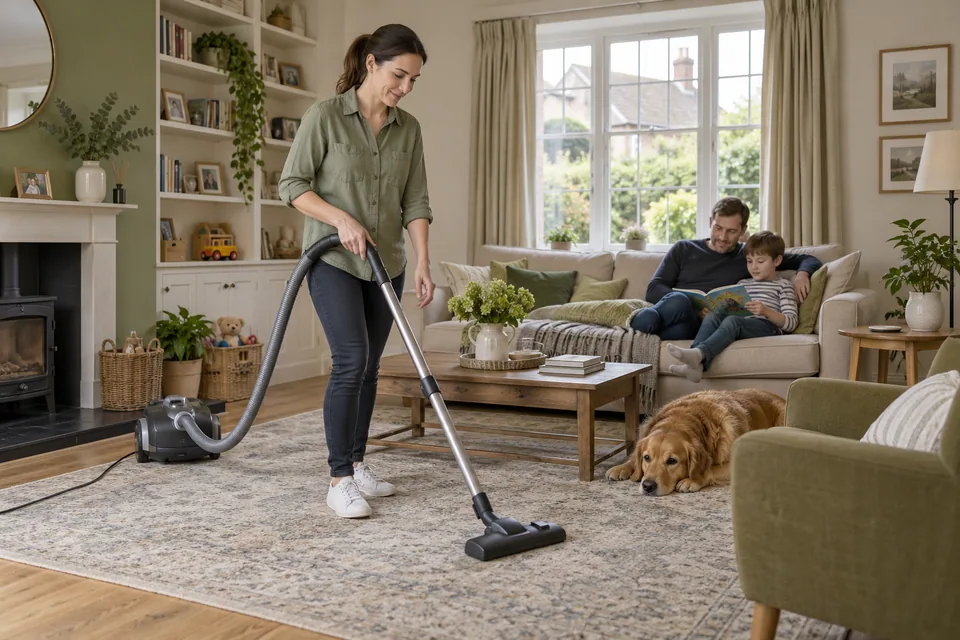
An occupied home needs a different plan from an empty property
Furniture, belongings and daily routines all affect what can be cleaned during an appointment. A kitchen may need to stay usable for part of the morning, a home office may be occupied, and a child’s bedroom may have toys on the floor. Mention these practical limits when arranging the visit so the cleaner can work around them sensibly.
Start by naming the rooms rather than describing the property only as a two-bedroom flat or four-bedroom house. Include additional toilets, stairs, an entrance hall and any reception rooms that matter. You can then agree priorities if the proposed time is not enough for the entire list. A smaller, achievable scope is preferable to an expectation that every surface will receive equal attention.
Kitchen, bathroom and everyday living areas
Kitchen work can include accessible counters, sinks, taps, suitable splashbacks and the outside of appliances. Identify tables, cupboard fronts or other touch points you would like included. The inside of a cooker, fridge or kitchen cupboard is a separate task to specify, particularly when food or stored belongings need to be removed before work can begin.
For bathrooms, discuss basins, toilets, bath or shower fittings and the floor. In living rooms and bedrooms, accessible dusting, vacuuming and suitable hard-floor cleaning form a practical starting list. Explain if a room has delicate ornaments, fragile lamps or a surface with a special finish. Items that require dismantling, specialist access or repair should not be treated as ordinary dusting jobs.
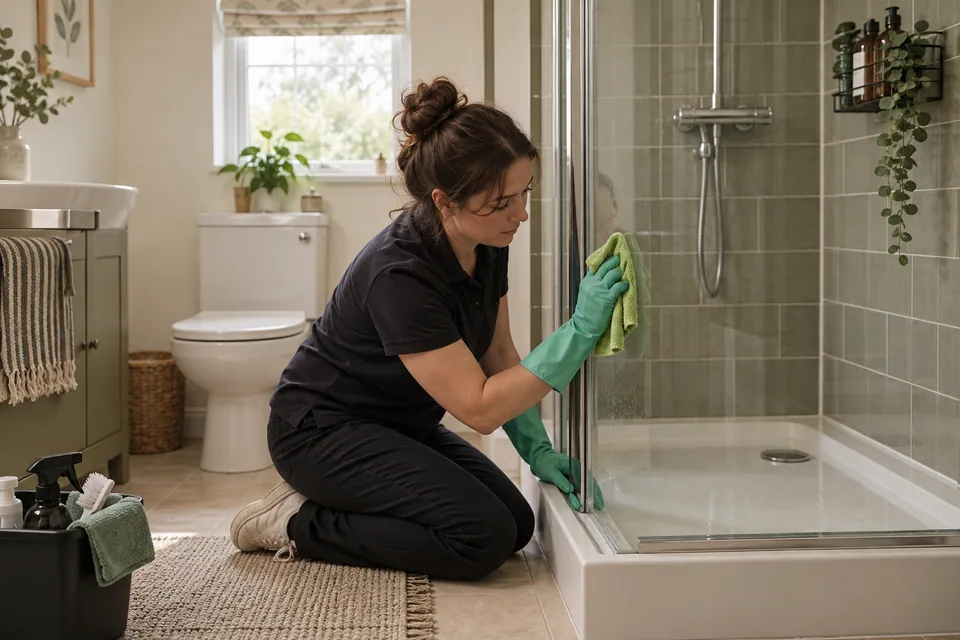
Keep cleaning and household organising distinct
Moving a few objects to wipe a surface is different from sorting paperwork, reorganising a wardrobe or deciding what should be thrown away. If you want help with a particular household task, raise it when discussing the booking. Work such as changing beds or dealing with laundry needs its own allowance and clear instructions rather than being added informally halfway through the visit.
The same distinction applies to heavy furniture. A cleaner may be able to reach around or beneath suitable items, but moving a large sofa, lifting appliances or emptying a full bookcase is not something to assume. Tell us about any access problem that affects the work. You remain best placed to identify valuable possessions and decide where they should be stored safely.
Products should suit the materials, not the room name
A bathroom can contain ceramic, chrome, natural stone, painted wood and acrylic, each with different care requirements. Kitchen surfaces also vary considerably. Explain anything unusual about the finishes and keep manufacturer instructions available where they matter. Previous staining, a damaged coating or a loose fitting should be pointed out before cleaning so it is not mistaken for ordinary dirt.
Discuss products and equipment at the time of booking, including which items will be provided under the agreed arrangement. Tell us about product sensitivities or areas where a particular material must be protected. Cleaning should use a suitable approach for the surface. It should not be expected to restore lost polish, reverse discolouration inside a finish or repair a deteriorating seal.
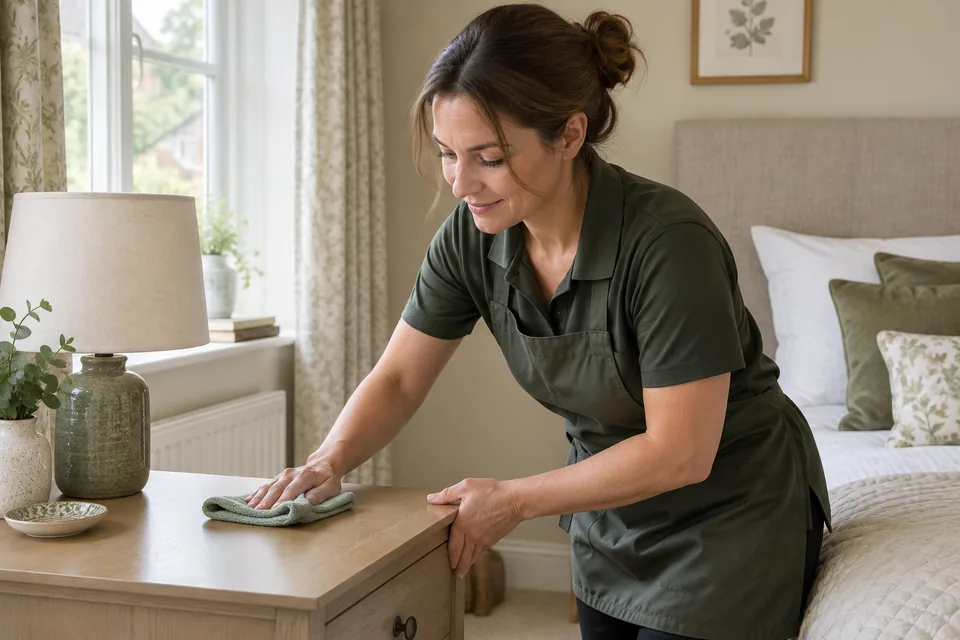
Make the appointment easier to carry out
Clear everyday clutter from the floors and worktops that need cleaning. Put away important papers and valuables, and set out any items needed for an agreed task. Keep pets in a comfortable separate area and mention any doors that must stay closed. If you will be working from home, explain which room needs to remain quiet or unavailable during the visit.
For flats, the cleaner needs to know about entry systems, stairs, lifts and parking. For any property, confirm access to water and electricity as required for the work. If you plan to be out, agree entry, alarm instructions and how the home will be left afterwards. A short written room list can help, provided it reflects the scope already discussed.
Agree the time allowance and what the quote covers
The workload depends on the number of rooms, the amount of furniture, the surfaces involved and the condition at the start. Two bathrooms with heavy deposits are a different task from two bathrooms that are maintained regularly. Describe the current condition honestly, including any neglected areas, so the appointment is not planned around an unrealistically light routine.
Ask how the price is calculated and confirm any minimum period, travel or other applicable charges. Establish which tasks come first and how additional requests would be handled. If the cleaner finds an issue that changes the proposed scope, it is better to discuss it before proceeding. Do not assume an extra specialist treatment fits within the same time or price.
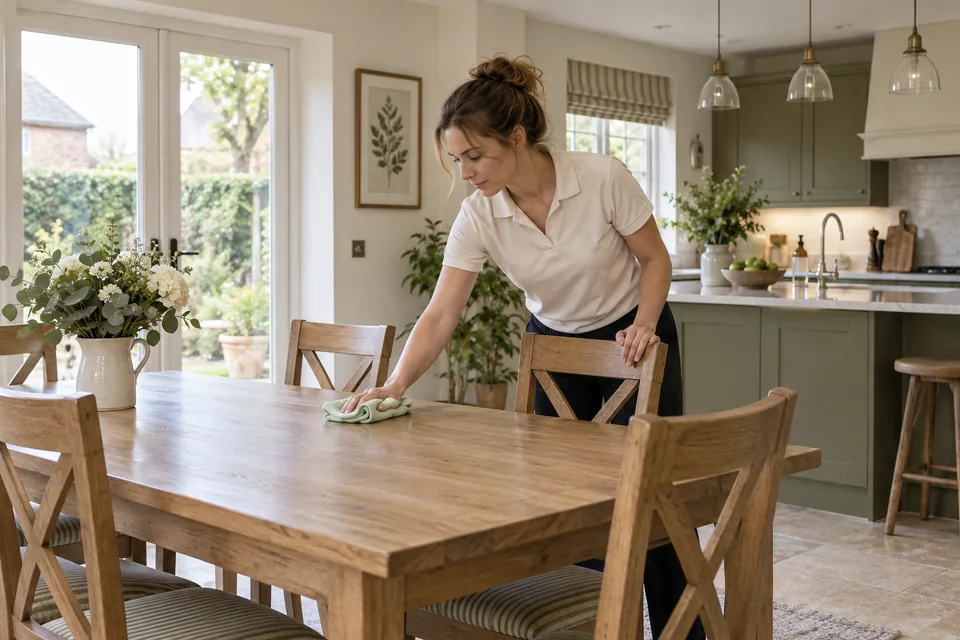
Choose related work without duplicating the booking
If you mainly want a recurring household routine, regular cleaning explains frequency and rotating priorities. For a single appointment around guests or a change in routine, see one-off cleaning. Where accumulated grime needs closer attention before maintenance can begin, compare the scope of deep cleaning instead of requesting a longer ordinary visit without explaining why.
Carpets and soft furnishings are assessed as materials, not simply as another room surface. Read about carpet cleaning if you have traffic marks or stained fibres, and upholstery cleaning for fabric furniture. Mention these items when calling so the household work and specialist care can be quoted and scheduled clearly.
BEFORE YOU ARRANGE THE VISIT
Questions about domestic cleaning.
Can domestic cleaning cover only selected rooms?
Yes, discuss the particular rooms and tasks you want quoted. Explain whether other parts of the home will be occupied or out of bounds, and agree how the available time should be divided.
Does the service include putting household clutter away?
Do not assume a general organising service is included. Clear the areas to be cleaned where possible, and discuss any specific household help before booking so time is allowed for it.
What should I say about delicate surfaces?
Identify the material or finish, share its care instructions and point out existing damage. Mention natural stone, oiled timber or specialist coatings before products are chosen for the job.
Can a cleaner move my fridge or heavy sofa?
Heavy lifting and appliance movement should not be assumed. Explain the area you want reached and the item blocking it. A safe access arrangement may need to be made separately.
Is domestic cleaning suitable before I move out?
An occupied-home routine may not cover an empty-property inventory check. Discuss an end of tenancy service if cupboard interiors, appliances and a handover list are the main requirement.
A PRACTICAL NEXT STEP
Domestic Cleaning.
Start with the details.
Call with your postcode, the areas or items involved and a preferred appointment. Discuss the scope and quote before arranging the visit.