

A DIFFERENT COOKER. A DIFFERENT CARE PLAN.
AGA Cleaning Watford
An AGA can combine vitreous enamel, cast iron, insulated lids and model-specific oven surfaces. AGA cleaning in Watford needs that construction to be understood before a method or appointment is agreed. Give the exact model where possible and explain which parts need attention, including any relevant manufacturer instructions.
Model and surface types identified first
Lids, doors and removable fittings listed
Cooling and cooking arrangements planned in advance
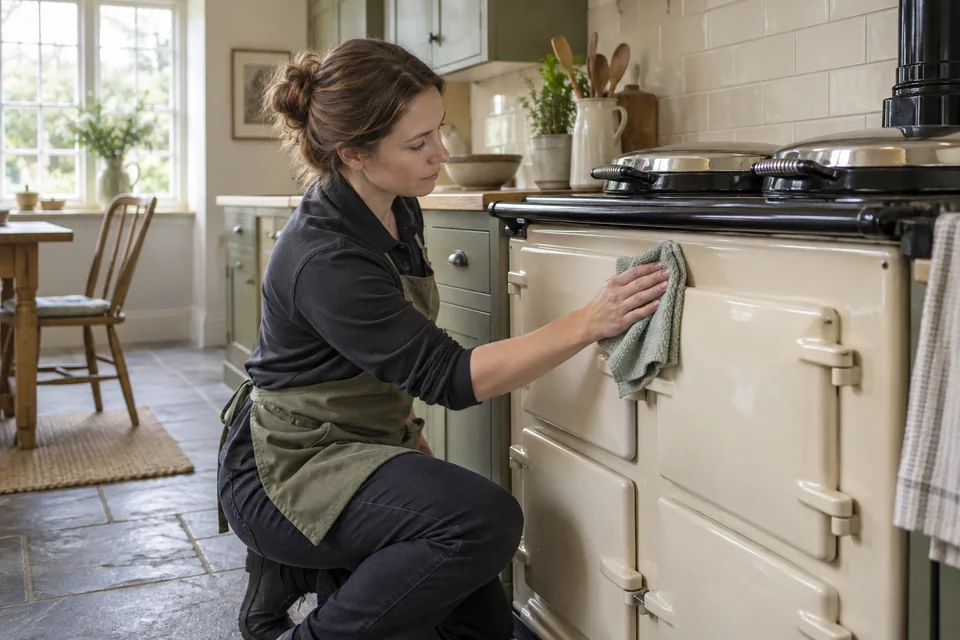
Start with the model, fuel and operating arrangement
Traditional heat-storage cookers and newer electrically controlled models do not all have identical care requirements or operating routines. Tell us the model, the number of ovens and lids, and any separate modules. Keep the handbook available. If you are unsure, a clear photograph and the appliance’s identification information can help establish what needs further checking before the clean.
The cooker’s operating condition matters to both planning and safe access. Do not switch off or prepare a heat-storage appliance on the assumption that every model follows the same timing. Ask for preparation to be coordinated with its instructions. Cooking, cooling and the eventual return to use may involve a longer period than the active cleaning work, so this needs more planning than a brief gap between meals.
Enamel and cast iron are not interchangeable surfaces
The enamel front, doors, hotplate surrounds, bare cast-iron areas and other components can require different care. A method suitable for one part should not automatically be used on the next. Manufacturer guidance is particularly important where moisture, abrasives or cleaning products could affect the material. Explain worn enamel, old chips, staining and any previous attempts at treatment.
Cleaning cannot repair a chipped enamel finish or restore a damaged component. Some marks may be permanent changes rather than removable cooking residue. The cleaner needs to distinguish those conditions before work. Ask what improvement is realistic for the surfaces present, and avoid treating a strong conventional oven product as a universal answer for every part of the cooker.
| Cooker area | Point to establish |
|---|---|
| Enamel front and doors | Compatible care and any pre-existing chips or staining. |
| Cast-iron and oven areas | The particular model’s instructions and surface condition. |
| Insulated lids and linings | Approved handling, moisture limits and safe access. |
| Shelves and removable parts | Which components are included and how they are treated. |
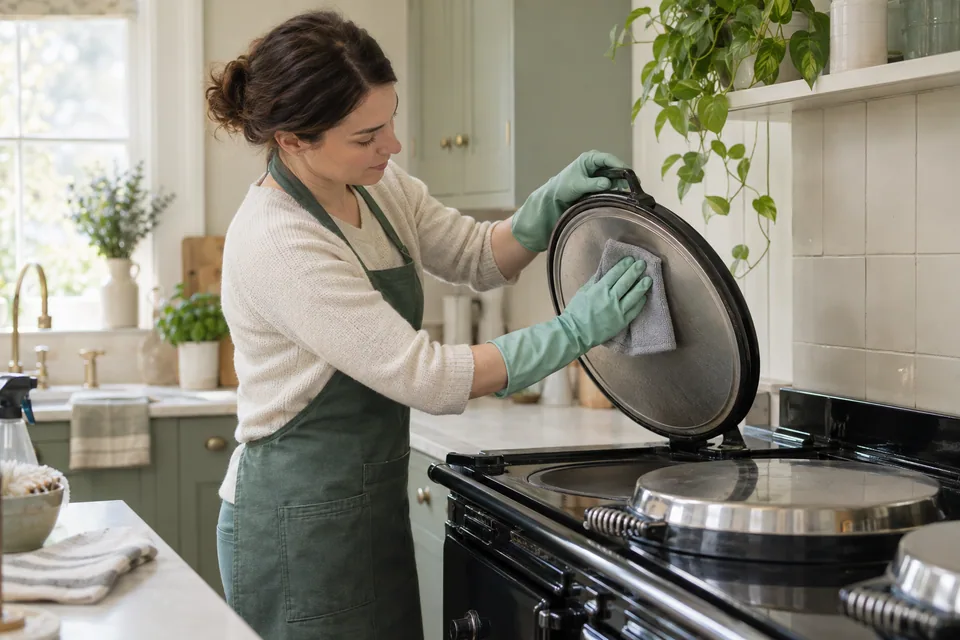
Lids, fittings and residue need an itemised scope
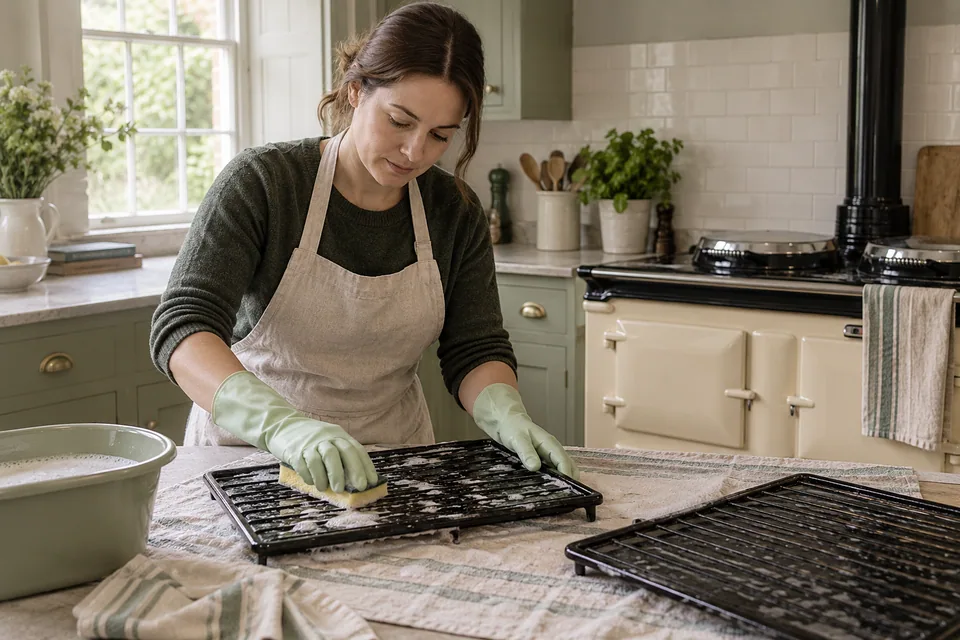
List the components you want assessed, including the exterior, doors, appropriate oven areas, shelves and lid linings. Some cooking residues can be worked on within a suitable method, while other areas may remain outside that process. The term AGA cleaning should not be interpreted as dismantling the appliance, removing every fitted component or carrying out a complete mechanical service.
Insulated lids and their linings deserve specific attention in the discussion. Heat, moisture and their construction affect what is appropriate. Removable fittings also vary, so identify them instead of treating all racks and trays as equivalent. A clear list makes it easier to understand the quote and prevents a specialist part being added casually after the appointment has begun.
Cleaning and appliance servicing have different purposes
A surface-cleaning appointment is not an inspection or service of burners, fuel supplies, electrical systems, flues or internal operating parts. Report any fault, unusual operation or damaged fitting before arranging cleaning. The appropriate competent engineer or manufacturer support may need to be involved separately. Do not expect cleaning to resolve a performance problem merely because the appliance looks cleaner afterwards.
The same boundary applies to pulling a heavy cooker away from its position or disconnecting supplies. Those are not routine assumptions for a cleaning visit. Explain any restricted alcove, loose component or inaccessible area. If safe handling or the care instructions are unclear, the scope should be reviewed before work rather than improvised on a substantial appliance in the home.

Prepare the kitchen and allow for the full timetable
Clear nearby counters and the floor so there is a practical working area for agreed removable items. Put cooking equipment and food away, and keep pets and children outside the work zone. Make the handbook and any relevant product history available. If another contractor is servicing the cooker, coordinate the visits so responsibilities and preparation instructions do not conflict.
The cleaning allowance depends on the model, components and residue, while cooling or return-to-use requirements can extend beyond that appointment. Ask for the timetable before booking and make alternative cooking arrangements if needed. Do not add a household chemical treatment or start removing parts to save time. An accurate preparation plan is more useful than a universal duration that may not apply to the model.
Quote for the cooker you actually have
Give the model, oven and lid count, component list, condition and access details. Mention a separate module or unusual finish, along with any damaged or sensitive areas. Ask what the quotation includes and whether further assessment is needed before a method can be agreed. Additional cleaning, repair or servicing should be clearly distinguished instead of being implied within one broad price.
For conventional oven cavities, see oven cleaning. A wide freestanding appliance with several cavities and a hob may belong under range cooker cleaning instead. Other kitchen equipment can be listed through appliance cleaning, while surrounding grease and household surfaces can be planned as deep cleaning. Keeping those scopes separate helps protect the cooker’s individual care requirements.
BEFORE YOU ARRANGE THE VISIT
Questions about aga cleaning.
Should I switch my AGA off before the cleaner arrives?
Coordinate preparation with the exact model’s instructions and the agreed service. Traditional and newer controlled models can differ, so do not apply a universal switching-off or cooling time without checking.
Can ordinary oven cleaner be used on every AGA surface?
No universal product should be assumed appropriate. Enamel, cast iron, oven areas and lid linings can have different requirements, and the maker’s guidance needs to inform the proposed method.
Will cleaning repair chipped enamel?
Cleaning can address suitable deposits but cannot mend a chip or replace a damaged finish. Point out existing defects so they are distinguished from cooking residue before work is planned.
Is burner or fuel-system servicing part of AGA cleaning?
No. Mechanical, electrical, fuel and flue work require their own appropriate competent service. Report operational concerns separately rather than expecting surface cleaning to diagnose or repair the appliance.
Are insulated lid linings included?
Name them in the requested scope. Their construction and the model’s care instructions affect suitable handling, so they should not be treated as equivalent to an enamel exterior or removable shelf.
Can I use the cooker immediately after the appointment?
Confirm return-to-use guidance for the model and process. The active clean, any relevant cooling period and the cooking timetable are different considerations, so plan meals around the advice actually agreed.
A PRACTICAL NEXT STEP
AGA Cleaning.
Start with the details.
Call with your postcode, the areas or items involved and a preferred appointment. Discuss the scope and quote before arranging the visit.