

CARE FOR THE SEATING YOUR VISITORS AND STAFF USE
Commercial Upholstery Cleaning Watford
Reception chairs, meeting-room seats and upholstered benches each combine fabric, padding and construction details. Commercial upholstery cleaning in Watford begins with those materials and the way the items are used. Provide an item count and condition notes, then plan enough access and drying time before the seating returns to service.
Seating counted by item and construction
Fabric and care labels reviewed
Reuse planned around actual drying
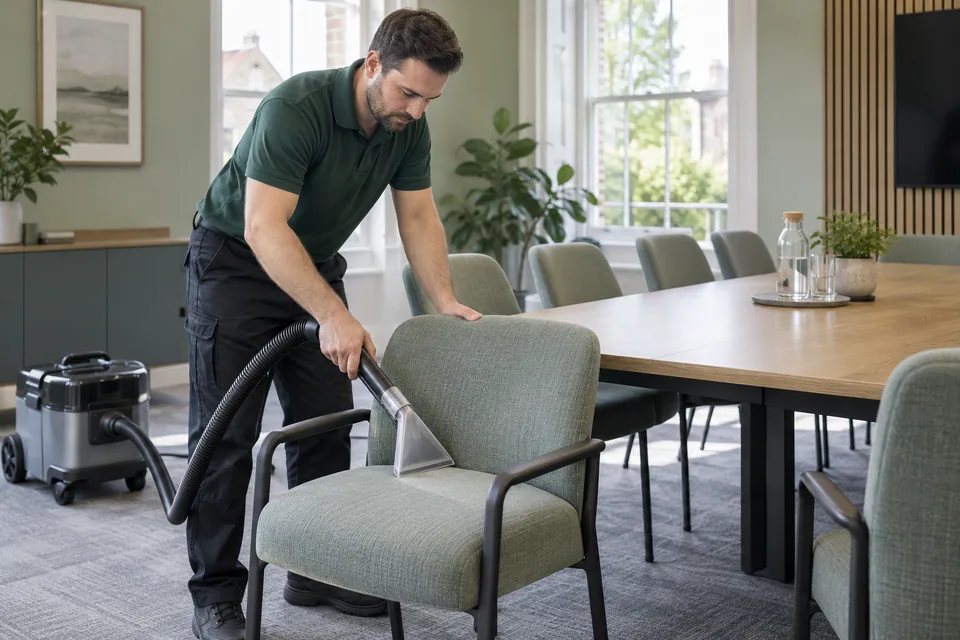
Count the items and identify the fabrics
List chairs, sofas, benches and any other upholstered pieces individually, with photographs where useful. A small meeting chair and a large padded reception sofa have different working areas and access needs. Describe fixed seating as well as loose items, and explain which cushions can be removed. Item count alone may not reflect the workload if the furniture varies considerably.
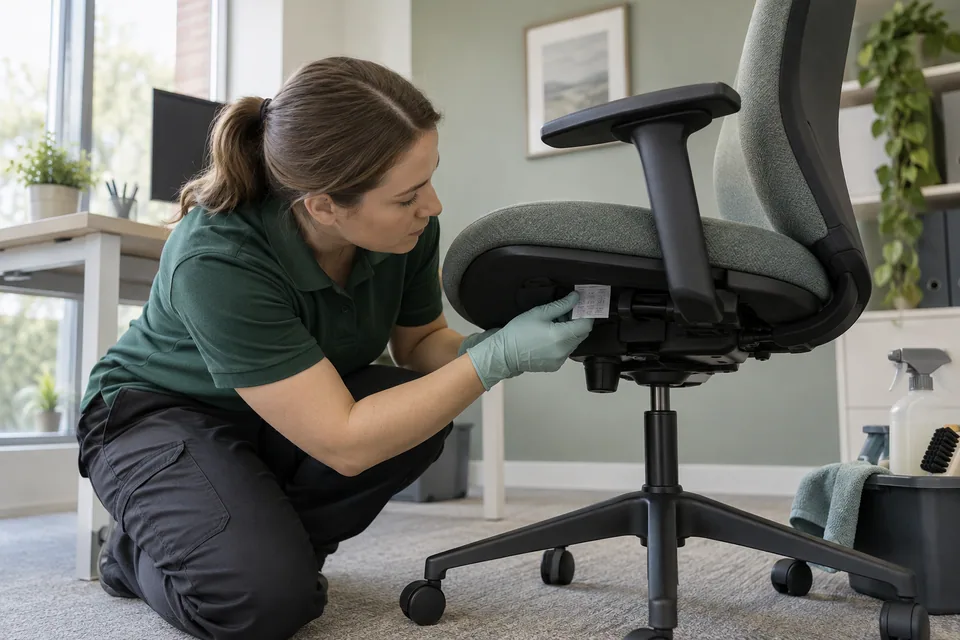
Keep care labels and manufacturer information available. Fabric composition, backing, dyes, trims and filling can affect the method and amount of moisture suitable for the item. Some seating includes leather, coated material or mixed finishes that need separate attention. Do not assume every piece in one reception area can receive the same treatment simply because the colours or overall style match.
Describe how the seating became marked
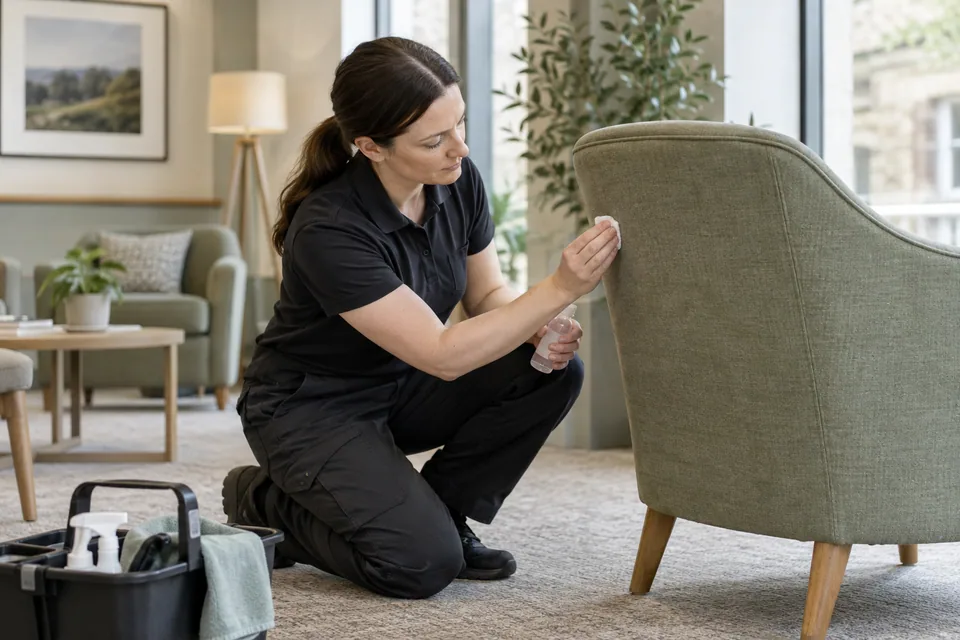
Food and drink spills, hand contact, clothing transfer and general soil can leave different marks. Explain what is known about the stain and any treatment already attempted. Old residue from another product may influence the assessment. Photographs help show location and scale, but cannot guarantee what can be removed or establish the fabric’s colour stability.
Wear on armrests, damaged fibres, faded fabric and cracked coatings are not the same as removable dirt. A clean can improve suitable surfaces without restoring the furniture’s original condition. Odour may involve filling or a source beyond the fabric face, which can limit treatment. The likely outcome should be discussed with those distinctions clear rather than promising every chair will look new.
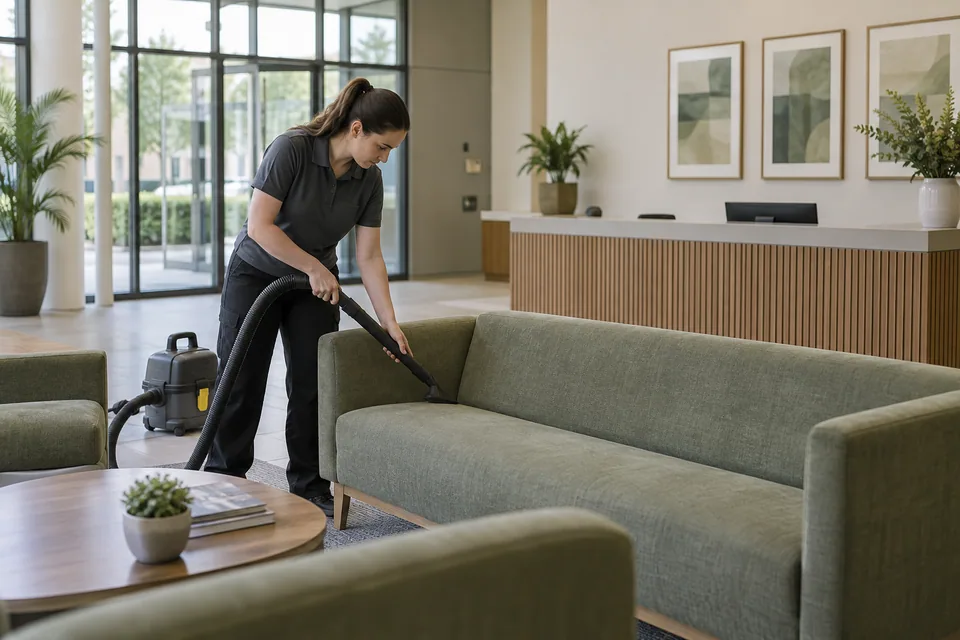
Select a compatible treatment before starting
An inspection and suitable testing can help establish what the material will tolerate. Depending on the fabric and construction, an appropriate wet or lower-moisture approach may be considered. No process should be applied universally across all commercial seating. Ask what is proposed, any material-specific limitations and how moisture will be controlled around padding, seams and frames.
Cleaning is separate from reupholstery, foam replacement, dye restoration or structural repair. Loose seams and damaged frames need to be identified rather than hidden by treatment. For predominantly leather furniture, review leather sofa cleaning and explain the actual commercial item. Leather finishes differ, so a suitable assessment remains necessary even if a fabric-cleaning appointment is already being arranged.
Organise the furniture and the working area
Agree where items will be treated and how they will be kept available. Some chairs may be moved to a suitable zone, while fixed seating requires access around its installed position. Ask who will move heavy items and whether any equipment or personal belongings need to be removed. Protecting access to the working area is part of the plan, not an assumption that staff can continue using every seat.
Describe parking, entry routes, lifts, water and power arrangements relevant to the proposed equipment. If the premises stays open, separate visitors from treatment and drying areas. A phased schedule may help retain enough usable seats, but it must fit the actual appointment availability and room layout. Do not promise unrestricted seating access throughout a treatment without considering the practical space.
Set aside drying time before people sit down
Fabric, filling, method, ventilation and room conditions all influence drying. A cushion that feels dry at one point may not establish that the whole item is ready. Ask for aftercare and return-to-use advice based on the actual work. Keep seating unavailable until the relevant conditions are met rather than using a fixed event time as proof that drying must be complete.
If a meeting, visitor session or reopening depends on the furniture, explain that deadline before booking. Coordinate commercial carpet cleaning if floors in the same area also need treatment, so furniture movement and drying routes make sense together. Cleaning appointments can be combined operationally while retaining a separate assessment and realistic return instructions for each material.
Fit periodic furniture care into the wider premises plan
Routine office cleaning can address agreed accessible furniture surfaces and loose soil, but specialist fabric treatment needs its own scope. Report spills promptly and avoid unknown stain removers that may affect colour or later treatment. Manufacturer care guidance is useful between visits, particularly where seating sees heavy daily use or has a sensitive finish.
For a larger site reset, commercial deep cleaning can cover surrounding detail areas. The upholstery quote depends on item size, construction, material, soiling, stain work, handling and access. Review any remaining marks or exclusions at completion. A practical care plan should distinguish improved cleanliness from repairs and cosmetic restoration, with the furniture’s condition honestly described.
BEFORE YOU ARRANGE THE VISIT
Questions about commercial upholstery cleaning.
Can fabric office chairs be quoted by quantity alone?
Quantity helps, but size, upholstery coverage, construction and condition also matter. Photographs and care labels make it easier to distinguish a lightly padded chair from larger or more complex seating.
Are leather and fabric reception seats cleaned together?
They can be discussed within one visit, but each material needs its own suitable assessment. A fabric method is not automatically appropriate for leather, coated surfaces or mixed finishes.
Will upholstery cleaning repair torn seams?
No. Tears, frame damage, worn fabric and foam replacement are repair or restoration issues. Identify them before treatment so cleaning expectations match the actual condition.
Can staff use treated chairs immediately?
Return-to-use depends on the material, treatment and drying conditions. Keep items out of use until the specific aftercare advice has been met, rather than assuming the appointment ending means they are ready.
How can a reception retain some seating during treatment?
Discuss item groups, space and visitor routes before scheduling. A phased plan may be practical, provided each group has suitable treatment access and a protected drying period.
Should we try stain remover before the visit?
Check the furniture’s care guidance before applying anything. Unknown products can affect fibres or colour; report the spill and any treatment already attempted during the assessment.
A PRACTICAL NEXT STEP
Commercial Upholstery Cleaning.
Start with the details.
Call with your postcode, the areas or items involved and a preferred appointment. Discuss the scope and quote before arranging the visit.