

GIVE THE COOKING RESIDUE ITS OWN APPOINTMENT
Oven Cleaning Watford
Baked-on residue inside an oven needs a different allowance from wiping the outside of a kitchen appliance. Oven cleaning in Watford is planned around the model, cavities, fittings and their condition. Describe the cooker accurately so the work can be agreed without assuming every lining or removable part tolerates the same treatment.
Oven model and cavity count identified
Removable fittings listed in the scope
Linings, seals and controls treated with care
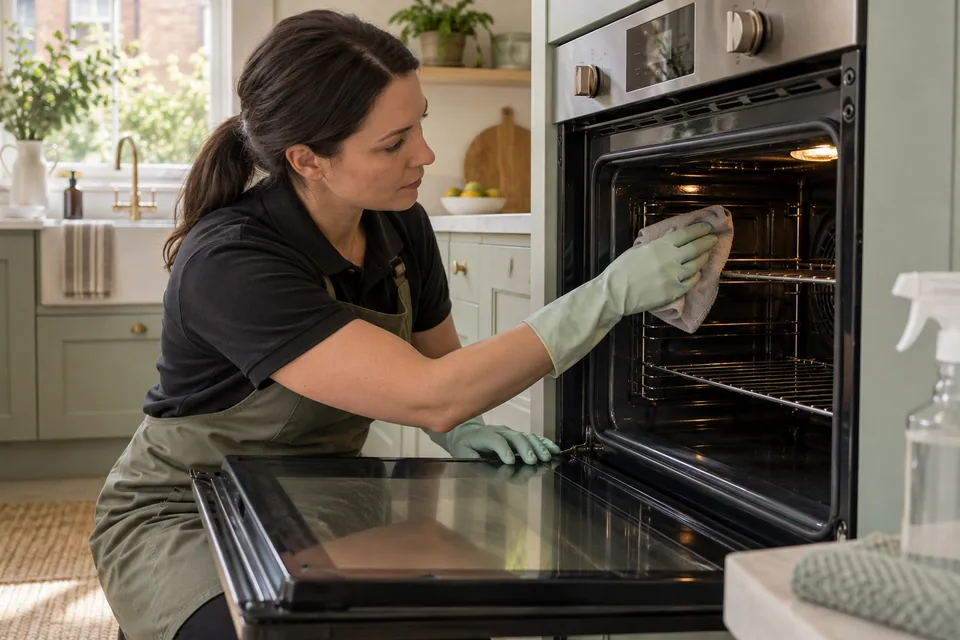
Identify the appliance before describing the dirt
Give the make and model where possible, and explain whether the appliance is single, double, compact or part of a larger cooker. Mention a separate grill cavity, steam function or other specialist feature. A photograph of the front and interior can help identify the configuration, but the care instructions remain important. A wide range cooker and a built-in single oven should not be quoted as interchangeable jobs.
Describe the condition inside each cavity and on the racks, trays and door glass. Heavy grease, baked-on spills and residue around edges may need different allowances. Explain any previous strong cleaners, damaged coatings or missing parts. Cleaning cannot repair a faulty thermostat, broken fan, damaged seal or other mechanical issue, so report those separately rather than assuming a clean will resolve an appliance fault.
Agree which parts form the cleaning list
The scope can identify the oven cavity, appropriate door surfaces, accessible glass and suitable removable racks or fittings. List the grill pan, shelves and other parts you want included. They are not all made from the same material, and some have a coating or finish that changes the method. The number of components can affect the workload substantially even within one appliance.
Removal of a door or inner glass panel should follow the model’s procedure and be part of an agreed, competent handling arrangement. It should not be treated as an automatic step for every oven. Electrical or gas disconnection, pulling a heavy built-in appliance out of its housing and repairing components are separate tasks. Keep those boundaries clear when requesting the quotation.
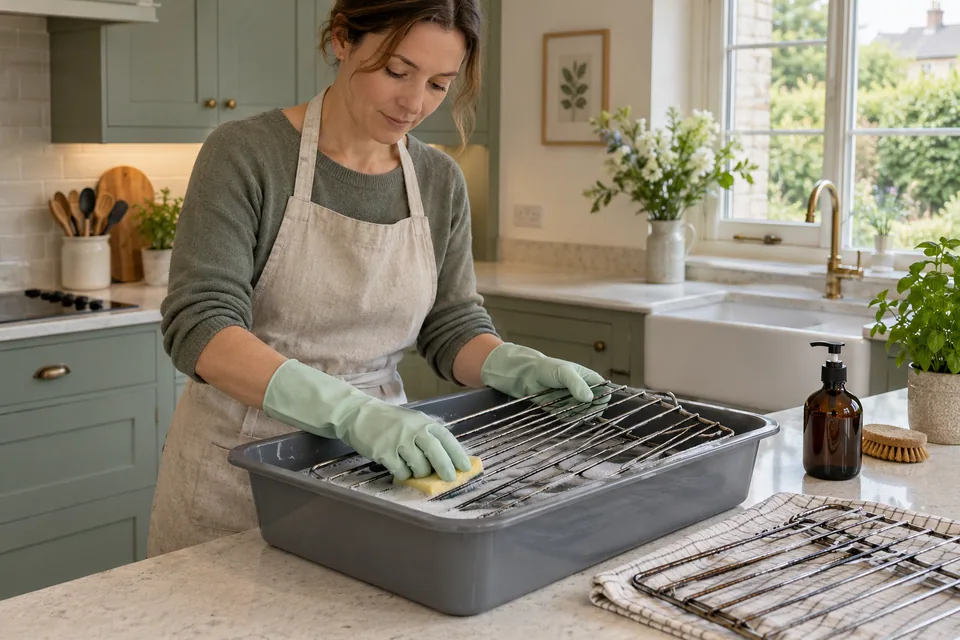
Sensitive linings and self-cleaning features need their own care
Catalytic liners, specialist coatings and self-cleaning features mean the interior cannot be treated simply as a uniform enamel box. Manufacturer instructions should guide which surfaces can receive which products. A cleaner needs to know the lining type before working around it. Aggressive abrasion or an unsuitable chemical can cause damage rather than improve the cooking surface.
A pyrolytic programme or another built-in cleaning function does not remove the need to understand the model and its limitations. Do not run an unplanned cycle or apply an extra product just before the visit. Explain what has already been used and keep the instructions available. The proposed service should state what can be cleaned directly and what must remain outside that treatment.
How the controlled cleaning work is approached
Once the appliance is in a safe, appropriate condition for work, the agreed removable components can be handled separately from the cavity. The cleaner can address compatible cooking residue with products, tools and working time suited to the surfaces. The surrounding kitchen needs protection, and residues should not be spread onto vulnerable floors, worktops or fittings.
Door edges, seals, controls and ventilation areas require care. An ordinary oven-cleaning service is not an internal electrical inspection or a gas service. If something appears loose, damaged or unsafe, it should be raised before cleaning continues around it. Ask about the proposed method if the appliance has unusual features, and avoid expecting the strongest possible treatment on every visible mark.
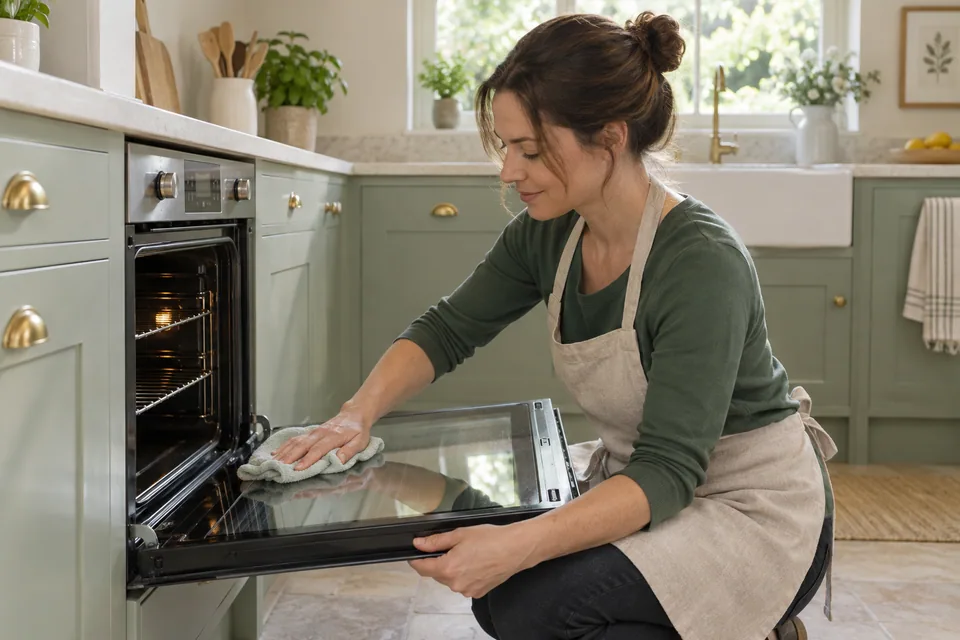
Prepare a cool appliance and a usable working area
Ask what cooling and preparation the particular model needs before the appointment. Remove food and personal cooking items, and clear the nearby worktop and floor. Do not start dismantling the appliance or disconnecting supplies simply to prepare for cleaning. Explain restricted access, a low oven position or any door movement that could make the work more difficult.
Make care instructions available and tell us about faults before the visit. Keep children and pets away from the working area, and plan meals around the appointment rather than requiring the oven in the middle of the work. If several kitchen services are being arranged, coordinate the order so surfaces remain accessible and cleaning products or removable fittings do not obstruct other tasks.
Allow time for the components and condition
A dedicated oven clean is generally a task measured in hours rather than a quick extension of a kitchen wipe. A double appliance, separate grill or large number of fittings can need more time, and severe deposits affect the estimate. Ask for an allowance based on the model and condition you describe, then confirm any aftercare before planning to cook again.
Price factors include cavity count, component list, residue, access and any specialist feature affecting suitability. Ask what is included and how additional work would be authorised. Permanent discolouration, damaged finishes and worn components may remain after appropriate cleaning. The quote should not be understood as promising restoration or mechanical repair unless a separate service has explicitly been agreed.
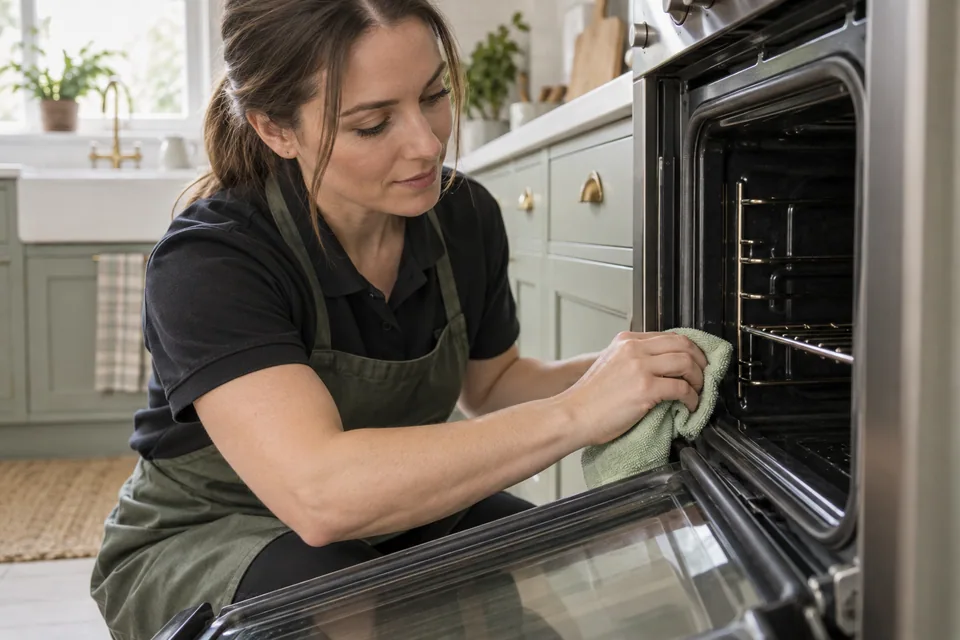
Choose the correct cooker and kitchen service
For a wide freestanding appliance with several cavities and hob components, read about range cooker cleaning. A traditional heat-storage appliance has a different care brief under AGA cleaning. Fridge, dishwasher or other appliance interiors are considered through appliance cleaning, with each item named separately in the booking.
If the kitchen has accumulated grease beyond the oven, coordinate deep cleaning for the surrounding suitable surfaces. For a moving-out property, the oven can be listed within an end of tenancy cleaning plan while keeping its specialist scope clear. That makes preparation, time and the overall quotation easier to understand.
BEFORE YOU ARRANGE THE VISIT
Questions about oven cleaning.
Is every oven lining suitable for the same cleaning product?
No. Catalytic liners, coatings and specialist features can have different requirements. Give the model and follow its care guidance so the method is agreed for the actual surfaces rather than assumed.
Will the oven door always be removed?
Door or glass removal is model-dependent and needs an agreed competent handling procedure. It should not be assumed for every appliance, and removal is different from cleaning accessible door surfaces in place.
Should I run a self-cleaning cycle before the appointment?
Ask first and follow the manufacturer’s instructions. An unplanned cycle can affect timing and cooling, while added products may be inappropriate. Explain any cycle or chemical treatment you have already used.
Can oven cleaning repair a heating or gas fault?
No. Cleaning is separate from diagnosis, repair and gas or electrical servicing. Report faults before the visit and arrange the appropriate competent repair service where needed.
How soon can I cook after the oven is cleaned?
Confirm the advice for the model and process actually used. Do not assume immediate use or improvise a heating cycle; follow the cleaner’s and manufacturer’s relevant instructions before preparing food.
Are grill pans and extra shelves included in the quote?
List the fittings you want cleaned, including a separate grill cavity. Extra components and their coatings can affect time and method, so they should be part of the agreed scope rather than added informally.
A PRACTICAL NEXT STEP
Oven Cleaning.
Start with the details.
Call with your postcode, the areas or items involved and a preferred appointment. Discuss the scope and quote before arranging the visit.