

FABRIC, FILLING AND FINISH ALL MATTER
Upholstery Cleaning Watford
Armchairs, dining chairs and upholstered benches can combine very different fabrics and fillings. Upholstery cleaning in Watford begins with the construction and condition of the seating involved. The visible cloth is only part of the item: backing, filling, seams and decorative details can affect treatment. Describe the furniture and its care guidance before deciding which cleaning approach is appropriate.
Individual furniture pieces listed for assessment
Fabric and hidden construction considered
Use and drying planned before treatment
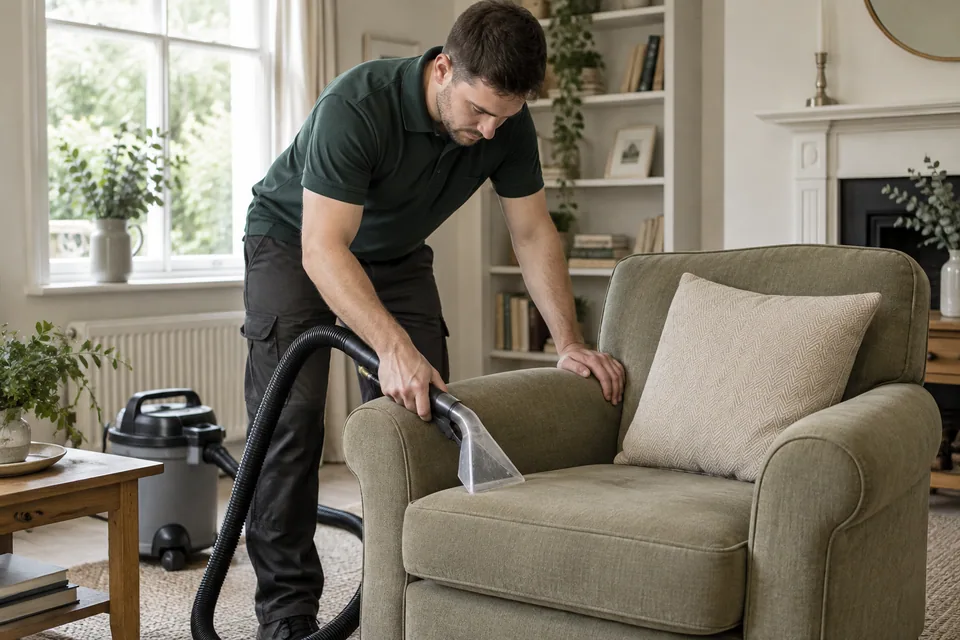
List the items rather than counting the room
An upholstered dining chair, a large armchair and a padded footstool involve different surfaces, access and construction. Give the number and type of pieces, their approximate sizes and whether cushions can be removed. If the furniture is heavily buttoned, skirted or finished with decorative trims, mention those features. A photograph can help explain shape and condition, but the material still needs consideration.
Tell us how the items are used. Food spills on dining seats, hand-contact marks on arms and dust around seams present different cleaning priorities. Explain the age of a mark if known and any attempts already made to remove it. Previous products can leave residues or change a dye, so withholding that history can make an assessment less useful.
Care instructions and discreet tests guide the decision
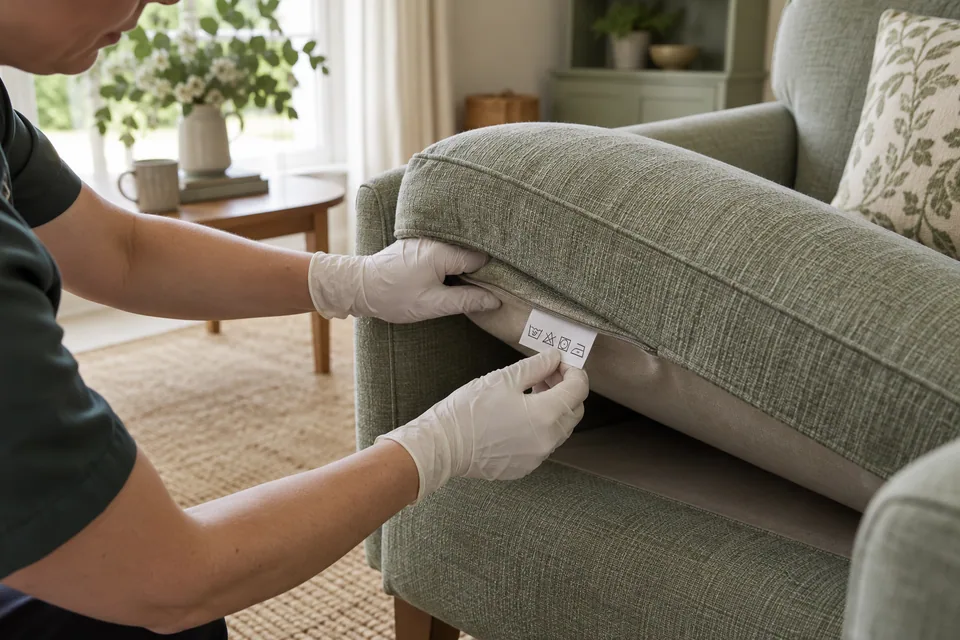
Check beneath cushions or the frame for a care label, and keep manufacturer information available. A cover that unzips is not necessarily suitable for machine washing. Fibres, dyes, backing and the way the item is made all influence what can be attempted. If the label is missing or unclear, say so rather than deciding from the fabric’s appearance alone.
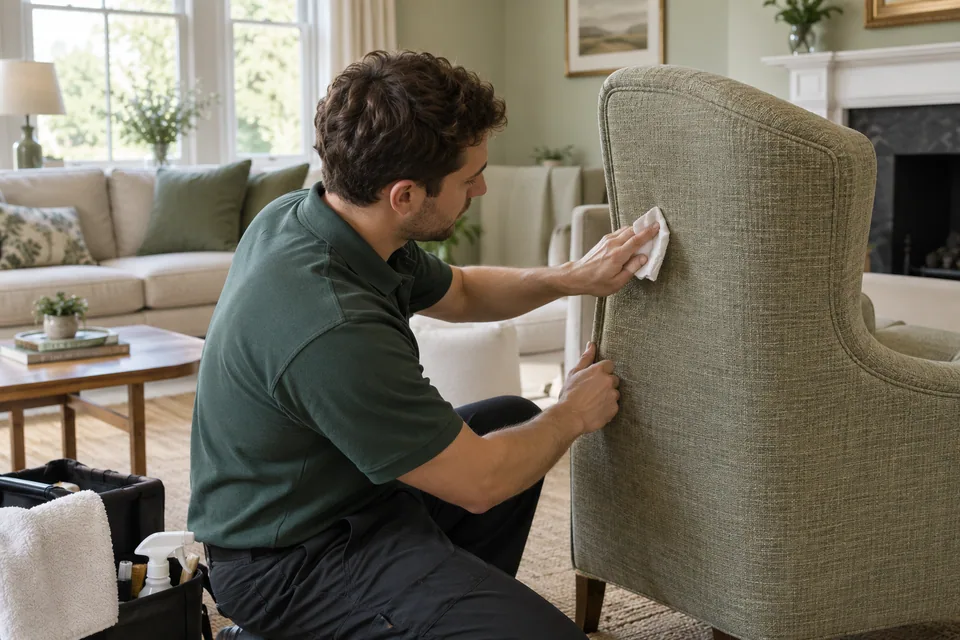
A small compatibility or colour-stability test may be needed in an inconspicuous area. The cleaner also needs to consider weak seams, loose trims, worn areas and any previous repairs. Some fabrics or constructions require a different specialist arrangement, and there may be limits to a proposed on-site treatment. Ask for those limits to be explained before the main surfaces are worked on.
Vacuuming, treatment and moisture are separate stages
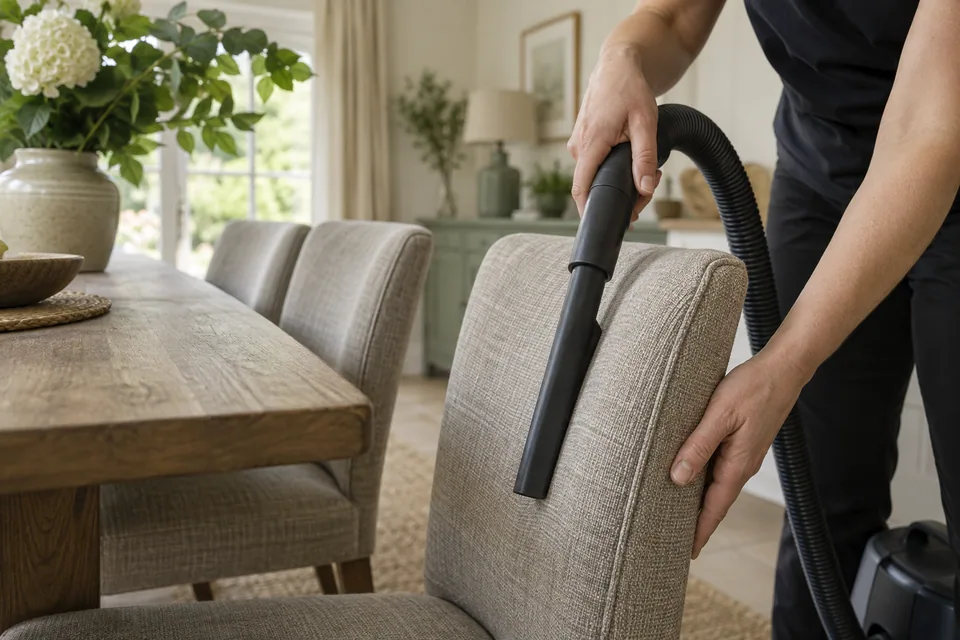
Where appropriate, dry soil and debris are removed before attention turns to bonded dirt or individual marks. Seams, piping and cushion joins can hold dust that is less obvious on the main panels. The proposed method may involve controlled extraction, a low-moisture process or another approach suited to the fabric. There is no universal treatment for every upholstered item.
Moisture and product choice need particular care because the visible fabric sits over other materials. Fillings, adhesives, timber and metal components can affect how an item responds and dries. More water does not mean a better clean. Discuss the intended process and any material restrictions rather than asking for every chair to receive the same wet treatment regardless of its construction.
Separate removable dirt from wear and permanent change
A dark patch can be soil, but it can also be abrasion, a changed pile direction or a finish that has worn differently. Some spills permanently affect the dye or fibre. Inspection helps establish what cleaning may improve and what it cannot repair. Fraying, thinning fabric, damaged stitching and faded areas should be identified before work so their condition is understood.
Odours can involve fillings or contamination below the surface, which may fall outside an ordinary upholstery clean. Explain repeated pet accidents, heavy spills or prolonged dampness rather than requesting a blanket freshening promise. Surface treatment cannot guarantee removal of every underlying cause. Further investigation, repair or replacement may be the practical route for an item affected beyond the fabric that can be treated.
Prepare the furniture and keep drying time free
Clear personal items from seats and remove fragile objects from the surrounding area. Explain which cushions are removable, but do not dismantle a frame or force fittings apart. Arrange a safe route for equipment and discuss anything too heavy to move. Keep pets and children away from the treatment area, and make care instructions available at the start.
Several pieces can occupy a meaningful part of a visit, with drying continuing after active cleaning finishes. Time depends on the number of panels, fabric, soiling, method and room conditions. Ask when each item can be used again and how ventilation should be managed. Do not replace throws or cushions in a way that traps moisture before the furniture is ready.
Quote for the furniture and choose related care carefully
The quotation should reflect the item count, dimensions, construction, access and any separate spotting work. A set of dining chairs may have many individual panels and seams despite occupying little floor space. Describe that detail and ask what is included. If the condition differs from the original brief, clarify how a revised approach or additional work would be agreed.
For a main household sofa, sofa cleaning explains cushion layout and common contact areas in more detail. A leather item belongs under leather sofa cleaning, because its finish needs a different assessment. Nearby floor textiles can be discussed through carpet cleaning or rug cleaning; keep each item’s material and drying requirements distinct when coordinating the room.
BEFORE YOU ARRANGE THE VISIT
Questions about upholstery cleaning.
Does a zipped upholstery cover mean it can be washed?
No. The zip may be part of manufacture or fitting. Follow the item’s care guidance and discuss the fabric, backing and construction before removing a cover or choosing a wet-cleaning method.
Can chairs with buttons or decorative trims be assessed?
Describe those details and any weakness or repairs. Buttons, piping, trims and seams can affect access and handling, and they may need different care from the main fabric panels.
Will cleaning restore fabric that has become thin or shiny?
Cleaning cannot reverse wear, abrasion or permanent changes to the fibres. Inspection helps separate removable soil from damage or pile characteristics that may remain after an appropriate treatment.
Are fillings considered as well as the outer fabric?
They need to be considered where they affect moisture tolerance, drying or contamination. Explain heavy spills and odours, because the issue may extend beyond the surface cloth that an ordinary treatment can reach.
How should I arrange the room while furniture dries?
Leave the treated items accessible to the agreed ventilation and keep them out of use as advised. Avoid trapping damp fabric beneath throws or replacing cushions too soon; ask for guidance for the actual piece.
A PRACTICAL NEXT STEP
Upholstery Cleaning.
Start with the details.
Call with your postcode, the areas or items involved and a preferred appointment. Discuss the scope and quote before arranging the visit.