

A WORKPLACE ROUTINE PEOPLE CAN WORK AROUND
Office Cleaning Watford
Office cleaning in Watford needs a usable plan for the people who share the building. Desks, kitchens and washrooms have different demands, and a busy reception may need attention at a different frequency from a little-used meeting room. Start with occupancy, access and priorities rather than a single room count.
Workstations and shared facilities mapped
Working hours and access coordinated
Clear-desk and confidential areas agreed
Map how the office is actually used
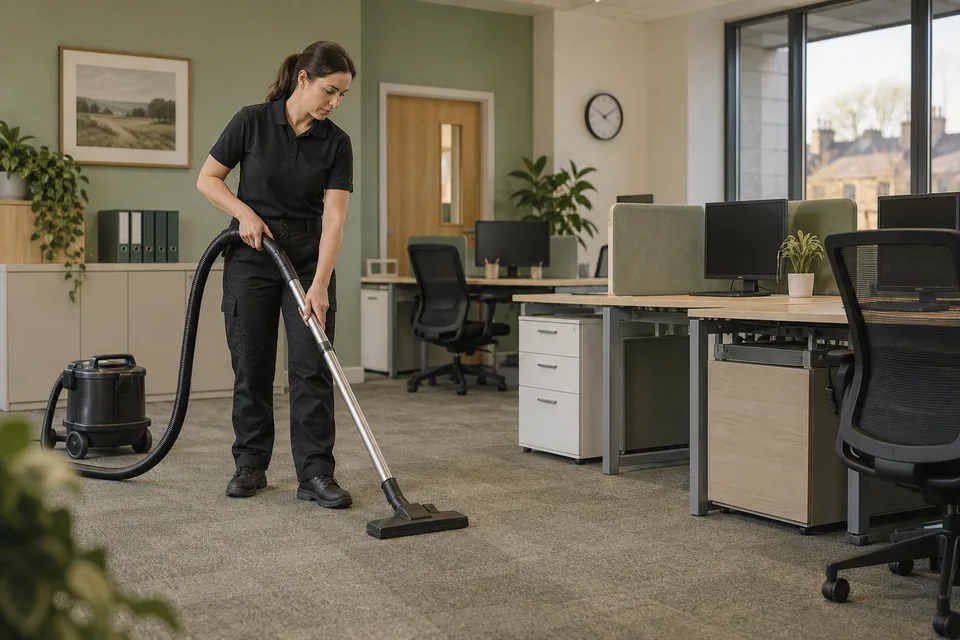
List the workspaces, meeting rooms, reception, kitchens, toilets and circulation routes that need attention. Include the approximate floor area and usual occupancy, with any variation across the week. Hybrid working can leave some zones quiet while shared desks and social areas remain busy. A useful schedule follows actual use instead of applying the same allowance to every room.
Explain the current condition and what is causing concern. Overflowing bins, marks around kitchen appliances and dusty low-use rooms call for different priorities. If the premises need an initial reset, commercial deep cleaning may be appropriate before a maintenance routine begins. Keep that initial work distinct from the ongoing visit so neither expectation is hidden in the other.
Agree what happens at a workstation
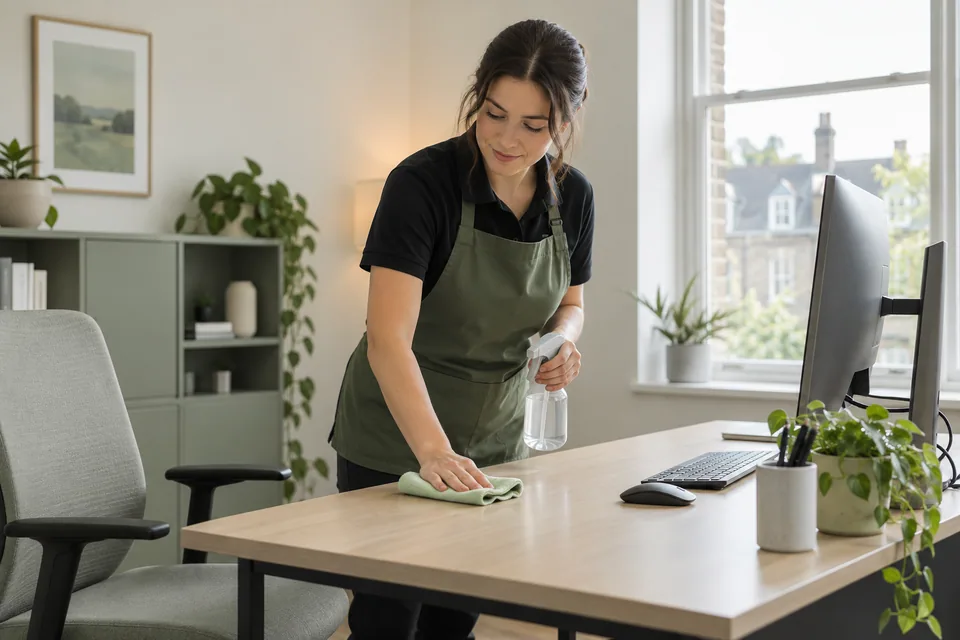
A desk should have a defined cleaning boundary. Explain whether staff will clear their work surfaces, which items may be moved and what must remain untouched. Paperwork, samples, personal belongings and confidential material should not be rearranged simply to complete a wipe. A clear-desk policy makes the available surface and the responsibility of office users easier to understand.
Electronics need their own instructions. Screens, keyboards, specialist equipment and powered devices are not automatically included in ordinary desk cleaning. Products and moisture must be appropriate to the surface, and manufacturer or company rules need to be followed. Ask for the agreed handling approach, particularly around shared equipment, rather than assuming every item on a workstation can be treated in the same way.
Give shared kitchens and washrooms their own priorities
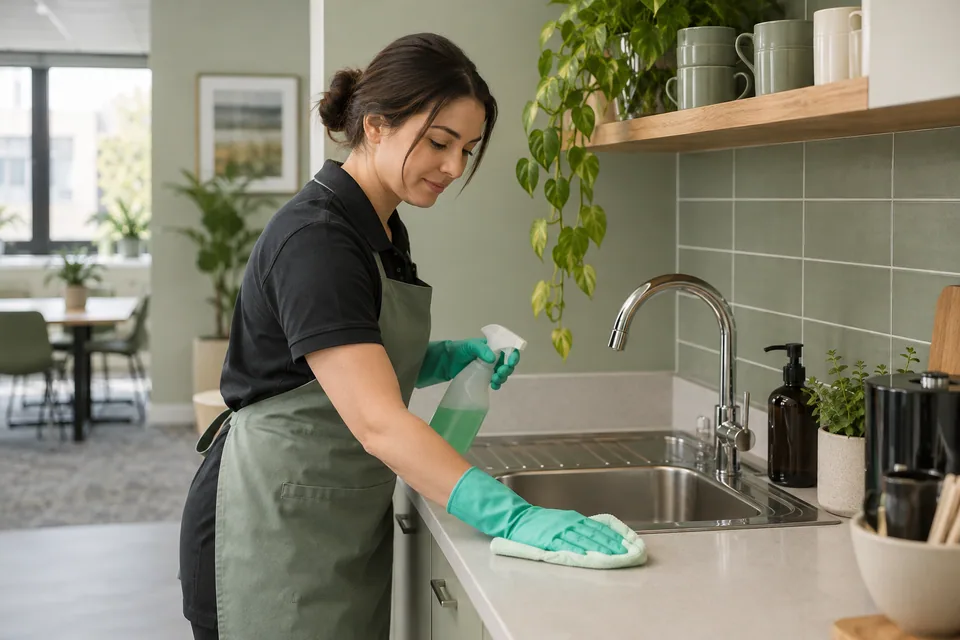
Kitchens can need attention to accessible counters, sinks, exterior appliance surfaces and floors, but washing personal crockery or clearing a full fridge requires a specific agreement. Explain the facilities and how they are used. Staff food, labelled containers and personal items should not be discarded without an agreed process. Cleaning cannot replace clear responsibilities for storing food and leaving shared areas usable.
Washrooms require an appropriate hygiene routine and separation of cleaning materials from food and desk areas. Describe the number of cubicles, basins and other facilities, along with consumable arrangements. Replenishing soap or paper may be included only if the supply and storage responsibilities are clear. Specialist waste handling and sanitary services need their own provision rather than an assumption that ordinary bin emptying covers everything.
Arrange access without interrupting the workplace
Discuss a suitable visit window and confirm availability before relying on an early, late or weekend slot. Keys, alarms, sign-in procedures, restricted rooms and the last person leaving all affect the practical plan. Identify the responsible contact and the method for reporting an access problem. Unclear entry arrangements can consume cleaning time without improving the condition of the office.
If staff remain on site, agree which rooms can be released in sequence and how wet-floor routes will be managed. Meetings, deliveries and visitors may change the order of work. Explain noise-sensitive periods and any areas where equipment cannot be used while a task is underway. A schedule should accommodate those restrictions without promising every task in an unrealistic window.
Keep periodic work visible in the schedule
Routine visits do not automatically include extraction of textile floors, detailed high-level cleaning or treatment of upholstered seating. Plan commercial carpet cleaning around drying and occupancy, and specify commercial upholstery cleaning for suitable office chairs or reception furniture. Listing these separately helps the maintenance allowance stay realistic while preventing occasional needs from being overlooked.
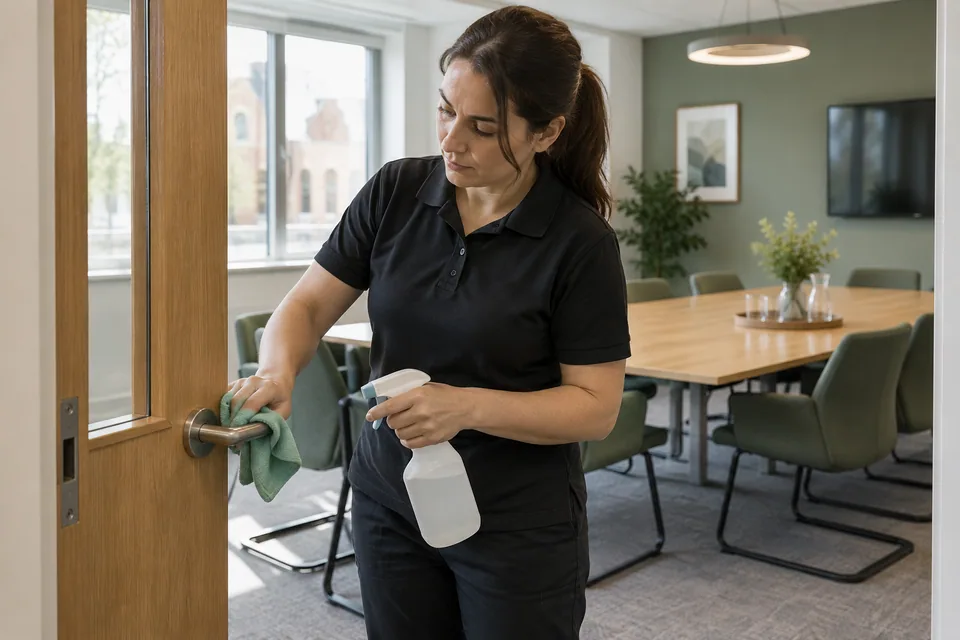
Glazing also needs a defined scope: internal partitions, entrance doors and external windows can have different access requirements. Use commercial window cleaning when planning that part of the building. A periodic list can be reviewed as the office changes, without quietly adding specialist tasks to an appointment intended for everyday facilities.
Set a brief that can be reviewed
The quote is influenced by area, occupancy, facilities, visit frequency, current condition and access restrictions. Describe tasks by zone and frequency rather than requesting an undefined standard clean. Ask which materials or consumables are supplied and what responsibilities remain with the office. If a budget limits time, set priorities openly so the expected work fits the agreed allowance.
Agree how issues will be reported and who can approve a change. A named contact, a practical task list and periodic review make the arrangement easier to manage than vague expectations about presentation. New desks, increased staff or a relocated kitchen may justify adjusting the scope. Cleaning supports a usable workplace, but does not repair damaged finishes or guarantee that a shared area stays clean throughout the working day.
BEFORE YOU ARRANGE THE VISIT
Questions about office cleaning.
Will cleaners move paperwork to clean office desks?
Agree a clear-desk boundary first. Confidential documents and personal belongings should remain under your control; surfaces obstructed by them may need to be left until staff have cleared the area.
Are keyboards and monitors included in a desk wipe?
Electronic equipment needs separate handling instructions and compatible methods. Specify the devices and company requirements instead of treating them as ordinary furniture surfaces.
Can visits fit around hybrid office attendance?
Describe occupancy by day and the rooms most heavily used. A schedule can then be discussed around actual demand, subject to appointment availability and the building’s access arrangements.
Who supplies washroom paper and soap?
Confirm supply, storage and replenishment responsibilities in the brief. Ordinary cleaning should not leave uncertainty about who orders consumables or authorises replacement stock.
Does routine office cleaning include carpet extraction?
A textile-floor treatment is normally a separately planned task, with method, access and drying considered. Routine vacuuming should not be confused with an agreed specialist carpet appointment.
What should our office provide for a quotation?
Share approximate area, occupancy, facilities, desired frequency, current condition and access restrictions. A zone-based list and photographs can help explain priorities before the scope is agreed.
A PRACTICAL NEXT STEP
Office Cleaning.
Start with the details.
Call with your postcode, the areas or items involved and a preferred appointment. Discuss the scope and quote before arranging the visit.