

PLAN THE TREATMENT AROUND THE FLOOR AND ITS USERS
Commercial Carpet Cleaning Watford
Entrance routes and shared walkways can show soil long before quieter rooms do. Commercial carpet cleaning in Watford needs a plan for the textile, its installation and the people using the premises. Describe traffic patterns and reopening requirements alongside stains, so the treatment can be assessed without overlooking the operational timetable.
Carpet and installation inspected first
Traffic lanes and stain history discussed
Drying and phased access included in planning
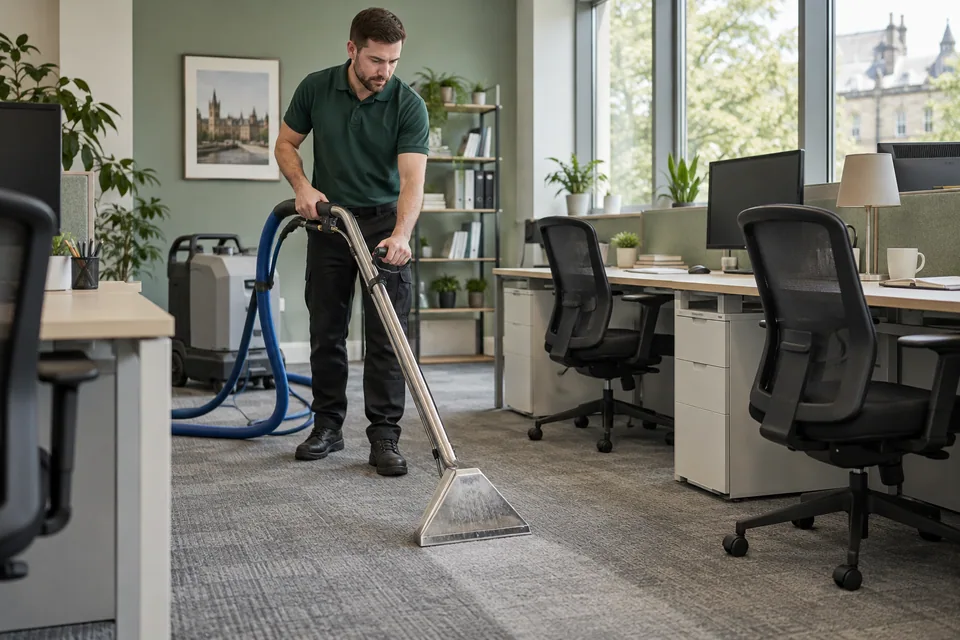
Identify the carpet and the installation
Provide the approximate area, room layout and any manufacturer or installer information. Carpet tiles, broadloom, different fibres and their backings can respond differently to moisture and treatment. Appearance alone may not identify the construction. Explain loose edges, lifting tiles, failed adhesive or previous water damage before a method is proposed, because those conditions can affect the practical scope.
A pre-clean inspection helps separate removable soil from wear, fading and damage. Busy routes may have flattened pile or permanent discolouration as well as dirt. Cleaning should not be promised as a way to make every traffic lane match a less-used area. An appropriate method and realistic expectations depend on understanding the textile and its current condition together.
Discuss the soil pattern, not just the square metres
List entrances, reception, corridors, desk areas and rooms with food or drink use. Different zones may need different attention or frequency. Describe spills, marks, odours and previous products used to treat them. An unknown spot remover can affect what follows, so the history is useful even if the original stain has changed in appearance.
If the carpet has been exposed during refurbishment, raise that before booking. Commercial after builders cleaning may be needed to address the surrounding site condition first. Textile treatment is not a substitute for suitable handling of hazardous construction residue. Explain the source of unusual soil instead of treating every dry-looking deposit as ordinary tracked-in dirt.
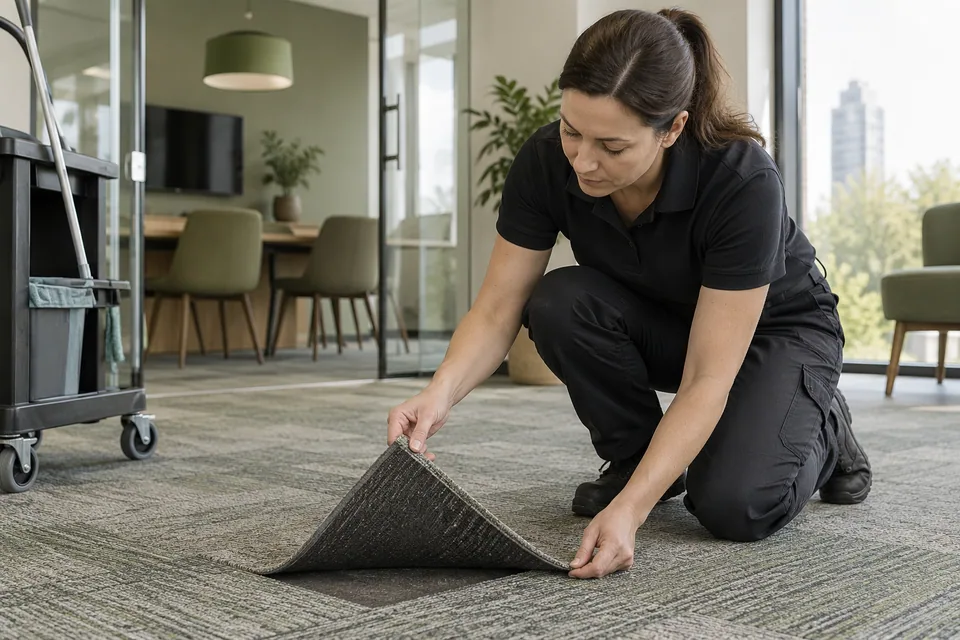
Choose a suitable method and test sensitive areas
The cleaning approach should suit the fibre, backing, installation, soil and available drying window. Extraction or a lower-moisture approach may be considered where appropriate, but no one method should be promised for every commercial carpet. Ask what is proposed and why, with relevant care guidance and a test considered where colour or material stability is uncertain.
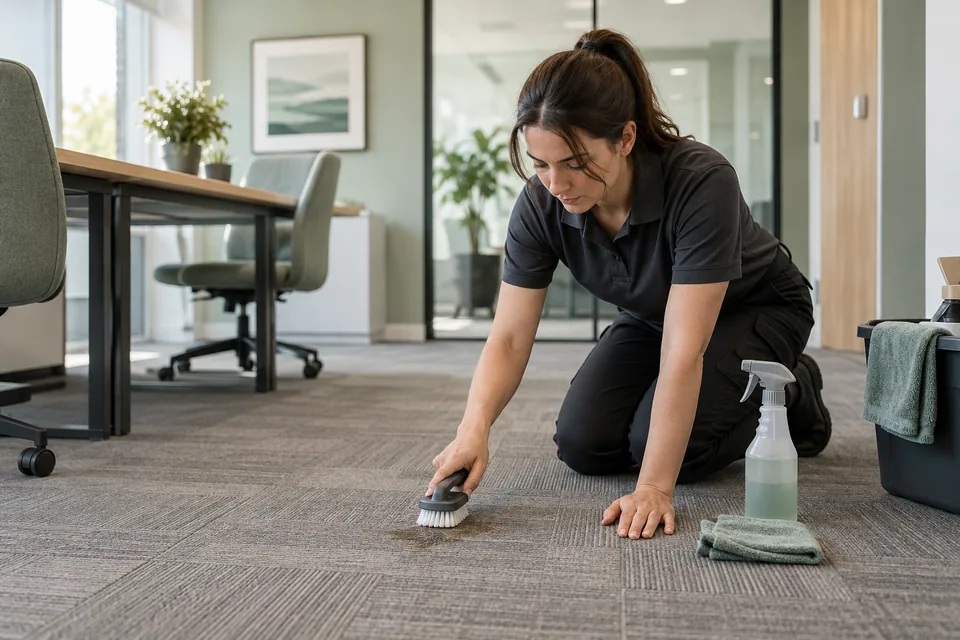
Stain treatment has its own limitations. Dye loss, old chemical damage, worn fibres and some spills may remain visible after removable soil has been addressed. An odour can also come from beneath the face fibres or another building source. The cleaner should explain likely limits rather than guarantee every mark disappears or use excessive moisture in pursuit of an unrealistic visual result.
Release the space and plan furniture handling
Explain desk systems, cabinets, fixed equipment and movable chairs when requesting the quote. Agree what your staff will clear and what the cleaner can safely move. Heavy furniture and electrical connections should not be handled on assumption. A plan around retained fixtures may be appropriate, but the accessible area should then be clear in the scope and completion expectations.
Confirm keys, sign-in, parking and the route for bringing equipment to the rooms. Water and power arrangements may be relevant to the proposed method. If the business remains open, identify routes that must stay available and areas that can be treated in sequence. Barriers or signs do not remove the need for a practical plan to keep people away from wet treatment areas.
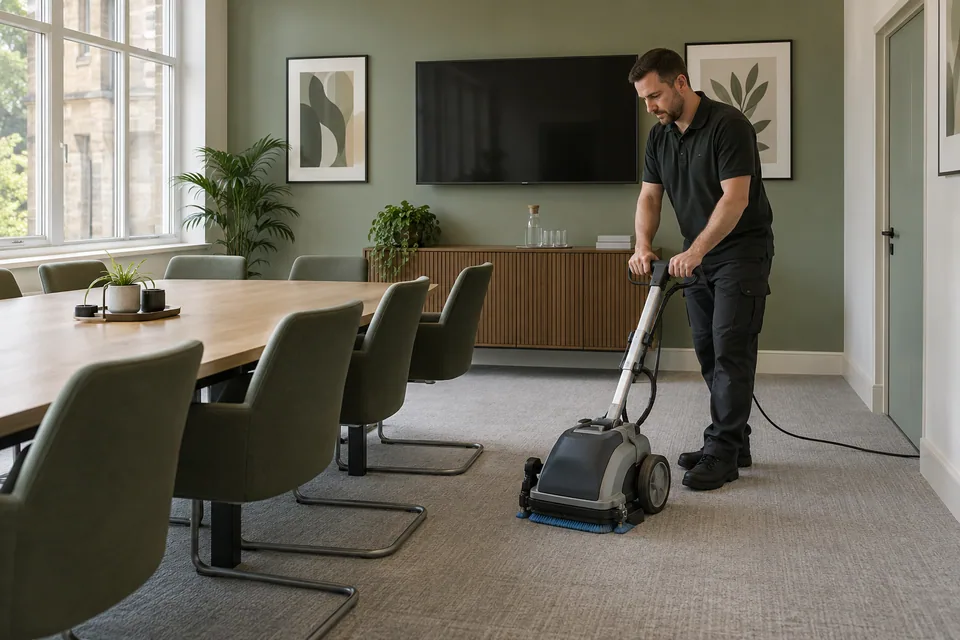
Allow drying to fit the next use of each room
Drying varies with the textile, treatment, ventilation, temperature and room conditions. Ask for an estimate based on the actual plan rather than assuming a universal number of hours. Keep an appropriate window before meetings, deliveries or furniture replacement. The completion of active cleaning does not automatically mean the room is ready for normal foot traffic or covered floor areas.
Tell us the reopening deadline before agreeing a method. Phasing may let one zone remain available while another dries, subject to layout and appointment availability. For mixed flooring, coordinate hard floor cleaning separately so routes and return instructions do not conflict. Both surfaces should retain their own care requirements instead of being combined under one generic drying promise.
Keep maintenance and periodic treatment connected
Routine vacuuming under office cleaning helps manage loose soil, but it is not the same as an agreed periodic carpet treatment. Entrance control and prompt reporting of spills can support care between visits. Avoid applying an unknown product without checking compatibility; tell the cleaner what happened and what has already been tried when a stain needs attention.
For seating in the same zones, commercial upholstery cleaning can be planned with its own fabric assessment. The carpet quotation depends on area, construction, condition, obstacles, stain work and access window. At completion, discuss any remaining marks, inaccessible patches and practical aftercare. A defined report is more useful than a promise that a used workplace floor will look identical everywhere.
BEFORE YOU ARRANGE THE VISIT
Questions about commercial carpet cleaning.
Are carpet tiles always suitable for wet extraction?
Suitability depends on the tile, backing, installation and care instructions. Loose tiles or adhesive issues need identifying, and the method should be selected for the actual floor.
Can a traffic lane remain darker after cleaning?
Yes. Wear, pile change, fading or permanent staining can affect appearance as well as removable soil. The inspection should explain likely improvement without promising an even new-carpet finish.
Can carpet treatment be phased while the office operates?
Possibly, depending on layout, safe routes and the proposed method. Identify occupied rooms and essential access before scheduling so treatment and drying can be planned by zone.
Do staff need to disconnect office equipment?
Discuss the furniture and equipment plan first. Electrical connections, heavy furniture and sensitive items should remain under the appropriate site’s control rather than being moved on assumption.
Is carpet ready for furniture as soon as the cleaner finishes?
Not necessarily. Follow advice based on the treatment and actual drying conditions, including when furniture, mats and normal traffic can return to the treated area.
What information helps quote a large carpeted premises?
Provide area by zone, carpet details, soil and stain history, furniture layout, access restrictions and reopening deadlines. Those factors explain the workload better than floor area alone.
A PRACTICAL NEXT STEP
Commercial Carpet Cleaning.
Start with the details.
Call with your postcode, the areas or items involved and a preferred appointment. Discuss the scope and quote before arranging the visit.