

CLEAR GLASS STARTS WITH CLEAR ACCESS
Commercial Window Cleaning Watford
A shopfront pane and an upper-floor office window may belong to the same building but require very different access. Commercial window cleaning in Watford needs a defined glazing list, with internal faces, external faces and frames separated. Explain the site layout and public activity before assuming a method or a standard visit time.
Glazing faces and frame detail specified
Customers and working routes considered
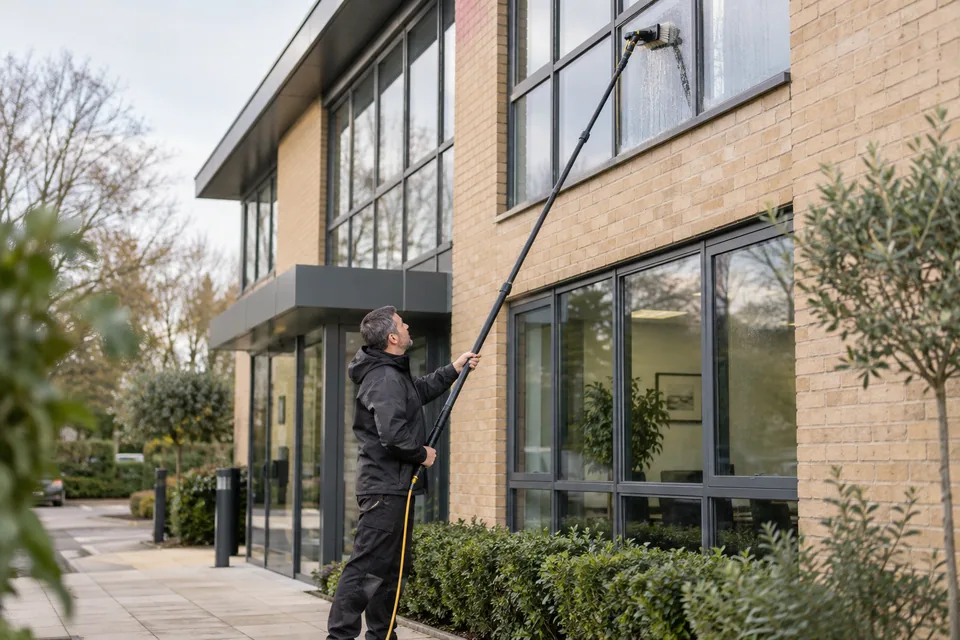
Safe reach assessed for the actual building
List the glazing rather than the building alone
Identify shopfronts, entrance doors, external windows, internal partitions and any other glazing requested. State which faces need cleaning and whether frames, sills or door surrounds are included. A quotation for exterior panes should not be assumed to include interior partitions or every fitting around them. Photographs can help explain counts and layout, especially where the building has several elevations.
Describe glass treatments, films, signage and known defects. Coated glazing or sensitive adjacent materials may have particular care requirements. Keep installer guidance available where possible and explain existing scratches, damaged seals or loose elements. Cleaning should be planned around the surface as it is, rather than treating all visible glass as plain, undamaged and unrestricted.
Assess reach and the space below the work
Give the approximate height and describe the ground, entrances, canopies, parked vehicles and neighbouring boundaries. A suitable ground-based approach should be considered where practical, but reach cannot be promised from height alone. Obstacles, fragile roofs and the shape of the building can change the arrangement. Some areas may require a separate specialist access solution or fall outside the feasible visit.
Do not assume cleaners can lean from unsuitable openings or use improvised platforms. Explain access restrictions before the quote so a safe plan can be discussed. If an area cannot be reached under the agreed arrangement, it should be identified rather than silently omitted or attempted through an unsafe workaround. Exterior work can also depend on weather and site conditions on the day.

Manage the public-facing working area
Customer routes, deliveries and opening hours affect how the appointment can be organised. Describe busy periods and any entrance that must remain available. A work area may need separation from people passing beneath or alongside it. Discuss the timing and practical controls with the responsible site contact rather than assuming normal trade can continue unchanged through every part of the work.
Confirm sign-in, keys, parking and equipment access. Shared buildings may require permission from a managing agent or coordination with another occupier. Appointment availability should be checked before an early or late slot is relied on. If access changes, raise it promptly: a blocked loading area or locked courtyard can alter which panes can be completed within the allowance.
Choose a method suitable for the glazing condition
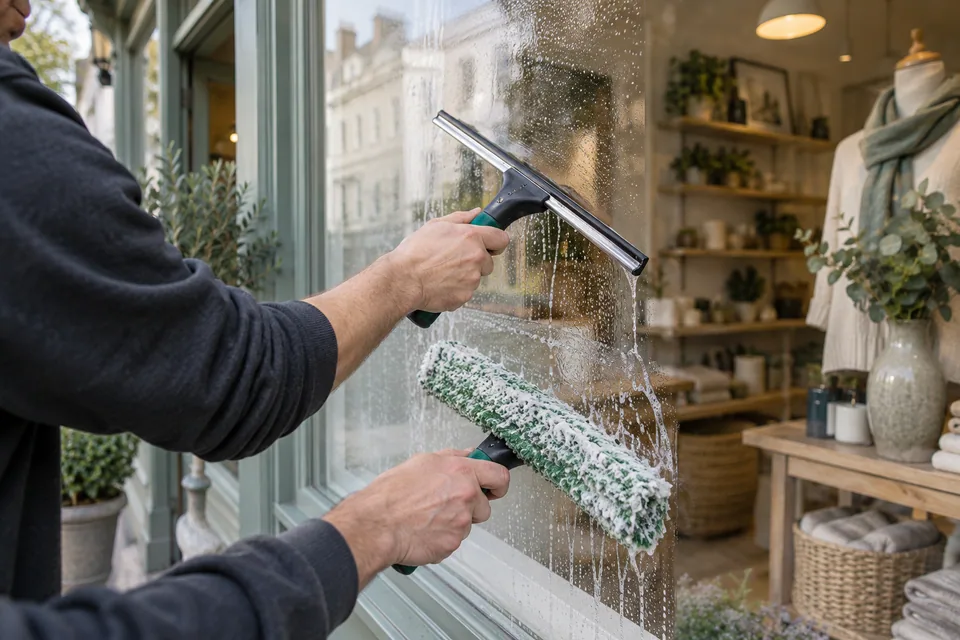
Accessible glass may suit a traditional squeegee method, while a suitable water-fed approach may be considered for other external areas. The actual method depends on glazing, frames, reach and conditions. Ask what is proposed for each part of the brief. No particular piece of equipment or access capability should be assumed simply from the commercial window-cleaning label.
Ordinary surface dirt is different from paint, adhesive, mineral staining or construction residue. Declare those deposits before booking. An abrasive or scraper can damage some glass and coatings, so residue removal needs its own assessment. Internal clouding within a failed unit, scratches and damaged films are not removable dirt. Cleaning should not be described as repairing glazing or guaranteeing every mark disappears.
Coordinate interiors and special cleaning stages
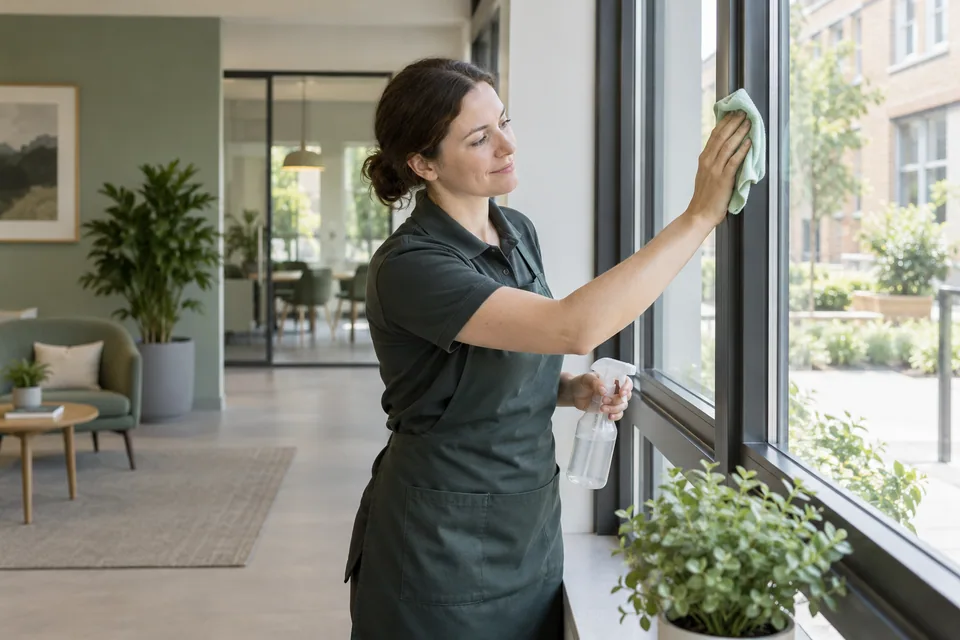
For internal panes and partitions, clear adjacent desks, displays and fragile items where practical. Agree who moves stock or furniture and what remains fixed. Protecting access inside can take time even when the glass itself is low level. Office cleaning can coordinate surrounding workspace tasks, while the glazing scope stays explicit about faces, frames and obstructions.
After fit-out work, use commercial after builders cleaning to discuss the site stage and dust conditions. For a glazed extension, conservatory cleaning distinguishes roof panels and structure from ordinary vertical panes. Those distinctions help avoid a routine glass appointment becoming an undefined construction or roof-cleaning job.
Set frequency and quote against actual use
A busy entrance can gather contact marks quickly, while sheltered or less-used glazing may need a different interval. Review the site’s appearance needs, exposure and budget rather than applying one frequency to every pane. A recurring arrangement can separate frequent entrance attention from less frequent wider elevations. Explain the priorities so the schedule reflects the parts of the building people actually use and see.
The quotation depends on pane count, size, faces, frames, condition, reach, obstacles and working window. For ongoing site coordination, contract cleaning can record responsibilities and periodic tasks. At completion, discuss inaccessible areas and marks outside ordinary cleaning. A clear glazing list and a report of practical limits make the result easier to assess than a broad promise covering every window on a complex commercial site.
BEFORE YOU ARRANGE THE VISIT
Questions about commercial window cleaning.
Does external window cleaning include interior partitions?
Only if they are expressly included. List external faces, internal faces, entrance doors and partition glass separately, along with the frame and sill detail requested.
Can work continue while customers use the entrance?
That depends on the working area and proposed method. Explain traffic and essential routes so separation, timing or an alternative access arrangement can be planned before the appointment.
Are upper-storey commercial windows always reachable?
Height alone does not establish safe reach. Ground conditions, obstacles, canopies and boundaries all matter; some areas may need a separate specialist arrangement or be excluded.
Will builders’ paint marks be removed in a routine visit?
Construction deposits need declaration and assessment. Their removal may require a different scope, and treatment must not risk damaging the glass, film or coating.
Can cleaning remove clouding inside a sealed glazing unit?
Clouding within a failed sealed unit is different from surface dirt. Ordinary glass cleaning cannot repair the unit or restore a damaged internal seal.
How should a business choose a window-cleaning interval?
Consider contact marks, exposure, customer-facing priorities and budget. Different glazing zones can have different frequencies, with the actual scope and access reviewed as the premises changes.
A PRACTICAL NEXT STEP
Commercial Window Cleaning.
Start with the details.
Call with your postcode, the areas or items involved and a preferred appointment. Discuss the scope and quote before arranging the visit.