

DIFFERENT BLINDS NEED DIFFERENT HANDLING
Blinds Cleaning Watford
Dust on a Venetian slat and a mark on a fabric roller blind are different jobs. Blinds cleaning in Watford starts by identifying the blind, its finish and how it operates. Give the type, dimensions and access details so cleaning can be planned without treating the fabric, headrail and controls as one washable item.
Blind type and installation recorded
Slats and fabric panels assessed individually
Mechanisms and repairs kept outside ordinary cleaning
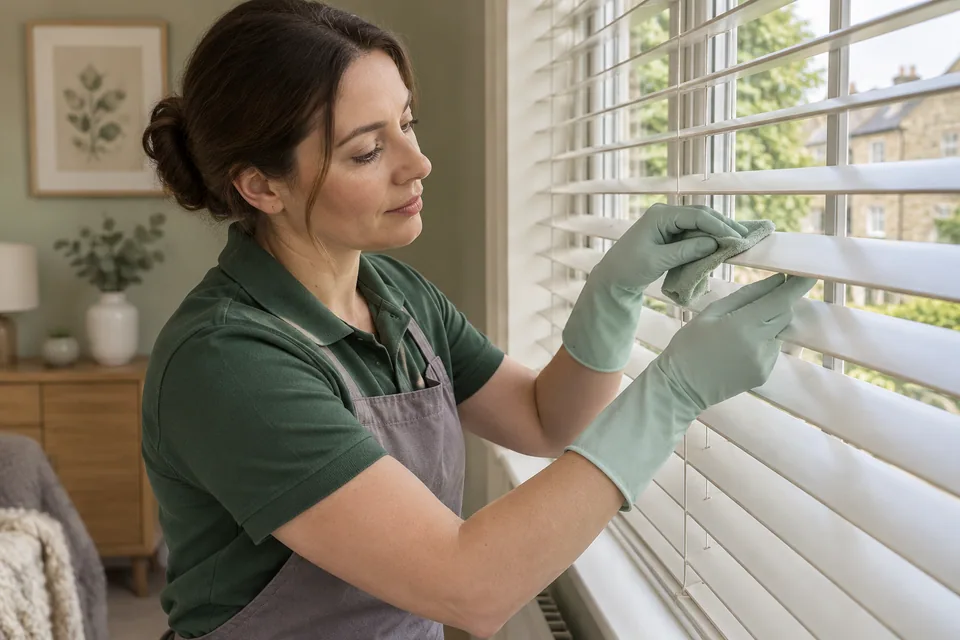
Identify what is fitted at each window
Make a short list of the blind types rather than counting only the windows. Venetian slats, vertical fabric panels, roller blinds and Roman blinds have different surfaces and moving parts. Real wood and a wood-effect material may also need different care. Keep labels or the manufacturer’s information available, particularly where a coating or fabric treatment is involved.
Describe width, drop and how the blind is mounted. A large blind spanning a bay or a high landing window can involve considerably more handling than a small ground-floor unit. Tell us about damaged slats, loose brackets, worn cords and any operating difficulty before the appointment. Cleaning should not be used as a substitute for repairing an unstable installation.
Separate dust from kitchen grease and visible marks
Loose surface dust can often be approached differently from greasy deposits or a stain within fabric. Explain the room and what has collected on the blind. Kitchen use, condensation near a window and ordinary dry dust create different concerns. A description of the mark and any product already used is more useful than asking for every blind to receive the same treatment.
Some colour change is permanent fading or deterioration rather than removable dirt. Coated fabrics can also react poorly to an unsuitable product or excessive moisture. An inspection and appropriate discreet test may be needed. Ask which areas can reasonably improve and which limits follow from the material or its condition; a blind should not be represented as looking new after every clean.
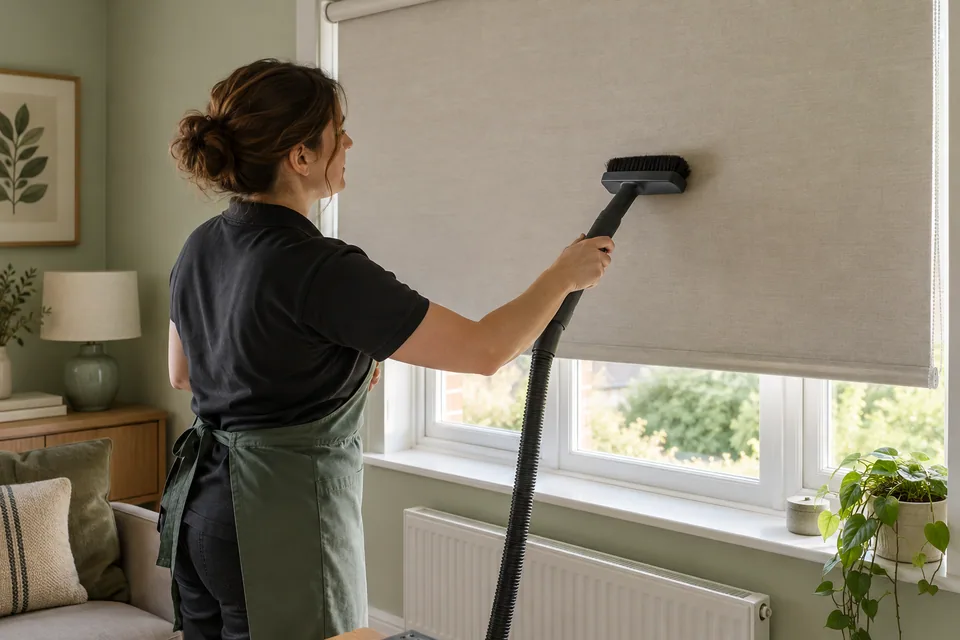
Choose care for the material, not a universal soaking method
Wooden slats generally call for controlled, finish-appropriate care rather than an assumption that they can be soaked. Fabric rollers and Roman blinds need their own care guidance, including any lining or backing. For metal or synthetic slats, finish and condition still matter. The appropriate method depends on the actual product, not simply the shape of the slat.
Heads, cords, tapes and mechanisms are not all designed for the same exposure as a visible panel. Explain motorised operation before work is planned, and follow the manufacturer’s requirements. An ordinary blind-cleaning appointment does not include electrical disconnection, motor repair or complete dismantling. If specialist off-site handling is proposed, collection, fitting and return need a separate clear arrangement.
| Blind detail | Care question |
|---|---|
| Wood or coated slats | Which finish-safe approach limits unnecessary moisture? |
| Roller or Roman fabric | What do the label and backing allow? |
| Headrail, cords or motor | Which parts can be cleaned without dismantling or repair? |
Provide safe reach and space around the window
Clear windowsills and remove small fragile objects from beneath the blind. Explain furniture, radiators or fitted units that obstruct access. Height and reach should be assessed before the visit; standing on an ordinary household chair is not an appropriate access plan. A blind can be within a domestic room but still be impractical to reach safely in the proposed appointment.
Let the cleaner know which blinds operate normally and which should not be moved. Do not force a stiff control or remove a headrail in advance without an agreed plan. Keep children and pets away from equipment and hanging controls while work is taking place. If the room needs to remain occupied, discuss when the window area will be available.
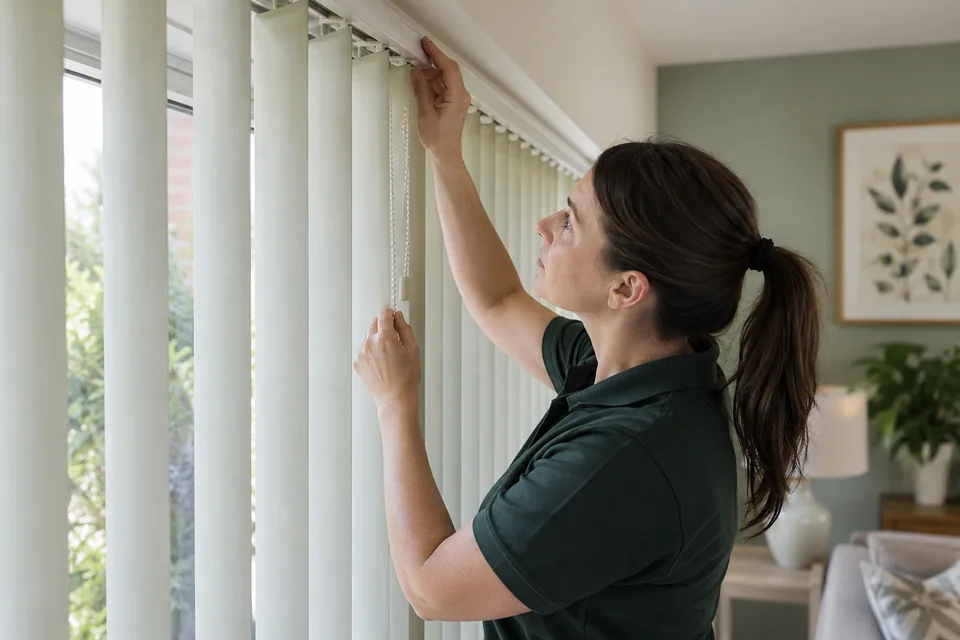
Plan handling, time and any drying requirements
A row of narrow slats can involve a lot of individual surfaces. Time depends on type, dimensions, number of panels, the deposit and safe access, so the number of windows alone is a poor estimate. Ask whether the proposed work can be completed in place and what preparation is needed for each unit. A mixed property may need more than one approach.
Where a compatible treatment introduces moisture, ask how the blind should be positioned afterwards and when normal use can resume. Tight rolling or closing may not suit the drying advice for a particular fabric. Do not add another household product after the visit in an attempt to accelerate the result. Follow the instructions relevant to the blind and any treatment that has actually been carried out.
Quote clearly and coordinate nearby cleaning
Provide a list of the types and approximate measurements, plus photographs where useful. Explain kitchen grease, staining, delicate coatings and any damaged components. Ask whether removal or re-fitting is included and how inaccessible units would be handled. The quotation should make cleaning and any separate specialist handling distinct from repairs to tracks, brackets, cords or motors.
For hanging fabric with linings and headings, compare curtains cleaning. Glass and frames belong in a separate window cleaning brief. A broader spring clean can organise the surrounding ledges and room surfaces, while domestic cleaning covers the occupied home’s routine needs. Coordinating these tasks avoids assuming that a room clean automatically includes every blind.
BEFORE YOU ARRANGE THE VISIT
Questions about blinds cleaning.
Can wooden blinds be immersed in water?
Do not assume they can. The material and finish need an appropriate method that avoids unnecessary moisture. Share the manufacturer’s guidance and identify real wood rather than relying on a wood-effect appearance.
Are fabric Roman blinds treated like Venetian slats?
No single method covers both. Fabric, lining, backing and folds need their own assessment, while slatted blinds introduce different surfaces and moving parts. Describe the type when requesting the quote.
Will you repair a cord or motor that is not working?
Repair and electrical work are separate from ordinary cleaning. Report faulty operation before booking and avoid forcing the mechanism. An unstable or damaged installation may need attention before cleaning can proceed.
Should I take vertical blind panels down first?
Confirm the agreed method before removing anything. On-site suitability, fittings, handling and re-hanging arrangements differ, and panels should not be detached merely on the assumption that removal is required.
What measurements help with a blinds quotation?
Give the type, approximate width and drop, number of units or panels, and the mounting height. Add access restrictions and describe grease, dust, stains or damaged parts so the scope can be assessed.
A PRACTICAL NEXT STEP
Blinds Cleaning.
Start with the details.
Call with your postcode, the areas or items involved and a preferred appointment. Discuss the scope and quote before arranging the visit.