

ADDRESS MOISTURE BEFORE THE DECORATION
Mould Removal & Repainting Watford
Painting over a mould-marked wall can hide a symptom while the conditions behind it remain. Mould removal and repainting in Watford should begin with the affected area, its condition and the likely moisture problem. Explain what has happened and any investigation already completed before agreeing cleaning, preparation or a decorative finish.
Moisture concerns raised before surface work
Affected materials and scale considered
Repainting agreed only when appropriate
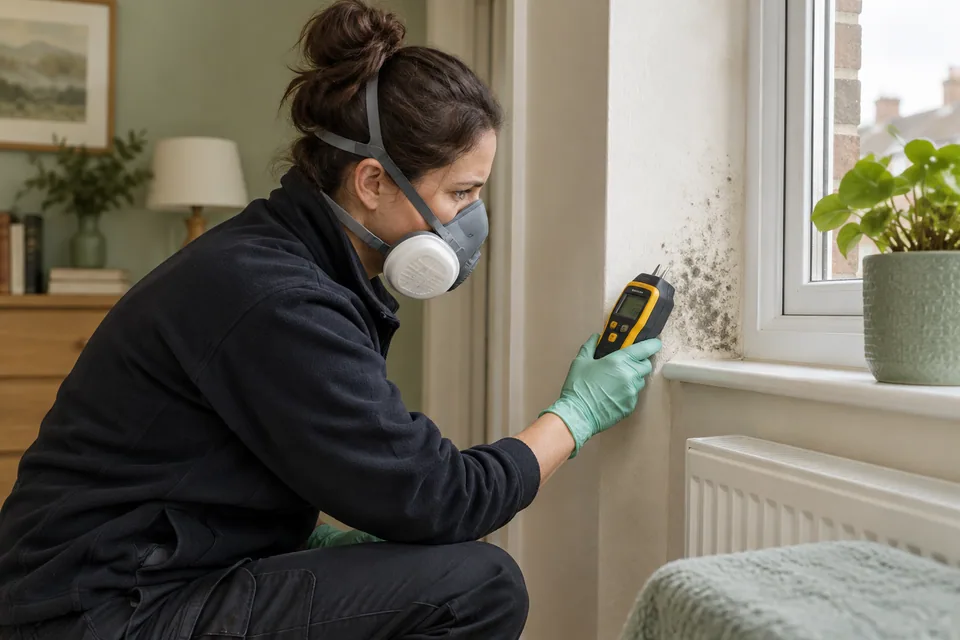
The visible patch is only part of the brief
Tell us where the affected area is, its approximate size and whether it has returned after previous cleaning or painting. Include recent leaks, condensation concerns, musty smells or damage to surrounding finishes. Photographs can explain the visible condition, but they cannot confirm the source or extent of moisture within a wall. A recurring patch deserves investigation rather than another cosmetic promise.
Damp and mould can affect health, so report problems promptly to the person responsible for the building. A tenant should notify the landlord or managing agent rather than waiting for the next decorative appointment. Where occupants have health concerns, seek appropriate medical advice. The cleaning brief does not replace a building assessment or advice about individual health needs.
Resolve the cause before planning the finish
Water may be associated with a leak, penetrating damp, condensation or another building issue. The appropriate investigation and repair depend on the property. Do not assume every patch results from how an occupant uses the room. Explain any findings from the responsible repair professional and whether the underlying problem has actually been resolved, not simply booked for a later date.
Ventilation, heating and the condition of the building can all be relevant, but cleaning alone does not establish a permanent solution. Repainting a surface that remains damp or has ongoing contamination may fail. Agree which responsibilities sit with the owner, repair contractor and cleaning or decorating work. A clear sequence avoids finishing a wall only for unresolved moisture to affect it again.
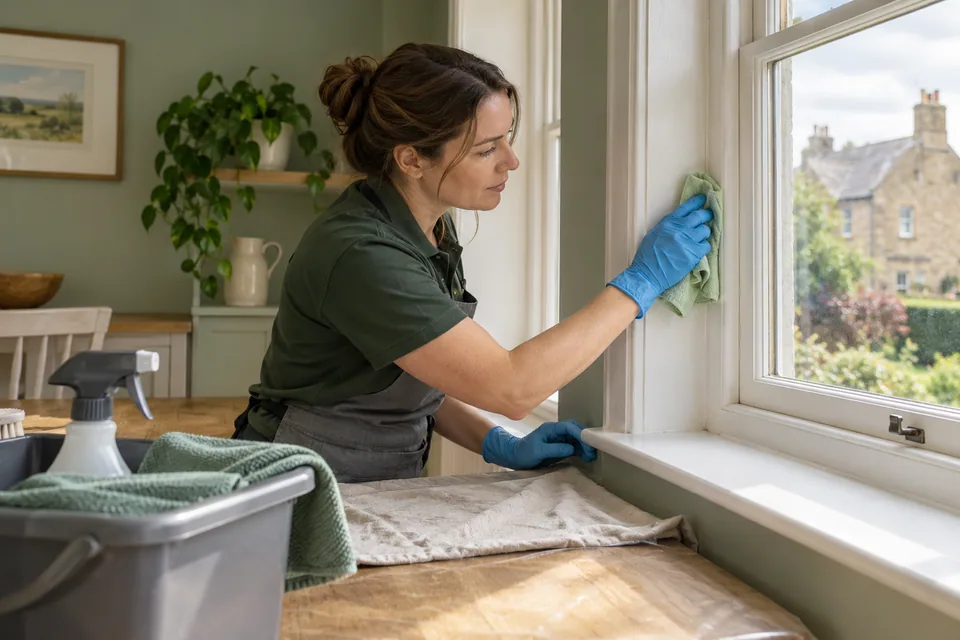
Assess material, extent and practical limits
Painted plaster, silicone, timber and porous furnishings do not respond in the same way. Some materials may be suitable for controlled surface work; others can need replacement or specialist remediation. Widespread growth, concealed contamination, fragile finishes or unusual exposure risks require a different assessment from a small accessible surface patch. They should not be folded into a routine general cleaning visit.
Products and methods need to match the surface and the assessment, with suitable working controls and manufacturer instructions observed. Do not mix household chemicals or try an aggressive product simply because the stain is persistent. The quote should describe the treatment proposed and its limitations. Any uncertainty about the safe scope should be resolved before work starts, with specialist input where required.
Prepare and protect the room for agreed work
Explain how the room is occupied and what furniture, textiles or stored belongings are close to the affected area. Agree a practical access and protection plan before moving items. Work may need separation from occupants and from the rest of the room, according to the treatment. Keep children and pets away from the working area and follow the specific return advice given.
Drying and ventilation requirements depend on the work and products involved. Ask how long the space needs to remain available and which surfaces must stay undisturbed. A deadline for guests, new tenants or an inspection should be raised at enquiry stage. It should not compress preparation or drying into a period that is unsuitable for the wall or coating system.
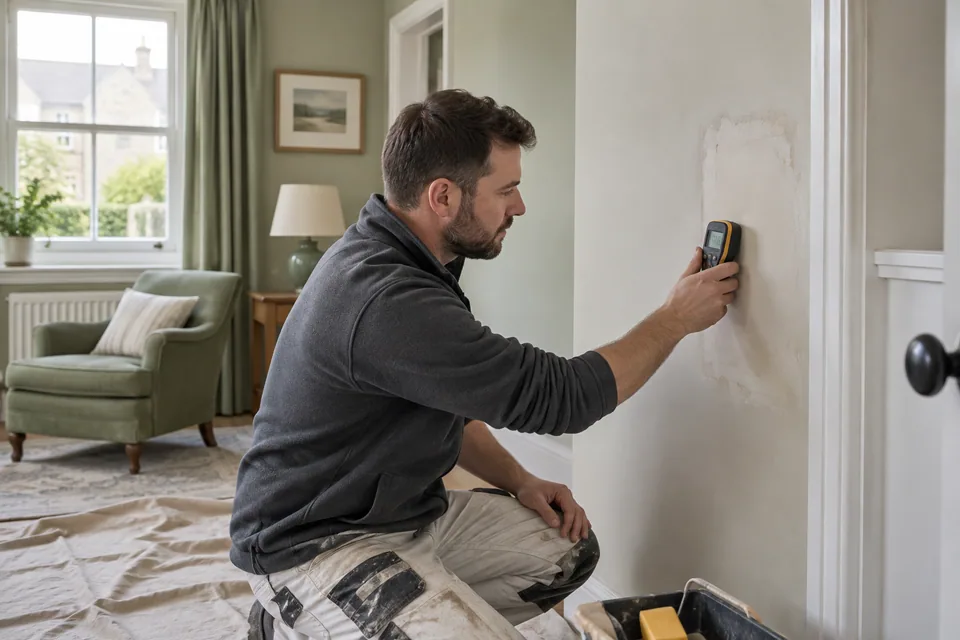
Repainting requires a sound, suitable background
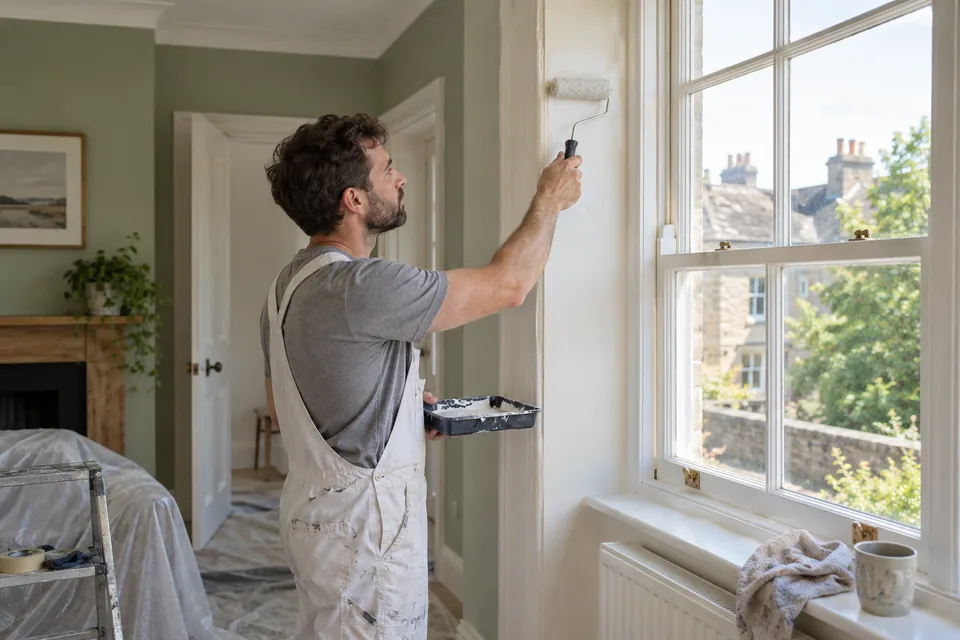
Decorative work should be considered only after the relevant moisture problem and surface condition have been addressed. Preparation may involve removing unsuitable loose material or making good a sound background, but substantial plaster repairs need their own scope. The proposed coating must be suitable for the surface and conditions. A product described as mould resistant does not make an unresolved leak harmless.
Agree the area to be painted, colour, number of surfaces and what making good is included. A local patch may not blend invisibly into an aged wall. Cleaning, stain treatment, preparation and decoration should be itemised enough to distinguish their purposes. There can be no blanket guarantee that mould will never return, particularly where the underlying conditions are outside the scope of the work.
Coordinate other cleaning without hiding the issue
For a broader property reset, deep cleaning can cover ordinary accumulated dirt in unaffected rooms. If the property is about to be occupied, discuss pre-tenancy cleaning after the relevant repairs and surface work. Neither service should be used to conceal a damp problem from an incoming occupant or substitute for the owner’s repair obligations.
Report exterior drainage concerns separately through gutter cleaning where accessible debris may be involved, without assuming that clearance diagnoses the building. Moisture-damaged floor finishes also need assessment before hard floor cleaning. The quotation depends on extent, materials, protection, access, preparation and the agreed decorative finish; photographs and a history make that discussion more useful.
BEFORE YOU ARRANGE THE VISIT
Questions about mould removal & repainting.
Can you just paint over visible mould?
A cosmetic coat does not address the underlying moisture or establish a suitable background. The affected area, cause and surface condition need consideration before repainting is agreed.
What if the same patch returns after cleaning?
Recurring growth is a reason to review the cause and the extent of the problem. Report it to the responsible owner or manager and seek the appropriate building assessment rather than repeatedly covering it.
Does every affected material need the same treatment?
No. Painted walls, porous materials, sealants and furnishings can have different requirements. Some may need replacement or specialist work instead of an ordinary surface-cleaning approach.
Should a tenant report mould before arranging decoration?
Yes, notify the landlord or managing agent promptly and explain the location and history. Cleaning or painting does not remove the need for the responsible party to investigate and address the problem.
Will repainting guarantee that mould cannot return?
No permanent guarantee is appropriate where moisture conditions or building defects remain. Suitable preparation and coatings do not replace resolving the source or maintaining appropriate conditions afterwards.
How is the time for treatment and repainting estimated?
The area, materials, access, protection, required preparation and drying stages all matter. Explain any occupancy deadline early so the sequence can be assessed without rushing necessary preparation.
A PRACTICAL NEXT STEP
Mould Removal & Repainting.
Start with the details.
Call with your postcode, the areas or items involved and a preferred appointment. Discuss the scope and quote before arranging the visit.