

IDENTIFY THE FINISH BEFORE THE TREATMENT
Leather Sofa Cleaning Watford
Leather furniture can have very different surface finishes, even when two sofas look similar. For leather sofa cleaning in Watford, the first question is how the material is finished and what has happened to it. Explain the label, age, wear and previous products before any treatment is proposed.
Leather finish and coating condition considered
Product compatibility checked discreetly
Cleaning kept distinct from colour or finish repair
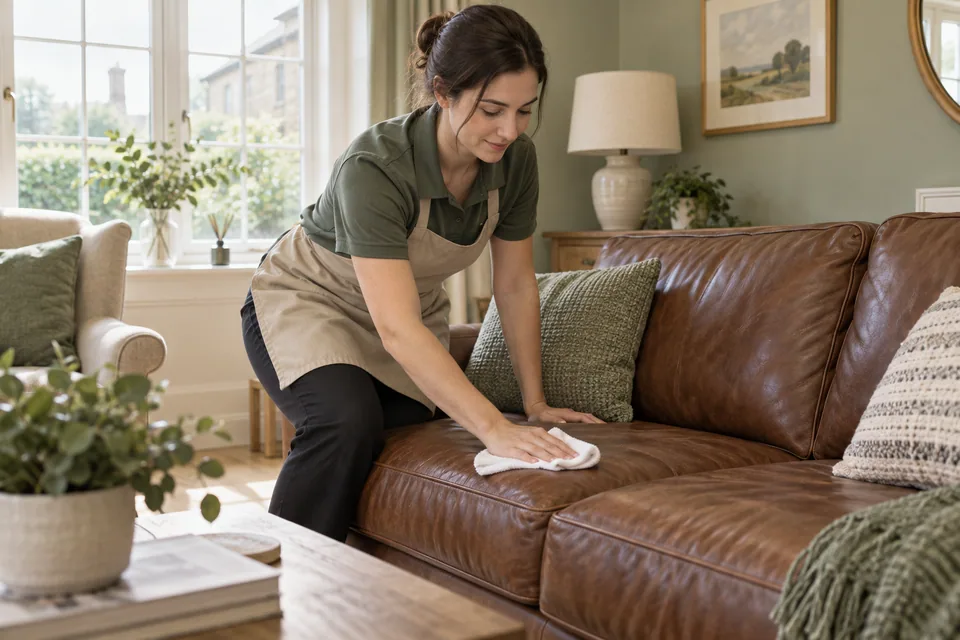
The finish changes what can safely be attempted
Pigmented or protected leather has a surface finish that behaves differently from more absorbent aniline leather. Semi-aniline finishes introduce another variation, and suede or nubuck have a different surface again. The colour and price of a sofa do not establish the finish. Keep the manufacturer’s instructions available and explain anything you know about the material rather than choosing a product from appearance alone.
Some furniture described as leather can contain coated, bonded or synthetic sections. Different panels within one item may not be identical. If the label is missing, the cleaner may need further assessment before recommending an approach. A plain household wipe, wet fabric extraction or a general leather conditioner should not be assumed appropriate for every surface that looks like leather.
Distinguish contact soil from a failing surface
Arms, headrests and seat fronts often receive the most contact. Darkening can involve everyday soil, body oils, dye transfer or a change in the finish itself. Explain how long a mark has been present and what you have already applied. Previous household cleaners, oils or stain products can affect the next decision, especially on an absorbent or weakened surface.
Cracking, peeling, abrasion and colour loss are repair questions as well as appearance concerns. Cleaning cannot replace a failing coating, mend a tear or recolour a worn panel. Point out those areas before work and ask what improvement is realistic. A good assessment should be able to identify when further cleaning is unlikely to resolve the problem rather than repeatedly working a damaged patch.
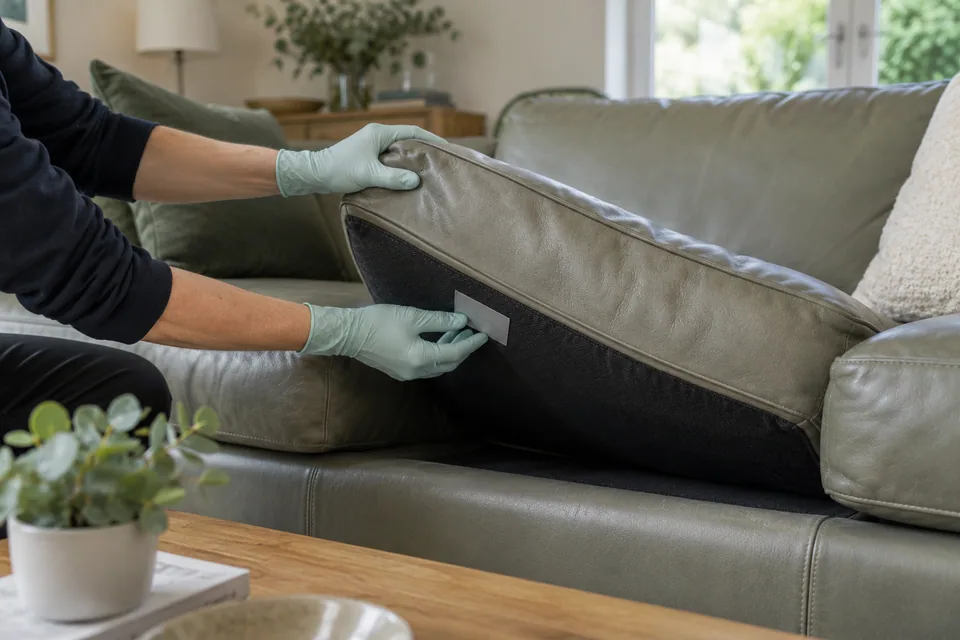
Compatibility matters more than the strength of a product
The proposed cleaner, amount of moisture and working method need to match the finish and its condition. A discreet compatibility test may be required. Avoid assuming that a product is suitable simply because leather appears on its label; manufacturer guidance and the actual material still matter. Tell us about any special instructions or earlier adverse reactions.
Conditioning is a separate decision, not an automatic stage for every leather finish. Ask why a proposed product is appropriate and what result it is intended to achieve. Household oils, aggressive detergents, soaking and steam should not be treated as universal leather-care methods. The aim is controlled care of a suitable surface, with limits made clear before the visible panels are treated.
| Finish or condition | Point to discuss |
|---|---|
| Protected or pigmented surface | The condition of the coating and compatibility of the cleaning product. |
| Absorbent aniline or uncertain finish | Sensitivity to moisture, colour change and the need for specialist assessment. |
| Suede, nubuck or peeling material | A different care route or repair assessment rather than a standard wipe. |
How an agreed leather cleaning visit is organised
The appointment should start with the item and condition being checked against the original brief. Loose debris can be removed appropriately, with attention to seams and joins that hold dust. Suitable surfaces can then be worked on using the agreed method. The exact treatment depends on the finish; it should not be improvised by treating leather as fabric upholstery.
Buttons, piping, reclining mechanisms and metal or timber parts affect access and handling. A cleaner should not need to dismantle a frame or disconnect a mechanism as part of ordinary surface care. Explain any faulty movement, loose part or panel that should not be handled. Decorative and functional details need consideration alongside the main seat and arm surfaces.
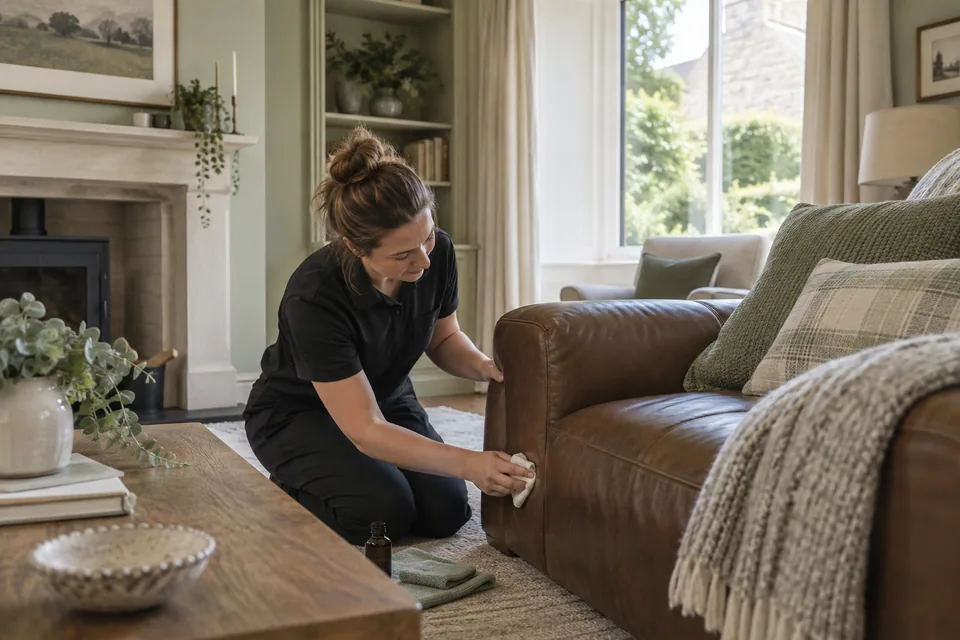
Prepare the sofa and the room without adding a home treatment
Remove throws and personal items, clear the space around the sofa and put fragile objects away. Do not apply another cleaner in an attempt to prepare the leather before the visit. Keep labels, product history and care instructions available. If cushions detach, describe that arrangement, but avoid forcing covers or fittings apart without the manufacturer’s guidance.
Confirm parking, stairs and the route for any agreed equipment. Heavy recliners and corner units should not be assumed to be moved or lifted. Keep pets and children away from the working area and identify any delicate flooring beneath the item. If the sofa must be used again at a specific time, discuss that requirement before arranging treatment.
Aftercare follows the surface and the proposed process
Ask when the sofa can be used and whether any treated area needs time before contact. Requirements can differ with the products and finish involved. Follow the item-specific advice rather than covering the furniture immediately or placing it beside strong heat to speed things up. Throws and clothing should not be returned in a way that interferes with the agreed aftercare.
For later maintenance, use the manufacturer’s guidance and avoid repeated experimentation on a stubborn mark. If the finish changes, becomes sticky or starts to peel, seek an assessment of the material rather than assuming it needs more conditioner. Cleaning is one part of caring for leather; use, sunlight, wear and previous treatments also influence how the surface develops over time.
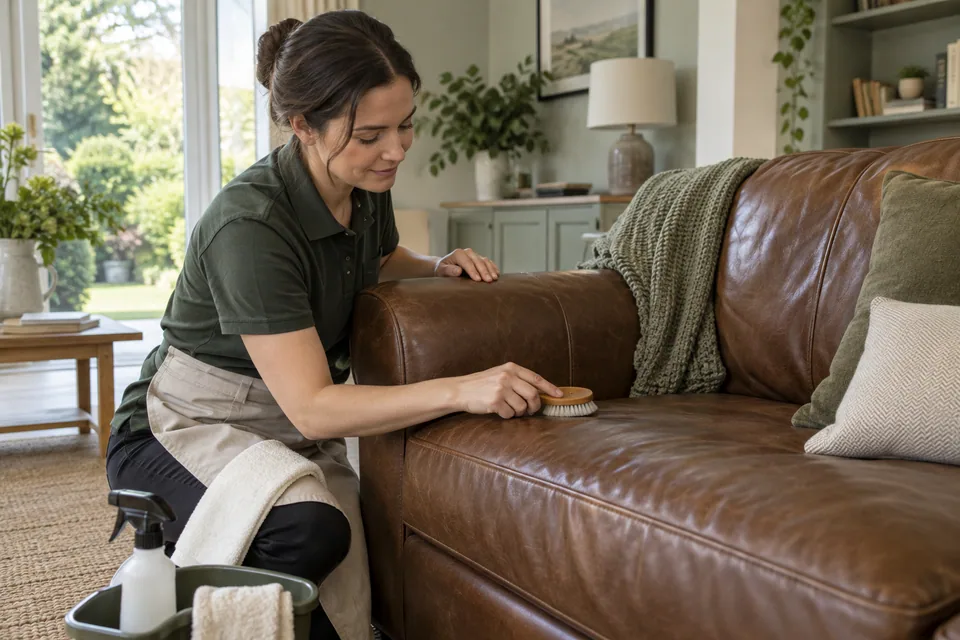
Describe enough detail for the quotation
Give the number of seats, the layout, any chaise or recliner section and the visible condition. Size is not the only factor: a sensitive finish or damaged area can change what is appropriate. Allow time for inspection and controlled treatment, and ask for an estimate for the specific item. Any repair, colour restoration or specialist work should have a separate scope and quote.
For fabric seating, use the sofa cleaning or upholstery cleaning information instead of transferring leather-care assumptions. Room textiles can be considered through rug cleaning and carpet cleaning. If several materials are to be treated, list them separately so the preparation and return-to-use advice remain clear for each one.
BEFORE YOU ARRANGE THE VISIT
Questions about leather sofa cleaning.
Can you tell the leather finish just from its colour?
Colour alone is not a reliable guide. Labels, maker’s instructions, construction and the surface condition can all help identify what is present and whether further assessment is needed before treatment.
Will cleaning stop a leather coating from peeling?
No. Peeling or a failing coating is not ordinary removable soil. The area may need repair or replacement advice, and further rubbing or unsuitable products can make its appearance worse.
Is conditioner necessary after every leather clean?
Not automatically. The finish and the maker’s care guidance determine whether a proposed product is appropriate. Ask what it is intended to do and avoid assuming every leather surface needs added oil or conditioner.
Can a fabric extraction machine be used on my leather sofa?
Do not assume a fabric treatment is appropriate. Leather care is finish-led, and moisture, products and handling need their own assessment. Describe the material accurately when discussing the service.
Should I test a new supermarket leather product before the appointment?
It is better to explain the current condition and existing product history. Adding an unplanned treatment can change the finish or complicate assessment, particularly where the leather is absorbent or already weakened.
Can colour transfer from clothing always be removed?
Removal cannot be guaranteed. The result depends on the finish, the substance, how long it has been present and previous attempts. Some marks become permanent or require work beyond ordinary cleaning.
A PRACTICAL NEXT STEP
Leather Sofa Cleaning.
Start with the details.
Call with your postcode, the areas or items involved and a preferred appointment. Discuss the scope and quote before arranging the visit.