

DETAILED ATTENTION BEYOND THE DAILY ROUTINE
Commercial Deep Cleaning Watford
Some parts of a business premises need more time than the normal maintenance visit allows. Commercial deep cleaning in Watford targets an agreed build-up of dirt, neglected edges and accessible detail areas. The starting point is a specific list of problems and surfaces, with time reserved for preparation and safe return to use.
Build-up and detail areas prioritised
Surface condition assessed before treatment
Reopening and access planned in advance
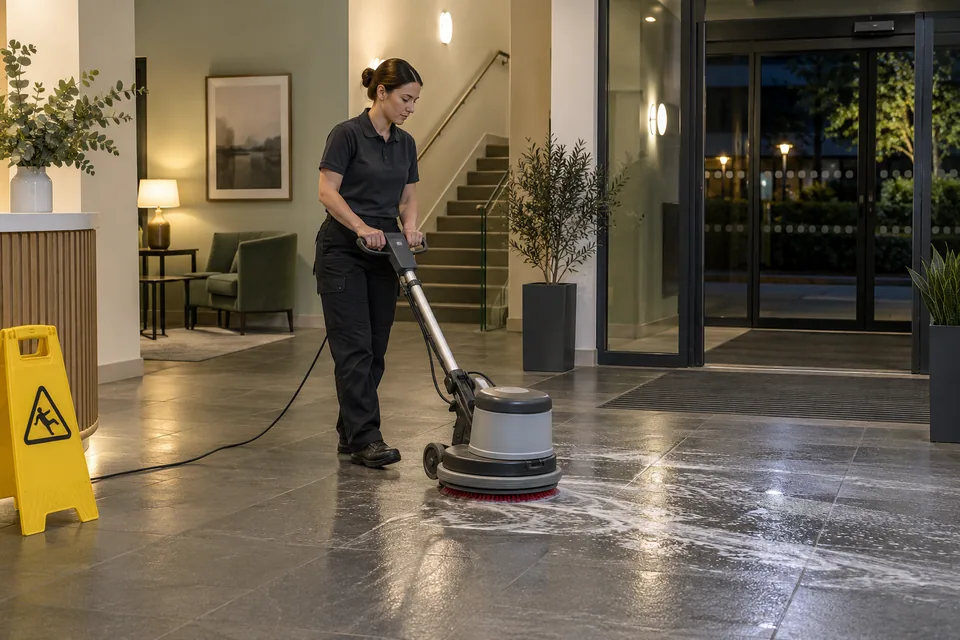
Identify what the routine visit is missing
Walk through the premises and note the areas that need a different level of attention: grime around fixtures, soil along edges, accessible vents or accumulated residue in shared facilities. Explain how long the site has been used and its recent cleaning history. Photographs can show scale and condition, but a broad request for a deep clean still needs a defined list of tasks.
A one-off detailed visit can be useful before a reopening, after an unusually busy period or when establishing a new maintenance arrangement. It does not automatically cover every item in the building. Equipment internals, high-level structures and areas containing hazardous materials need separate assessment. Be clear about the business activity so the scope is not confused with a specialist industrial or clinical service.
Divide the premises into workable zones
Group the work around facilities and materials rather than treating the site as one surface. Staff kitchens, washrooms, reception areas, corridors and working rooms have different practical needs. State which are empty and which remain occupied. Agree the priority order if not every zone can be released at the same time, particularly where the business needs an accessible route throughout.
Detailed cleaning may involve more handling around edges and fittings than a maintenance visit. Explain what may be moved and who will remove stock, paperwork or personal items. Heavy furniture, fixed equipment and machinery should not be shifted on assumption. A clear preparation list protects the working allowance from being consumed by unplanned clearance or access problems.
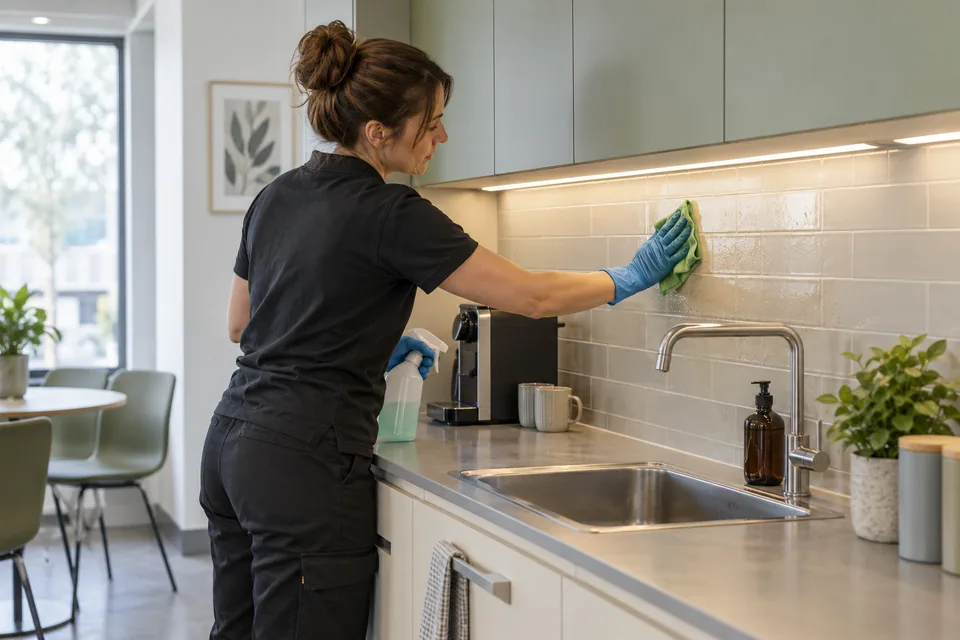
Choose treatment for the surface and the residue
Grease, mineral deposits, tracked-in soil and old product residue are different cleaning problems. Identify sensitive finishes and keep relevant care instructions available. Products, moisture and agitation need to suit the material and its condition. An appropriate test can be useful where a coating or previous treatment is uncertain, rather than escalating automatically to a harsher approach.
Cleaning has limits where the issue is etched stone, worn flooring, damaged paint or staining within a material. Those should be distinguished from removable deposits before expectations are set. Repairs, resealing and repainting are not automatic components of detailed cleaning. If an area cannot tolerate the proposed treatment, the scope or method needs to be reviewed rather than forcing a uniform result.
Plan time for preparation and reopening
A closed or partly vacant site can provide more access, but availability still needs confirmation. Explain opening times, deliveries, noise-sensitive activity and the reopening deadline. Treatment and drying can extend beyond the active cleaning period. A quote should consider the whole window in which the affected zone must remain available, not just the time people are visibly working.
Discuss ventilation, the movement of equipment and the separation of wet areas from visitors and staff. Some surfaces may need to remain undisturbed before furniture or floor coverings return. Ask for instructions specific to the treatment and actual conditions. An event or handover deadline should be raised early enough to judge feasibility, without compressing necessary checks or drying into an unsuitable interval.

Add specialist care only where it is needed
For textile flooring, commercial carpet cleaning provides a separate assessment of fibres, stains and drying. Reception chairs and other suitable seating can be discussed through commercial upholstery cleaning. These are not implied by a general deep-clean label. Specify the items and their condition so the method and timing can be properly considered.
For extensive floor treatment, see hard floor cleaning. If the main problem is construction dust after refurbishment, commercial after builders cleaning is the more appropriate brief. That distinction helps identify hazards and sequencing specific to the site rather than treating renovation residue as ordinary workplace dirt.
Use the reset to establish a realistic next routine
The workload depends on area, condition, surfaces, obstacles, facilities and access. A small but heavily used washroom can take more detailed attention than a larger empty meeting room. Share the priority list and ask how additional findings will be handled. Any extra task should be discussed before it is added, especially where it changes method, cost or reopening time.
At completion, review the agreed areas and identify remaining marks, damage or inaccessible sections. For ongoing commercial cleaning, use those observations to set maintenance priorities and sensible periodic tasks. A deep clean can address accumulated removable dirt; it does not guarantee that every surface looks new or prevent normal use from creating further work after the premises reopens.
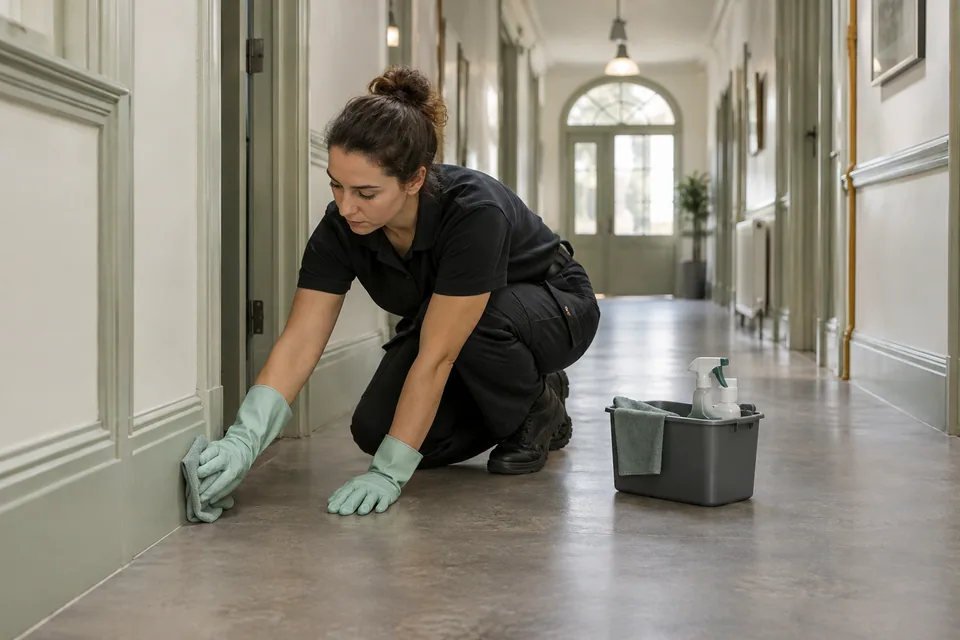
BEFORE YOU ARRANGE THE VISIT
Questions about commercial deep cleaning.
How is commercial deep cleaning different from maintenance?
It reserves time for specified build-up and detailed areas beyond the routine visit. The actual tasks still need agreement; the term does not include every surface or specialist process in the premises.
Can the business remain open during a deep clean?
It depends on the zones, access routes and proposed treatment. Some work can be phased, while other areas need to be released and kept clear through treatment or drying.
Is machinery internally cleaned as part of the service?
Do not assume so. Machinery, process equipment and sensitive devices need a specific suitable arrangement, with their operating and safety requirements identified before any cleaning is agreed.
Will a deep clean remove wear on commercial floors?
Wear, scratches and damaged protective finishes are different from removable dirt. They may need restoration or repair rather than a stronger cleaning product or more agitation.
Should stock be removed before detailed work?
Explain where stock obstructs surfaces and agree who will clear it. The plan should define safe movement, protected items and areas that will remain inaccessible rather than relying on improvised handling.
What affects the time before rooms can reopen?
Preparation, treatment, material, ventilation, drying and furniture return all matter. Provide the reopening deadline when enquiring and follow instructions for the actual surfaces treated.
A PRACTICAL NEXT STEP
Commercial Deep Cleaning.
Start with the details.
Call with your postcode, the areas or items involved and a preferred appointment. Discuss the scope and quote before arranging the visit.