

A CLEANING BRIEF BUILT AROUND YOUR PREMISES
Commercial Cleaning Watford
A public reception, staff kitchen and customer-facing floor do not need the same attention. Commercial cleaning in Watford should reflect what happens in the premises, who uses them and when areas can be released for work. Describe the business setting and practical requirements before agreeing a maintenance visit or a larger clean.
Scope organised around site activity
Public and staff access considered
Specialist requirements identified early
Begin with the site use and its boundaries
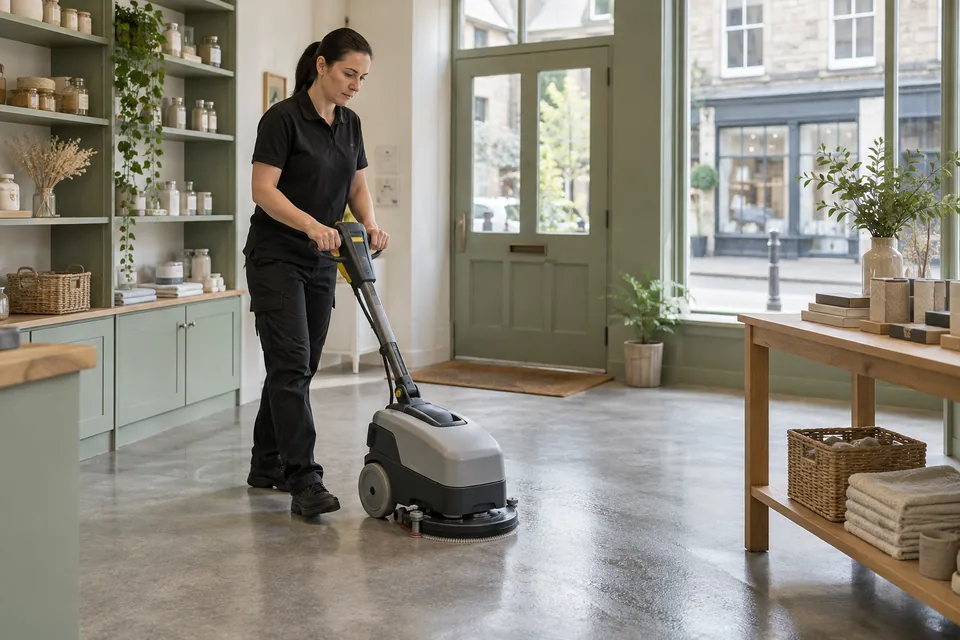
Explain the type of premises, approximate floor area and which zones form part of the request. Offices, showrooms, shared facilities and customer spaces can have very different traffic patterns. Include storage rooms and back-of-house areas if they need attention. A broad commercial label is not enough to establish what materials, restrictions or working arrangements are involved.
Some environments have specialist requirements beyond ordinary commercial surface cleaning. Tell us about regulated activities, hazardous substances, sensitive equipment or particular operating rules before any work is quoted. Clinical decontamination, industrial process cleaning and hazardous waste should not be assumed to be available under a general premises service. The scope needs to match the actual setting rather than imply an unsupported capability.
Choose maintenance, a single visit or an initial reset
A regular routine is suited to predictable day-to-day use, while a one-off appointment can address a defined event or period of accumulated dirt. Explain why the clean is needed now and the condition that will be present on arrival. A recently vacated building or one returning to use may need a more detailed initial brief before maintenance visits are practical.
For accumulated build-up, compare commercial deep cleaning. If you need an ongoing documented arrangement, contract cleaning focuses on frequency, responsibilities and scope review. These are different planning decisions: a recurring time slot does not automatically include all periodic detail work, and a large one-off clean does not establish a future maintenance agreement.
Translate expectations into areas and tasks
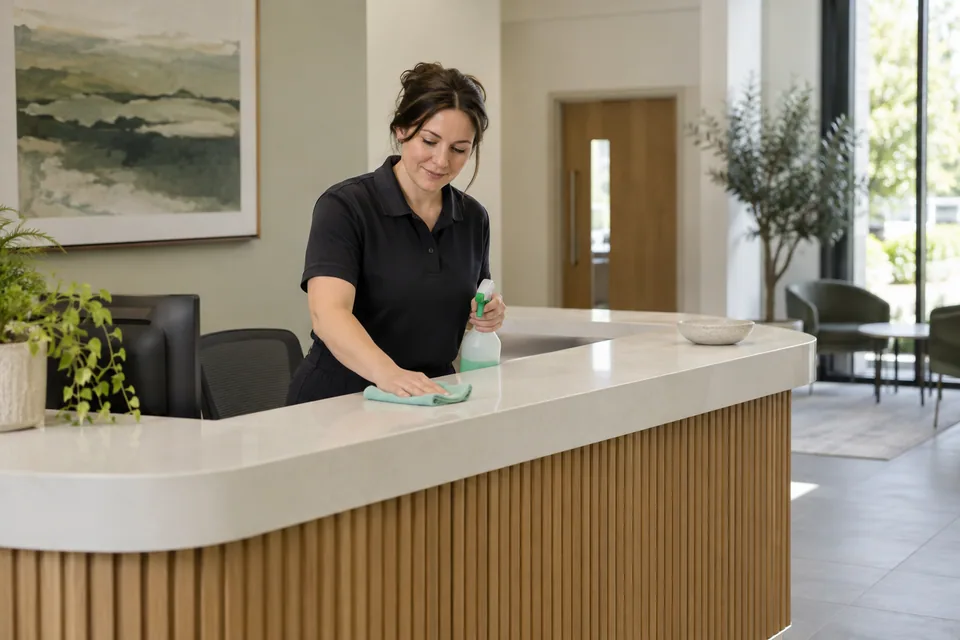
List the accessible surfaces, floors, facilities and waste points to be attended, with a priority order if time is limited. State what may be moved and what must remain untouched. Counter displays, stock and customer belongings should not be handled without a clear agreement. An accurate brief makes it possible to judge completion by the work requested rather than an undefined impression of the whole building.
Material choices also matter. Stone entrances, coated counters, wooden furniture and resilient floors need compatible products and moisture control. Provide any manufacturer restrictions or site instructions. A suitable test may be needed where the finish is uncertain. Cleaning cannot reverse every scratch, stain or worn coating, so permanent damage should be recorded separately from removable dirt.
Work around visitors, staff and deliveries
Describe opening hours, busy periods and the times when rooms or routes can be closed temporarily. A public-facing premises may need a different sequence from an empty site. Discuss sign-in, security, keys, alarms and the responsible contact. Appointment availability should be confirmed rather than assumed from the business’s preferred working window.
Wet areas, cables and equipment need practical separation from people moving through the premises. Explain accessible routes, delivery times and any space that must stay in use. A phased approach may be more useful than treating the entire floor at once. Access restrictions can affect both the duration and feasible method, so they belong in the quotation rather than as a surprise on arrival.

Keep specialist surfaces in their own scope
Textile floors can need a periodic treatment beyond routine vacuuming. Commercial carpet cleaning allows method, stain assessment and return-to-use time to be discussed separately. For tiled, stone or resilient flooring, hard floor cleaning addresses material and finish requirements. Coordinating the visits can be sensible, while retaining a clear brief for each surface.
High-level work, exterior access, machinery, specialist waste, repairs and substantial furniture movement must be identified explicitly. A general cleaning visit should not expand into unassessed tasks because they happen to be in the same building. Ask what is included, what needs another arrangement and how additional requests would be approved during the appointment.
Price the practical workload and review the outcome
Area alone does not explain the workload. Occupancy, traffic, facilities, soil levels, surface types, working hours and the movement of equipment all influence the time required. Share photographs and a task list, and explain any fixed handover or reopening deadline. Ask for an estimate based on those details, including any setup or restricted-access time that affects the appointment.
Decide who will inspect or receive the work and how outstanding items will be communicated. Damage, inaccessible spaces and tasks outside the quote should be distinguished from missed agreed work. For a recurring arrangement, changes in site use should prompt a review. The result is a practical cleaning plan that can adapt to the business without relying on invented certifications, blanket guarantees or a single method for every premises.

BEFORE YOU ARRANGE THE VISIT
Questions about commercial cleaning.
What types of premises fall within a commercial enquiry?
Describe the actual setting, activity and facilities so suitability can be assessed. The commercial label does not establish that clinical, hazardous or industrial process cleaning is included.
Can a business request just one cleaning visit?
A defined one-off scope can be discussed alongside ongoing needs. Explain the occasion, current condition and available window so the work can be quoted on its own terms.
Do we need to close the entire premises?
It depends on access, the method and how people use the space. Some work may be phased, while other tasks require a clear area and a period before normal use resumes.
Are cleaning products suitable for all commercial finishes?
Compatibility depends on the material, coating and site instructions. Share care restrictions and known damage so products and moisture are not chosen solely on the level of dirt.
Does general cleaning cover specialist waste?
Specialist or hazardous waste needs a specific arrangement. Identify its presence before booking; ordinary bin emptying should not be assumed to include regulated or unusual disposal tasks.
How can we avoid an unclear cleaning quotation?
List areas, tasks, frequency, exclusions and access conditions, with a named approver for changes. A practical written brief is more useful than asking for an undefined clean throughout.
A PRACTICAL NEXT STEP
Commercial Cleaning.
Start with the details.
Call with your postcode, the areas or items involved and a preferred appointment. Discuss the scope and quote before arranging the visit.