

FROM COMPLETED WORKS TO A USABLE PREMISES
Commercial After Builders Cleaning Watford
A fit-out can leave fine dust far beyond the area where the work took place. Commercial after builders cleaning in Watford needs a clear handover from the contractors, with the site safe and ready for the agreed cleaning stage. Explain the works, remaining materials and reopening plan before setting a final clean date.
Construction work and cleaning stages separated
Fine dust handled with suitable methods
New finishes and access restrictions identified
Establish what the builders are handing over
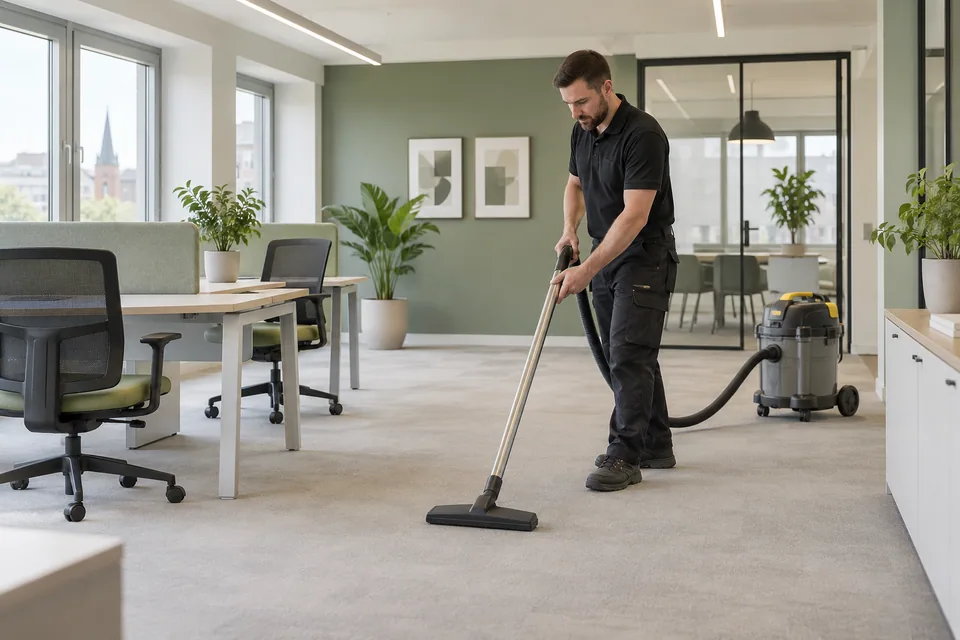
Describe the refurbishment, installation or fit-out and the approximate areas affected. Dust can travel through routes and adjacent rooms, so include more than the immediate works footprint where relevant. Explain whether the site is vacant, partly operating or awaiting stock and furniture. The brief needs to identify the condition that will be present when the cleaner arrives, not the condition hoped for after further building work.
Contractors should complete and make safe the relevant work before the cleaning stage begins. Tools, offcuts, rubble and hazardous materials need appropriate arrangements. A cleaning visit should not be treated as the route for disposing of every construction leftover. If the site is still active, discuss a staged scope rather than calling an unfinished works area ready for its final clean.
Distinguish initial dust removal from final presentation
Some projects need an initial clean before fixtures or stock are installed and a separate final visit afterwards. These are different stages with different access and detail. State which you are requesting and what other people will do between them. Continued drilling, sanding or deliveries can create more dust after cleaning, so the sequence needs to be realistic.
A last-minute inspection deadline does not make fresh dust stop settling or change an unfinished site into an accessible one. Explain the reopening date early enough to assess feasibility. Agree how a change in the building programme affects the appointment. A return visit should be planned explicitly rather than assumed whenever later works disturb already cleaned surfaces.
Control fine dust without treating it as ordinary soil
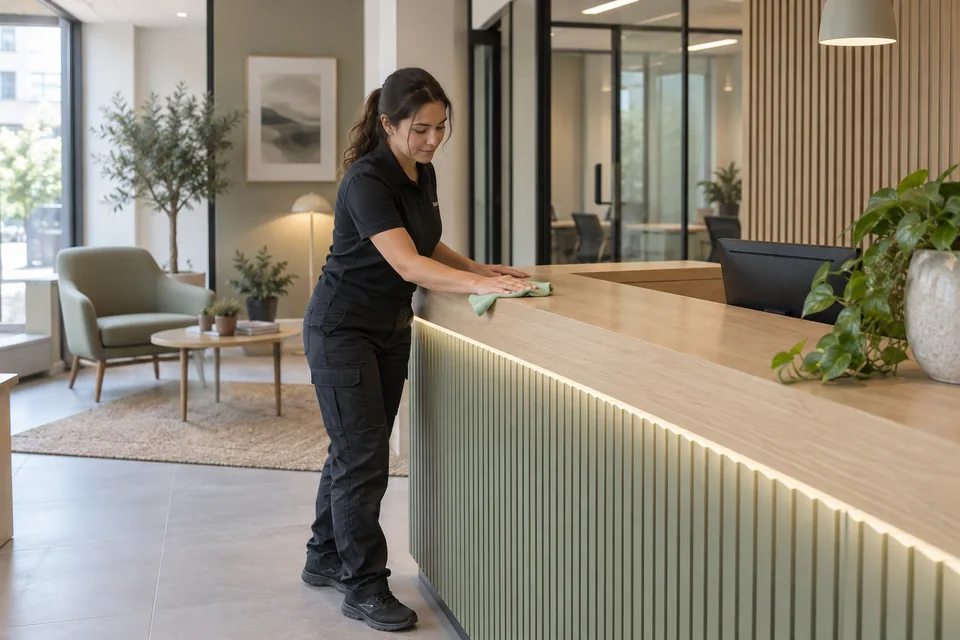
Construction dust needs an appropriate assessment and suitable collection methods for the work involved. Dry sweeping or blowing dust around can simply redistribute it and may create exposure concerns. Tell us what materials were worked on and any site information relevant to the residue. Unknown hazardous dust, asbestos concerns or specialist contamination require the appropriate specialist route, not an ordinary cleaning assumption.
Accessible ledges, fittings, edges and surfaces may need attention in a sensible sequence, with floors addressed as part of that plan. Explain high areas and concealed spaces rather than expecting them to be reached automatically. Ventilation systems and equipment internals need their own authorised specialist arrangements. General surface cleaning does not certify that every hidden area of the building is dust-free.
Protect new materials from unsuitable treatment
Fresh coatings, polished surfaces, stone, timber, metal and glass can have particular care and curing requirements. Provide installer or manufacturer guidance, including when the finish may safely be cleaned. A newly installed surface can be vulnerable even when it looks robust. The method should be chosen for its material and condition, with a suitable test where uncertainty remains.
Paint flecks, adhesive residue, protective films and grout haze are not interchangeable tasks. Some deposits need separate assessment, and an abrasive or scraper can damage a finish. Record defects and scratches before treatment so they are not confused with removable residue. Cleaning cannot repair poor installation or guarantee that every building mark can be removed without risk.
Arrange specialist areas with their own limits
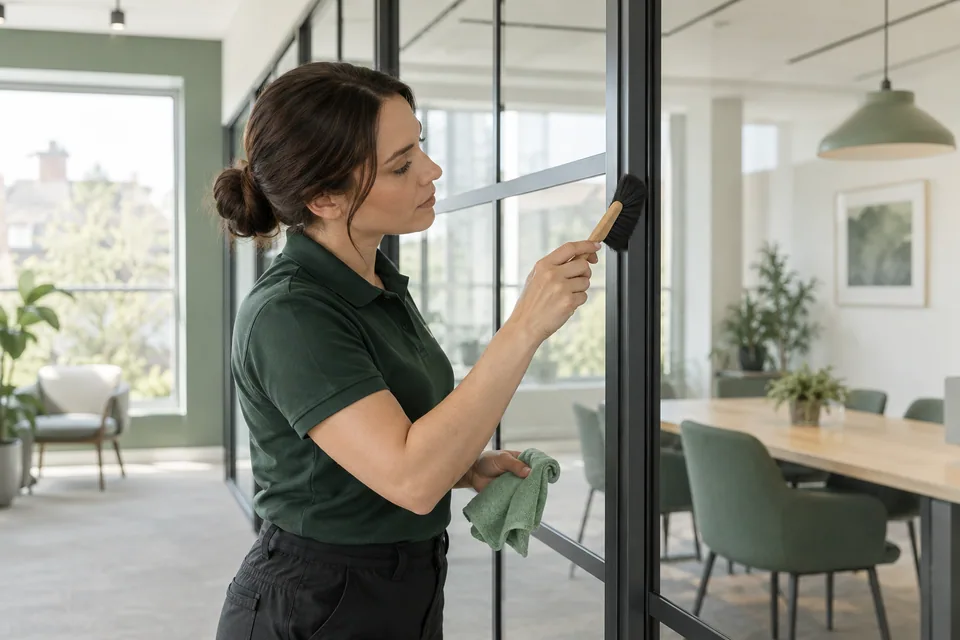
For panes and partitions, commercial window cleaning defines glazing faces and access. Construction deposits on glass should be declared rather than hidden inside an ordinary window request. For floor materials, hard floor cleaning allows the finish, joints and moisture requirements to be discussed. Both need coordination with the installation programme and the site’s availability.
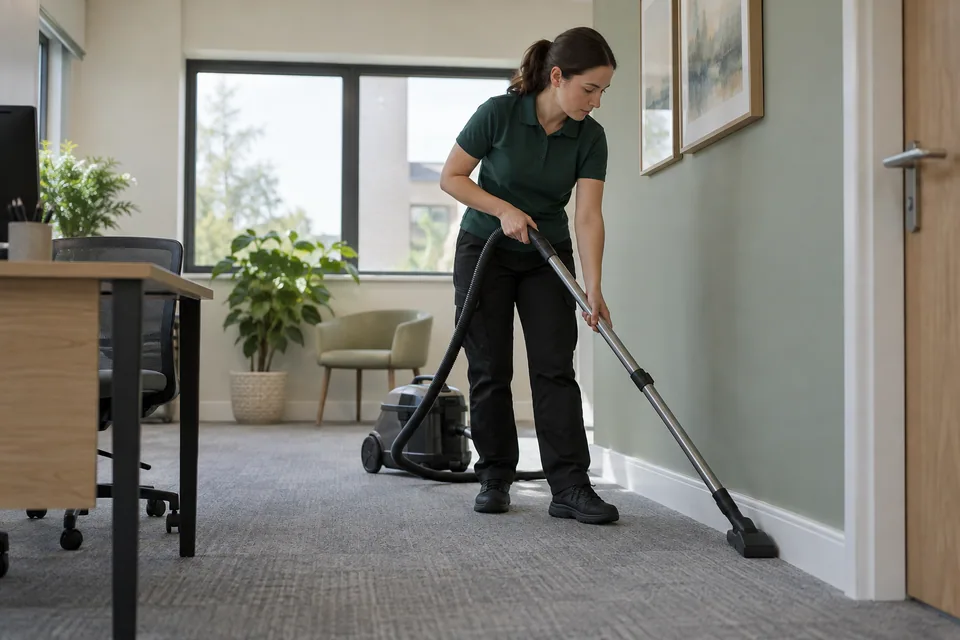
If existing textile flooring has been exposed during works, consider commercial carpet cleaning after the relevant dust and site conditions have been assessed. Wet treatment is not a substitute for appropriate handling of hazardous residue. If the issue is ordinary accumulated workplace grime rather than building works, commercial deep cleaning provides a more suitable starting brief.
Quote for the actual stage and release conditions
Area, extent of dust, material types, detailed residue, height, obstacles and access all influence the time. State whether water and power are available and explain loading routes, parking, lift restrictions and site sign-in requirements. Identify the person who can approve changes. A photograph set and list of works make the estimate more useful than floor area alone.
At completion, compare the agreed cleaning areas and note inaccessible zones, unfinished work, defects or deposits that cannot safely be treated. Establish who receives the report before reopening. A final clean supports preparation for occupation, but does not replace construction sign-off, safety checks or the owner’s decision that the premises is ready. Continued works should trigger a review of the cleaning plan rather than an unsupported promise of a permanent final result.
BEFORE YOU ARRANGE THE VISIT
Questions about commercial after builders cleaning.
Can the final clean take place while sanding continues?
Ongoing dusty work can undermine completed cleaning and affect exposure and access. Discuss a staged appointment or wait until the relevant works are completed and the site is appropriately released.
Does after-builders cleaning include rubble removal?
Rubble, offcuts and hazardous materials need suitable separate arrangements. Define any ordinary cleaning waste in the scope rather than treating the visit as general construction-site clearance.
Will all paint and adhesive marks be removed?
Deposits and finishes need assessment. Some can be treated, while others risk surface damage or are permanent. A blanket promise is inappropriate, particularly on newly installed materials.
Should new floors be cleaned immediately after installation?
Follow the relevant installer and manufacturer guidance, including curing or moisture restrictions. Explain the installation date and finish before agreeing any cleaning method or appointment.
Are air-conditioning internals part of the dust clean?
System internals and specialist equipment need their own authorised arrangement. Cleaning accessible room surfaces does not establish that concealed plant or ventilation components have been serviced.
How many post-works visits will our project need?
That depends on the programme, installation stages and later activity. An initial dust clean and a final presentation visit may be separate tasks; confirm the actual sequence and scope.
A PRACTICAL NEXT STEP
Commercial After Builders Cleaning.
Start with the details.
Call with your postcode, the areas or items involved and a preferred appointment. Discuss the scope and quote before arranging the visit.