

LOOK BEYOND THE FRONT FABRIC
Curtains Cleaning Watford
Curtains combine a visible fabric with headings, seams and sometimes a very different lining. Curtains cleaning in Watford therefore starts with the whole construction and its care instructions. Explain the drop, width, hanging arrangement and condition so the method, access and handling can be considered before an appointment is agreed.
Face fabric and lining assessed together
Removal and re-hanging arrangements made explicit
Access and drying matched to the construction

Identify the fabric, lining and condition
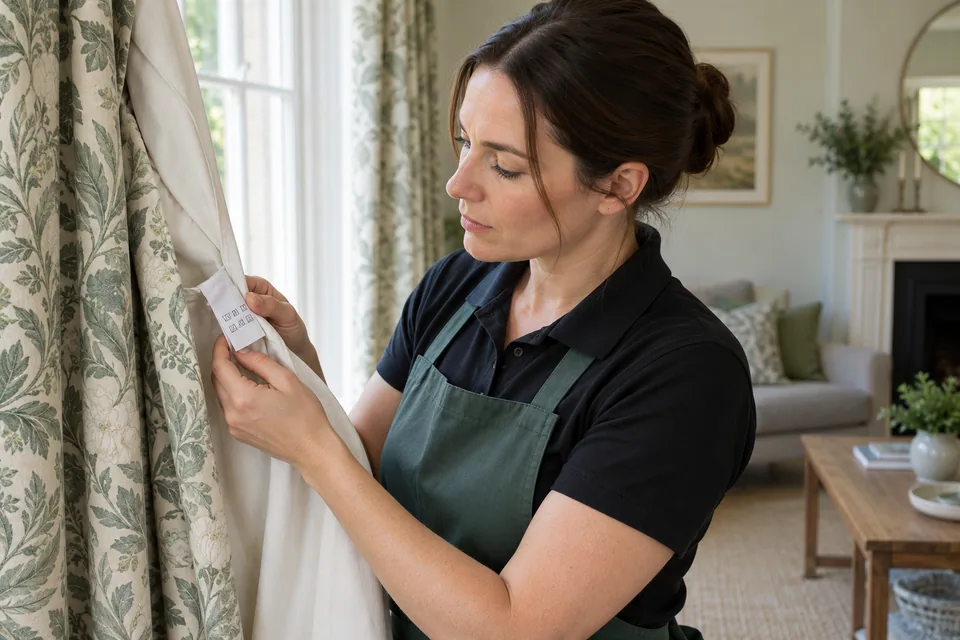
Keep care labels and the maker’s instructions available, including any information about blackout or thermal linings. A curtain can contain materials that respond differently to moisture or heat, even when the front fabric appears straightforward. Tell us about interlining, decorative trims, weighted hems and previous alterations. These details can affect treatment and handling as much as the main fabric’s fibre type.
Check for existing weakness, especially near windows where sunlight and use may have affected the material. Explain fading, worn edges, old water marks or areas that have already torn. Cleaning cannot restore lost colour or replace weakened fibres. A fragile curtain may need a different care route rather than being subjected to the same method as a newer, stable pair.
Decide what can be done on site
Some curtains may be assessed for appropriate on-site care, while others need a separate specialist or off-site arrangement. Do not assume all fabrics can be treated while hanging, and do not assume removal is included. Ask which approach is proposed for your particular construction and what limits apply. The answer should follow the label, condition and practical access available.
If removal is required, agree who will take the curtains down, how hooks or fittings will be handled and who will re-hang them. Transport, collection and return also need a clear arrangement. For heavy or high curtains, safe access is a separate consideration. A household chair or improvised platform should not be treated as an acceptable way to reach a heading.
Dust removal and further treatment serve different purposes
Appropriate vacuuming with a suitable soft tool may address loose dust on stable fabric, headings and reachable folds. Further treatment is a different decision. A stained area, an odour or accumulated soil may need an approach that the curtain’s construction will not tolerate. Explain the concern and ask what can be achieved without putting the material at unnecessary risk.
Moisture, agitation and heat can affect different fabrics and linings in different ways. Shrinkage, colour movement and coating damage are reasons to follow the care guidance rather than assuming steam is a universal solution. A discreet test may be needed where appropriate. No treatment should be represented as restoring every old mark, reversing fading or correcting a damaged blackout layer.
Prepare the window area and explain the fittings
Clear the windowsill and the floor beneath the curtains, and move small fragile objects out of the working area. Explain the track or pole, any motorised controls and any loose fittings. The cleaner needs to know whether a curtain can be moved freely and whether there are parts that should not be handled. Repairs to a track, motor or fixing are not ordinary fabric-cleaning tasks.
Give an accurate description of access: drop height, stairwell windows, furniture beneath the heading and the space available around the fabric. Keep children and pets away from equipment and hanging cords. If a room must remain occupied or private during the visit, mention that restriction. Access limitations can change what is practical even where the fabric itself is suitable for the proposed care.

Think through drying and re-hanging before booking
The active treatment time is only part of the plan. Heavier curtains, multiple layers and limited airflow can require a longer drying or handling period than a light unlined pair. Ask for an estimate based on the actual items, and confirm whether the room or window needs to remain available afterwards. Do not assume the fabric can immediately be folded tightly or returned to normal use.
Follow advice about positioning, ventilation and re-hanging. If the curtains are handled off site, confirm the expected return arrangements rather than planning around an assumed next-day turnaround. Products and methods need to respect the construction throughout, including any coating or lining. Avoid adding an unplanned home treatment while waiting for the appointment, as it can alter the material or the appearance of a stain.
Quote for the pairs and coordinate the room
Describe the number of pairs, approximate width and drop, lining type, access height and condition. Mention heavy decorative features or unusual fittings. Ask whether inspection, removal, transport and re-hanging are included or separate. A quote based only on the number of windows can miss substantial differences between a small light pair and a long, heavily interlined set.
For slats, rollers and vertical panels, see blinds cleaning instead of treating them as curtains. Nearby fabric seating can be discussed through upholstery cleaning, while floor textiles need the separate assessment described under rug cleaning. A wider spring cleaning plan can coordinate accessible dusting around the window without assuming it includes specialist fabric care.

BEFORE YOU ARRANGE THE VISIT
Questions about curtains cleaning.
Can blackout curtains be treated like an unlined fabric pair?
Not automatically. A blackout layer or coating can have different sensitivities from the face fabric. Share the care label and construction details before any wet, heat or other treatment is proposed.
Are taking down and re-hanging included?
Confirm those tasks explicitly. The proposed cleaning arrangement may be on site or involve separate handling, and heavy or high curtains can require an additional safe-access plan.
Will cleaning remove sunlight fading near the window?
Cleaning cannot replace colour lost through fading or repair fibres weakened by exposure. Explain those areas before treatment so they are distinguished from removable dust or suitable surface soil.
Should I remove hooks and weights beforehand?
Ask for instructions for the agreed method rather than dismantling the item in advance. Fittings, hems and decorative details can affect handling, and their removal or refitting should be planned clearly.
Can curtains stay closed while they dry?
Follow the advice for the actual fabric, lining and method. Tight folds or restricted airflow may not suit the proposed drying arrangement, so discuss how the room and window will remain available.
A PRACTICAL NEXT STEP
Curtains Cleaning.
Start with the details.
Call with your postcode, the areas or items involved and a preferred appointment. Discuss the scope and quote before arranging the visit.