

THE SEAT YOUR HOUSEHOLD USES MOST
Sofa Cleaning Watford
Sofa arms, seat fronts and cushion joins collect different kinds of everyday dirt. Planning sofa cleaning in Watford means looking at those contact areas alongside the fabric and construction, not treating the whole item as one washable cover. Tell us the size, layout and condition of the sofa you would like assessed.
Seat layout and cushion construction recorded
Contact marks considered separately from wear
Furniture use planned around drying advice
Look at the contact areas before requesting a treatment
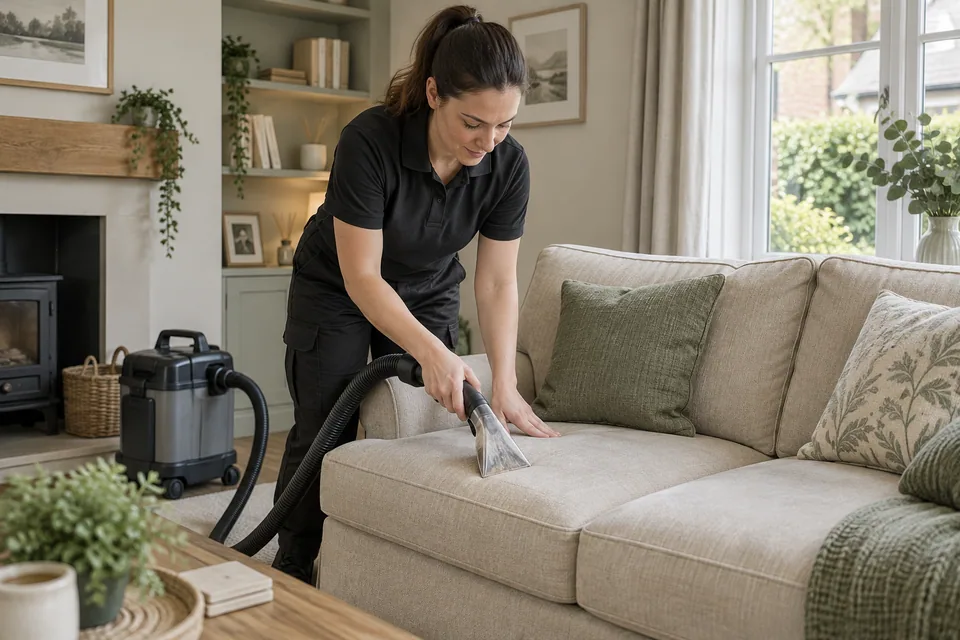
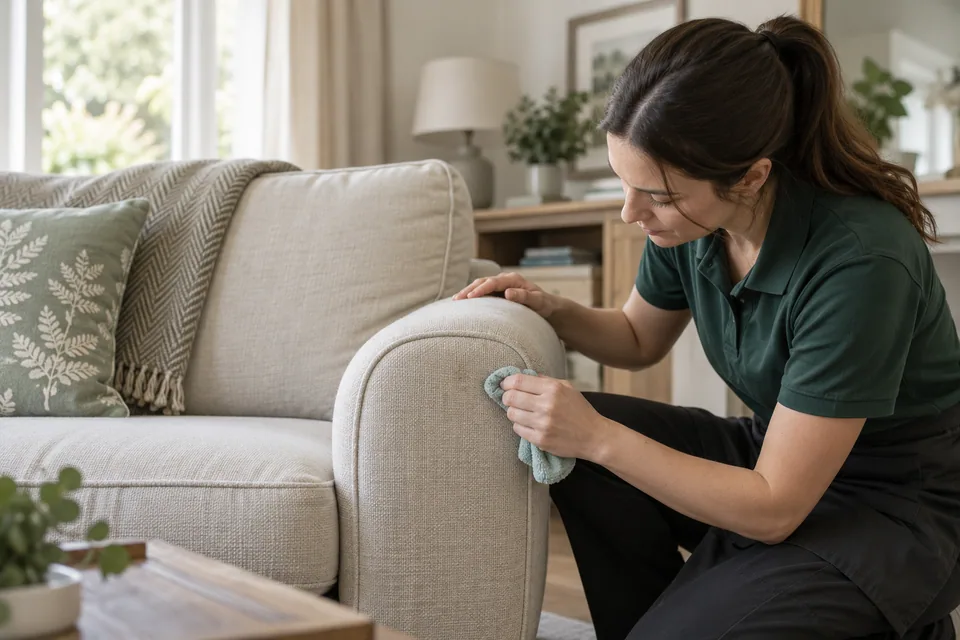
A sofa can look uneven because different parts receive different use. Arms may collect hand-contact soil, seat fronts may show friction and the back may be affected by hair or products transferred from clothing. Explain the areas that concern you rather than requesting a general freshen-up without describing the marks. An inspection can then separate likely dirt from a permanent change in the fabric.
Tell us about spills and previous cleaning attempts, including products used on one small patch. A home treatment can leave a ring or residue that affects the next decision. If the sofa has been damp, exposed to repeated pet accidents or stored in an unsuitable place, mention that history. The cause of an odour or mark matters as much as its appearance.
Covers, cushions and frames all influence the approach
Keep the care label and any maker’s instructions available. A zip or removable cushion does not establish that a cover can be washed or treated separately. Fibres, backing and trims may respond differently, while the filling beneath can affect moisture tolerance and drying. Explain whether cushions are fixed, loose, reversible or attached to a reclining mechanism.
Corner units, chaise sections and sofa beds have additional panels and joints that affect the workload. Describe the shape rather than counting the item simply as one sofa. Point out weak seams, damaged piping and worn areas before work. Decorative buttons, timber feet and metal fittings also need consideration; a fabric cleaning appointment is not a repair service for those components.
Match cleaning and spotting to the actual fabric
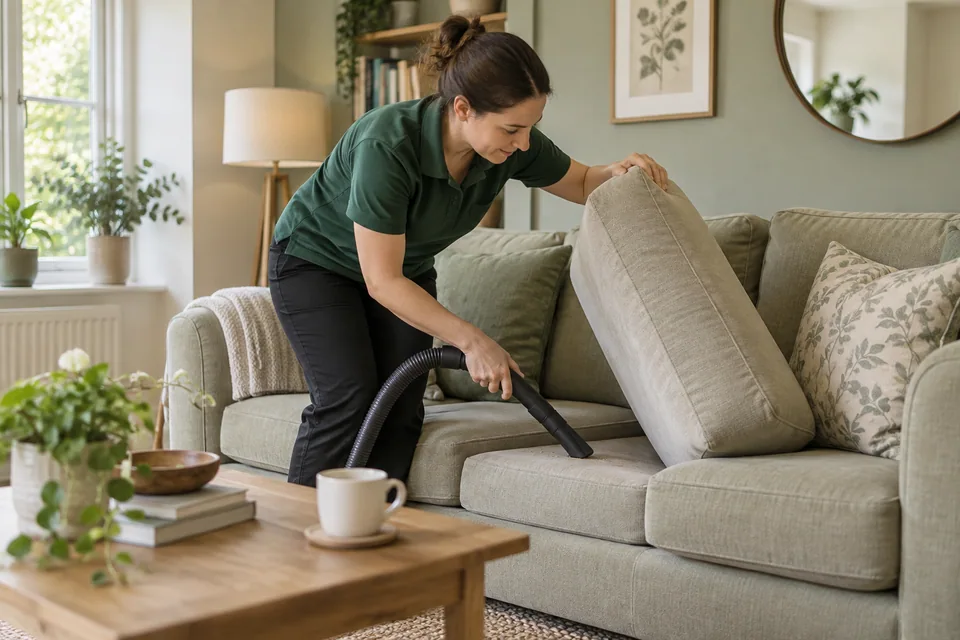
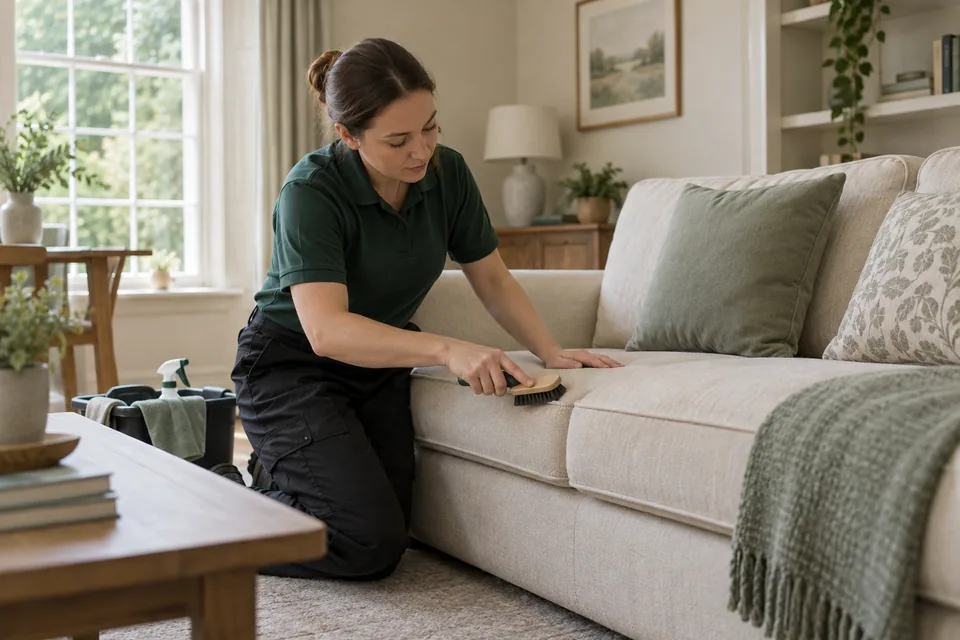
Appropriate preparation may include vacuuming loose debris from seams, the seat platform and accessible surfaces. The next stage depends on the material and the soil. Controlled extraction or a lower-moisture method may be proposed where suitable, with discreet testing as needed. Ask why the approach fits your particular sofa instead of assuming one technique is best for every fabric.
Individual marks may need separate attention, but there is no reliable promise that every spill can be removed. Dye changes, wear, sunlight damage and some stains can remain after appropriate cleaning. Ask which areas are likely to improve and which are outside the realistic scope. Repeatedly wetting a stubborn patch or adding stronger products without assessment can create a different problem rather than solve the original one.
Make the room and sofa accessible
Remove throws, loose items and personal belongings before the visit. Clear the route around the sofa and put fragile objects safely away. Agree which furniture can be moved; a large corner unit, recliner or heavy sofa bed should not be assumed to be lifted or dismantled. Explain sockets, narrow entrances, stairs and parking arrangements that affect equipment access.
Keep pets and children away from the work area, and identify any damaged mechanism or loose part. If the sofa converts into a bed, describe its arrangement beforehand rather than asking the cleaner to discover how it works during treatment. Different sleeping surfaces may need their own assessment. Avoid taking apart a frame or forcing a cushion cover off simply to make the appointment appear easier.
Leave the furniture available for drying
The active work and the return-to-use time are different. A compact sofa can involve fewer panels than a large sectional, but fabric, filling, soiling and the method still determine the treatment allowance. Drying may continue for several hours afterwards and can take longer in unfavourable conditions. Ask for guidance for the actual item and the ventilation available in the room.
Follow advice about replacing cushions, using the seats and putting throws back. Covers can trap moisture if returned too early. Odours involving the filling or deeper contamination may not be resolved by treating the outer fabric alone. If a concern remains, ask how it should be assessed; do not assume a further treatment or a permanent odour-removal guarantee is part of the original booking.
Compare the item, the quote and related furniture care
The quote should reflect dimensions, seat count, chaise or corner sections, cushions, access and any specialist spotting. Explain unusual construction and the condition of the most affected areas. Ask what is included and how extra work would be agreed if inspection changes the proposed approach. A single headline price for a sofa does not necessarily describe every configuration or fabric.
For armchairs, dining seats and other fabric pieces, see upholstery cleaning. A leather sofa requires the finish-led assessment described under leather sofa cleaning. If floor textiles are also part of the room plan, discuss carpet cleaning and rug cleaning separately, so furniture movement and drying do not conflict with the treatment of another surface.
BEFORE YOU ARRANGE THE VISIT
Questions about sofa cleaning.
How should I describe a corner sofa for a quote?
Give the layout, approximate dimensions, seat count and any chaise, recliner or sofa-bed section. Photographs can help explain the panels and access, but the fabric and condition still need assessment.
Can removable sofa covers be washed separately?
Only follow the maker’s guidance for the particular cover. A zip does not guarantee washability, and shrinking, colour change or difficulty refitting can occur if the construction is misunderstood.
Will a worn arm look new after cleaning?
Cleaning can improve suitable soil but cannot replace lost fibres, reverse abrasion or repair a changed finish. Discuss the visible condition before treatment so the expected improvement is realistic.
Does a sofa-bed mattress form part of sofa cleaning?
Identify it separately. The sleeping surface and the sofa upholstery may have different materials and care requirements, and opening or treating a sofa bed needs to be included in the agreed scope.
When can I put a throw back over the seats?
Wait until the relevant surfaces are ready according to the cleaner’s guidance. A throw or closely fitted cushion can restrict drying, so do not cover damp upholstery simply because it feels cooler rather than wet.
A PRACTICAL NEXT STEP
Sofa Cleaning.
Start with the details.
Call with your postcode, the areas or items involved and a preferred appointment. Discuss the scope and quote before arranging the visit.