

CARE FOR THE WHOLE CONSTRUCTION
Rug Cleaning Watford
Pile, backing, edges and fringes can have different care requirements within a single rug. Rug cleaning in Watford considers those parts together before a treatment is chosen. The rug may contain different fibres or dyes within the same piece. Explain what you know about its construction and the marks you want assessed before deciding how and where it should be cleaned.
Construction and colour stability assessed
Fringes and backing treated as part of the item
Handling and drying arrangements discussed
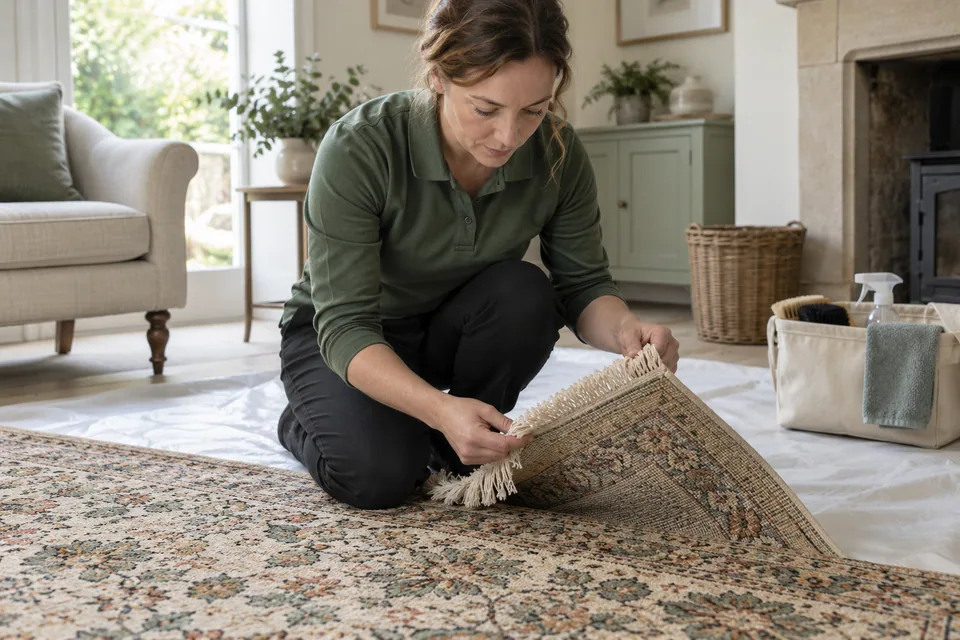
Bring together the label, history and construction
A rug’s appearance does not reliably establish what it is made from. Wool, cotton, synthetic fibres and regenerated-cellulose fibres can occur in different combinations, and the underside can introduce further sensitivities. Keep the care label, purchase information or maker’s guidance available if you have it. For an older or valuable piece, mention its age, repairs and any concerns about weakened areas.
Describe how the rug has been used and what has happened to it. A hallway rug with ground-in grit, a dining rug with a food spill and an item affected by pet accidents present different questions. Explain previous cleaning and any household stain products already applied. This history helps distinguish appropriate cleaning from problems involving permanent colour change, fibre damage or contamination beneath the visible pile.
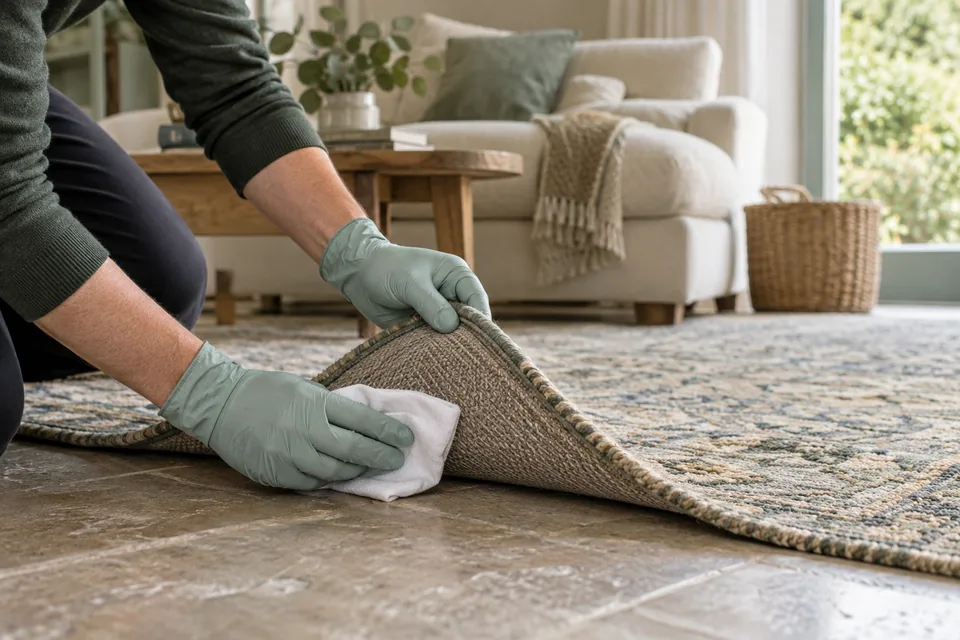
Test colours and check the underside before treatment
Dyes can react differently to moisture and products, particularly where several colours meet. A discreet test may be needed before a method is agreed. The cleaner should also consider the backing, adhesive, stitching and any signs of shrinkage or distortion. Tell us if the rug curls at an edge, sheds unusually or has areas that have already become thin.
No single technique is appropriate simply because the item is called a rug. Colour movement, sensitive fibres and unstable construction can limit what can safely be attempted. Ask for those limits to be explained. Valuable, fragile or uncertain pieces may need specialist assessment or a different handling arrangement rather than an ordinary on-site household treatment.
Choose the method and location together
The proposed approach should follow the construction and condition. It may involve controlled surface work, appropriate extraction or another method suited to the item. Full immersion should never be assumed from the service name. Equally, a light surface clean may not address contamination deeper in a rug. Discuss the aim of the treatment and what the method can realistically achieve.
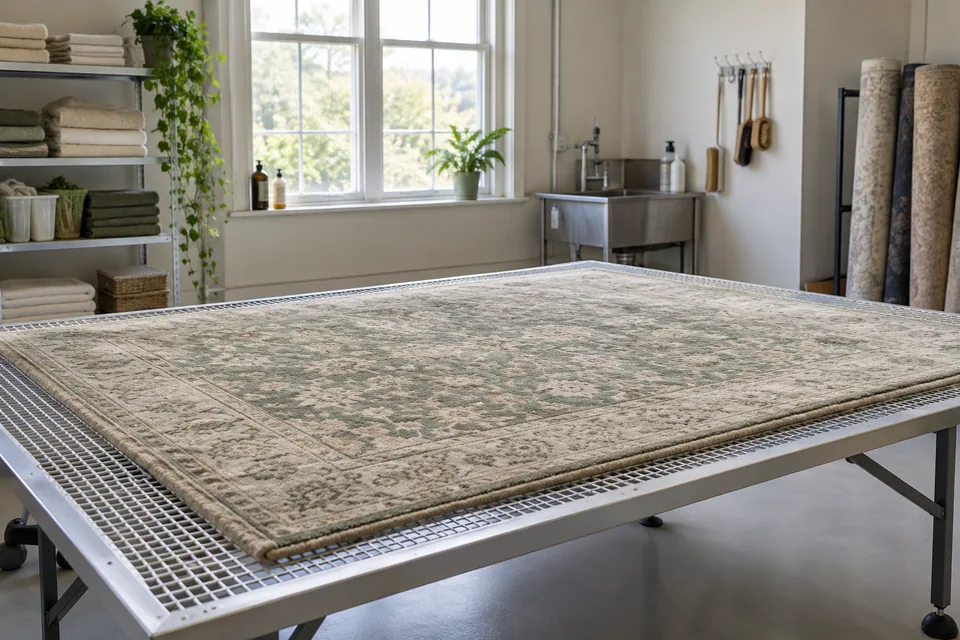
Ask whether the arrangement is on-site or involves collection and return. If the rug will remain in the property, the floor beneath it needs protection and suitable working space must be available. If it is moved elsewhere, confirm handling, transport and return arrangements. Size, weight and access through stairs or narrow entrances can affect the plan as much as the visible marks.
Fringes, pile direction and backing change the detail
Fringes may be part of the foundation or attached separately, and they can be more vulnerable than the main pile. Point out fraying, loose stitching and repairs. A cleaning appointment is not automatically a fringe-repair or reweaving service. The edges need careful handling, particularly where the item has already lost strength through use, age or previous treatment.
Pile appearance can also be influenced by wear, shading or the way fibres lie. A dark area is not always a removable stain. Ask what can be improved through cleaning and what is a physical characteristic of the rug. Where a backing or adhesive is sensitive to moisture, the working method and drying support become especially important.
| What to identify | Why it matters |
|---|---|
| Mixed fibres or uncertain label | Different parts may respond differently to the same treatment. |
| Multiple strong colours | Colour stability needs consideration before moisture is introduced. |
| Fringes, repairs or latex backing | Handling and drying can be limited by the weaker parts. |

Prepare the space and leave room for drying
Remove small furniture and fragile objects from the area, and explain any heavier item resting on the rug. Do not drag a delicate piece out from under a loaded cabinet. Agree what can be moved safely and who will arrange it. Give the rug’s approximate dimensions and describe stairs, parking or other access issues when requesting the quote.
Cleaning time and drying time are separate. Treatment may take part of a visit, while the item can need a much longer protected drying period depending on its construction and method. Ask when it can be walked on, rolled, returned to a floor or placed under furniture. Avoid storing a damp rug rolled up or placing it against a moisture-sensitive surface before it is ready.
Quote for the item and connect related fabric care
Size, fibre, condition, colour risks, fringes, transport and the proposed method all influence the quote. Describe unusual contamination before booking and ask whether any assessment or handling charge applies. Cleaning cannot guarantee the removal of every stain or odour, especially if the underlying material has changed. A clear quotation should distinguish cleaning from repair and specialist remedial work.
For fitted floor coverings, see carpet cleaning rather than assuming the same process applies to the rug. Nearby seating can be assessed through upholstery cleaning or sofa cleaning. If the room also needs a broader reset, deep cleaning can be planned separately so dust removal, access and the rug’s drying arrangements work together.
BEFORE YOU ARRANGE THE VISIT
Questions about rug cleaning.
Can a rug with no care label still be assessed?
Explain what you know about its origin, age and previous treatment. An uncertain fibre or construction may limit the method, and some pieces need specialist assessment before any cleaning is attempted.
Are fringes included in the assessment?
They should be described with the rest of the rug. Loose, fragile or repaired fringes can affect handling and the scope. Cleaning is different from reweaving, replacing or repairing the fringe.
Will the rug be taken away for cleaning?
Confirm the proposed arrangement rather than assuming collection. The item, method and working space determine what is practical, and any collection, transport and return details need to be agreed explicitly.
Can every rug be soaked or immersed?
No. Fibres, dyes, backing and adhesives can all affect moisture tolerance. Ask which method is suitable for the particular construction and what testing or restrictions apply.
When can I roll the rug up again?
Follow drying advice for the actual item. Rolling or storing it while damp can create problems, so do not use a fixed time estimate without checking its condition and the proposed treatment.
A PRACTICAL NEXT STEP
Rug Cleaning.
Start with the details.
Call with your postcode, the areas or items involved and a preferred appointment. Discuss the scope and quote before arranging the visit.