


A shared bathroom can look untidy within hours of a thorough clean. Several people use the same basin, shower and floor, often in a hurry. The answer is a small routine that keeps surfaces accessible and moisture under control between agreed cleaning visits. It should be easy enough for everyone to follow.
Start with the places everybody touches
Look at the basin taps, flush control, door handle and light switch. These surfaces collect fingerprints and splashes quickly. Agree who will wipe them and how often, using a product suitable for the material and following its label. Keep cloths used for the toilet separate from those used for the basin. Do not reuse a visibly dirty cloth just because it is still damp.
The aim is ordinary upkeep, not a claim that a quick wipe disinfects every surface. Product instructions differ in contact time, dilution and rinsing. If someone in the home is ill, follow the relevant public health advice for that situation and product guidance; do not improvise stronger mixtures. Never combine cleaning chemicals.
Give the basin a clear edge
Toothpaste tubes, razors, brushes and cosmetics can make a basin difficult to reach. Give each person a tray, shelf or other suitable place for their belongings. Wipe visible splashes when they happen, then return items after the surface is dry. Do not put electrical devices on a wet counter or spray liquid towards sockets.
Check where water collects around the tap and behind containers. A small pool that reappears after the area is dried may point to a leak or failed seal. Record when it happens and arrange maintenance rather than repeatedly treating it as ordinary soap residue. Cleaning can improve a surface only while the source of recurring moisture is addressed.
Make the shower easy to leave ready
After use, remove loose hair from the drain cover where it is safe and practical to do so. Rinse away visible product residue if the surface care guidance allows, then leave the area to dry. Use an existing extractor fan or window appropriately. Avoid blocking vents with towels or storage. A room that stays damp needs attention to ventilation or a possible building problem, not a stronger cleaning spray.
Store shampoo and soap so the tray or ledge underneath can be reached. Do not leave loose bottles where they could fall. If tiles, grout or a screen need periodic detailed attention, make those areas explicit in your domestic cleaning priorities. A recurring visit can maintain accessible surfaces, but it cannot repair broken grout or a failing seal.
Keep the floor safe for the next person
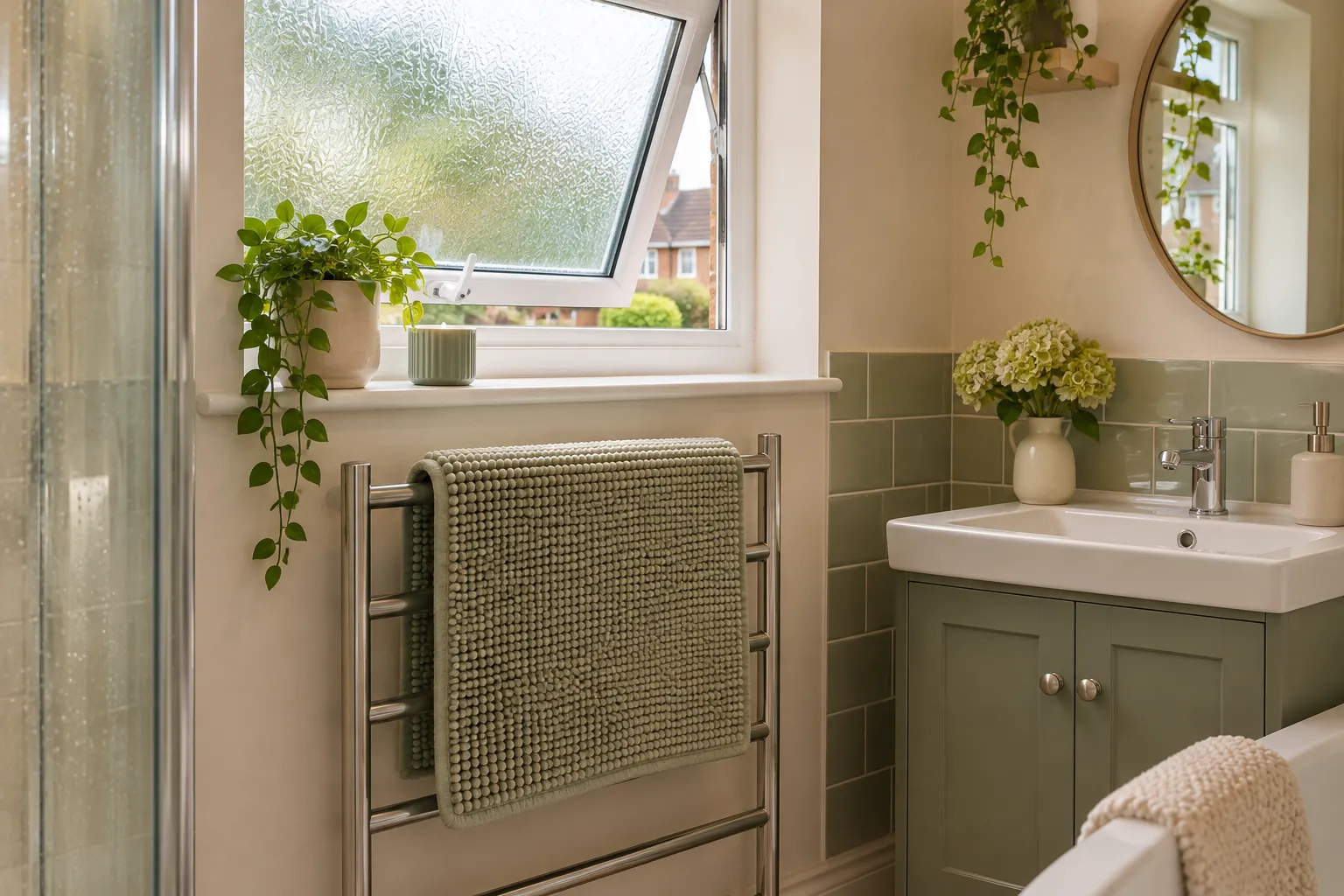
Use a bath mat that can dry between uses and follow its care label. Pick up clothing and towels rather than leaving them on the floor. Water on smooth flooring can create a slip risk; wipe a fresh splash with a suitable cloth and let the area dry. Avoid soaking timber, laminate or other moisture-sensitive finishes. If the floor is unusually wet after each shower, look for a screen, curtain or plumbing issue.
Do not crowd the route to the toilet with laundry baskets and cleaning products. A clear floor lets a cleaner reach edges and corners without moving personal belongings. It also makes everyday use safer for the household.
Share the work without a complicated rota
Agree on a few actions everyone can perform after use: return personal items, remove obvious splashes, hang towels and leave the room able to dry. Then assign the less frequent tasks, such as emptying the bin and laundering mats, to named people. A rota helps only if it is visible, realistic and revised when somebody is away.
For a household with children, give age-appropriate tidying tasks and keep cleaning products secured according to their labels. Adults should handle products that require specific precautions. Do not leave a bottle within easy reach because it is used often. In a shared rental, agree who reports leaks or damaged fittings so a problem is not silently passed from one resident to another.
Use visits for the work that needs more time
Before a booked regular cleaning visit, clear personal items from the agreed surfaces. Tell the provider about a changed material, loose fitting or persistent patch. Name the bathroom tasks that matter most rather than assuming every cupboard interior or tile joint is included. If build-up has been neglected for a long period, discuss a separate deep cleaning scope instead of expecting the routine visit to absorb it unnoticed.
After the visit, notice which surfaces become difficult first. If the basin is continually blocked by belongings, storage may be the useful change. If the shower stays wet, investigate drying and ventilation. If a mark returns in exactly the same place, ask whether its cause lies beyond cleaning. These observations help you adjust the household routine without adding unnecessary jobs.
Keep a small, clearly labelled kit
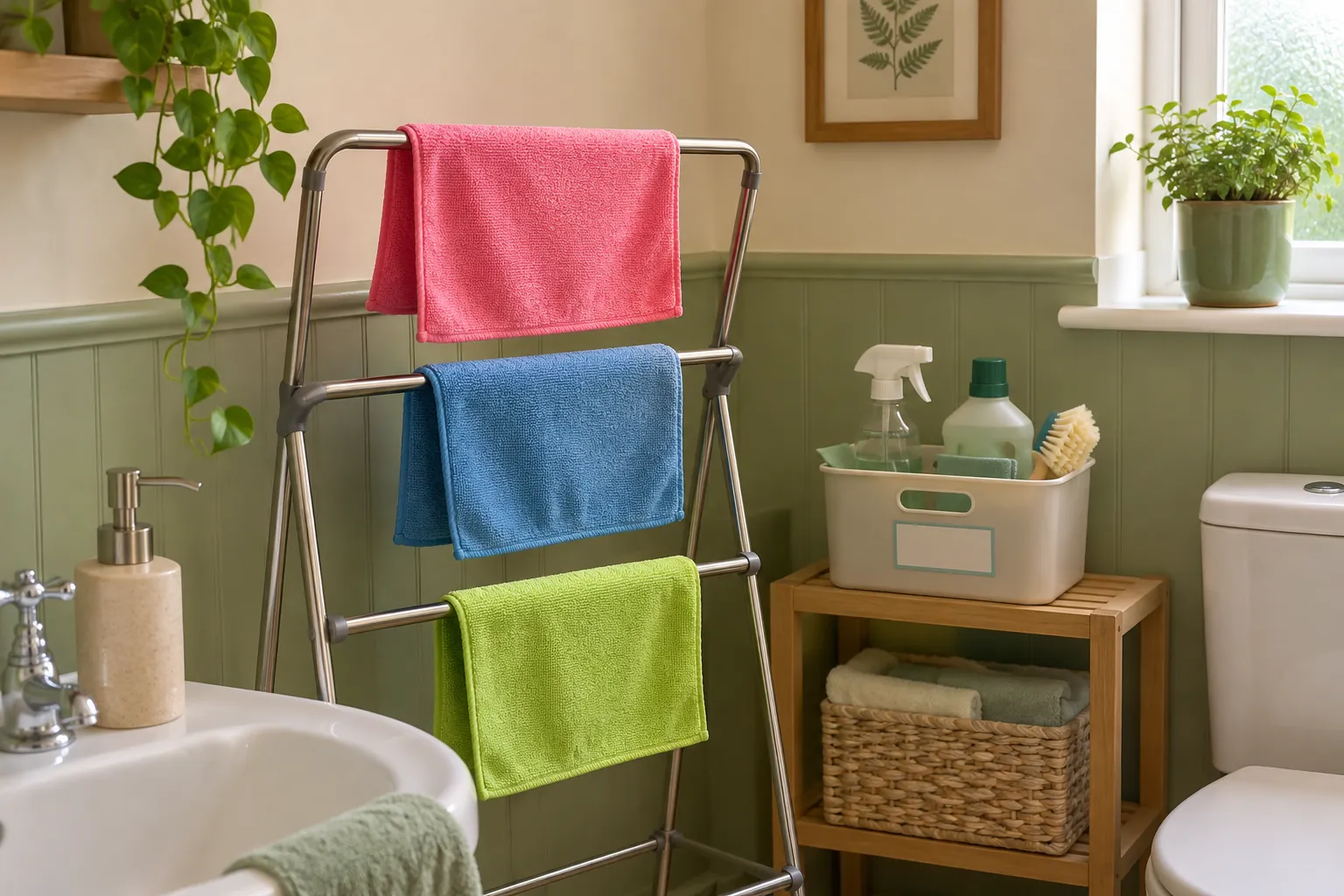
Choose a place for bathroom supplies away from food and out of children’s reach. Keep products in their original containers with readable instructions. Store them as the labels direct, with lids closed. A basket of unmarked sprays invites mistakes. If a product is nearly empty, do not combine it with another bottle, even if the bottles look similar.
Give cloths a purpose. One cloth can be reserved for the basin and another for the toilet area; wash and dry reusable cloths according to their care instructions. A damp cloth left in a closed cupboard is not ready for the next person. Replace worn sponges or pads that shed material or scratch a test area. Avoid abrasive tools on unknown finishes, plated fittings and coated screens.
Place the kit where it will not block the floor or tempt people to leave chemicals on the basin edge. If the cleaner brings supplies, ask whether your household kit should be put away before the visit. Explain any material restrictions, such as a stone counter or special tap finish. A concise note beside the kit can identify the surfaces, but the product label remains the authority for how that product is used.
A shared bathroom stays more manageable when each person leaves it ready for the next. Keep the everyday actions brief, give occasional tasks an owner and let the agreed cleaning visit focus on the surfaces it can actually reach.