

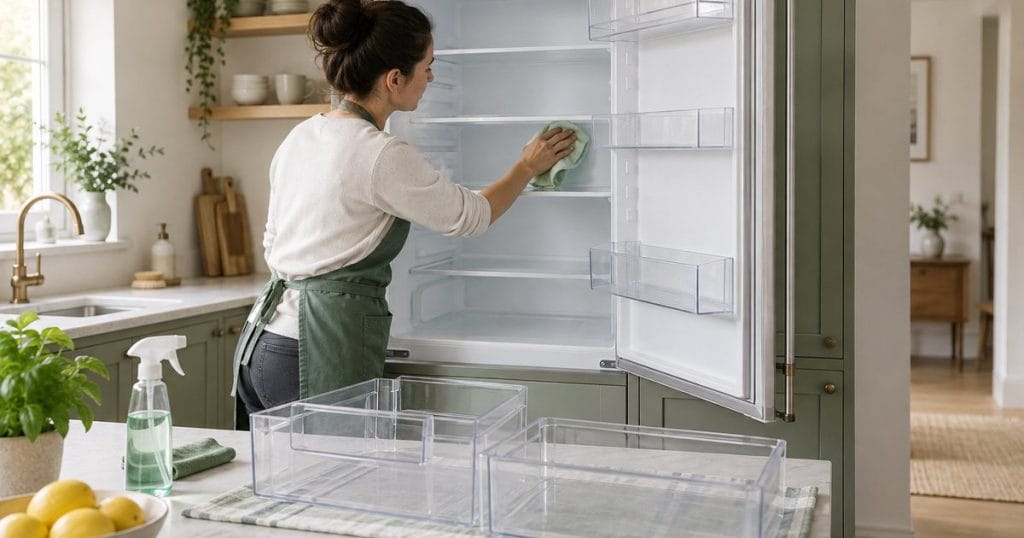
Crumbs behind a toaster, a sticky bin lid and an overlooked spill are easy to miss during a quick tidy. A kitchen routine should make residues easier to find and remove. It cannot guarantee that pests will never appear; an established problem needs advice beyond a general clean.
Remove visible residue
Clear a manageable worktop area and collect crumbs before wiping it. Clean under small items only when they can be moved safely, then replace them after the surface dries. Use a compatible product and follow its label. Put food and utensils away from the area while work is in progress.
Give the bin a routine
Empty the bin before waste stops the lid closing. Check its rim, lid and the surrounding floor for leaks or food residue. Clean with a compatible product, rinse if instructed and let it dry before adding a liner. Fragrance may cover an odour without removing the material causing it.
Review food storage
Keep opened food in suitable containers and check shelves for spills when putting shopping away. If you find droppings, damaged packets or repeated pest activity, do not treat it as ordinary loose dust. Seek pest-control advice and explain the evidence rather than assuming that a deeper clean alone will solve it.
Arrange the right work
Include kitchen priorities in your household cleaning list. An agreed kitchen deep clean can focus on accessible surfaces. Pest treatment, proofing, appliance repairs and leak investigations need separate arrangements. Tell everyone involved about an unresolved problem before work starts so responsibilities are clear.