

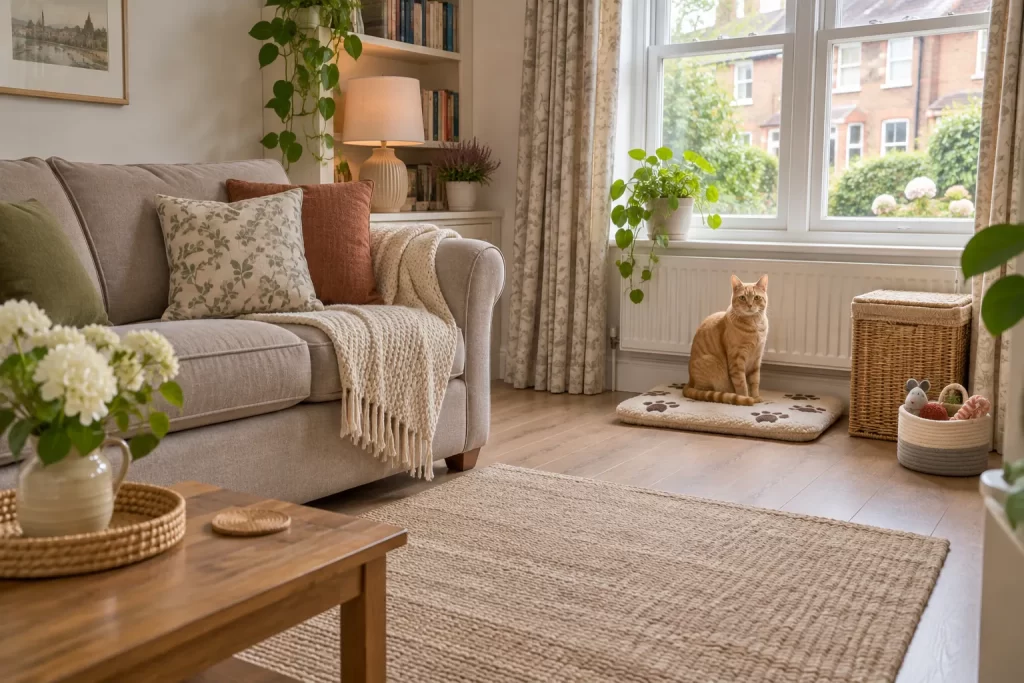
A cleaner visiting a home with pets needs more than a note saying that an animal lives there. The useful details are where the pet will be, which doors must stay closed and which areas collect hair or food residue. A brief handover can protect the animal, the cleaner and the surfaces you want cleaned.
Agree where the pet will be
Decide before the visit whether the animal will be with you, in a secure room or elsewhere. Do not assume a cleaner can supervise, restrain or move a pet. Tell the provider about a dog that may greet visitors at the door, a cat that slips through a window or a small animal housed near the working area. Explain which doors and gates need to remain shut.
If the animal is anxious around unfamiliar people or equipment, plan a separate space and keep its water and usual care available. A closed room should have suitable conditions for that pet; the owner makes that decision. Agree whether the room itself is excluded from the appointment or can be cleaned at another time. Give the cleaner a clear contact route if an unexpected access problem arises.
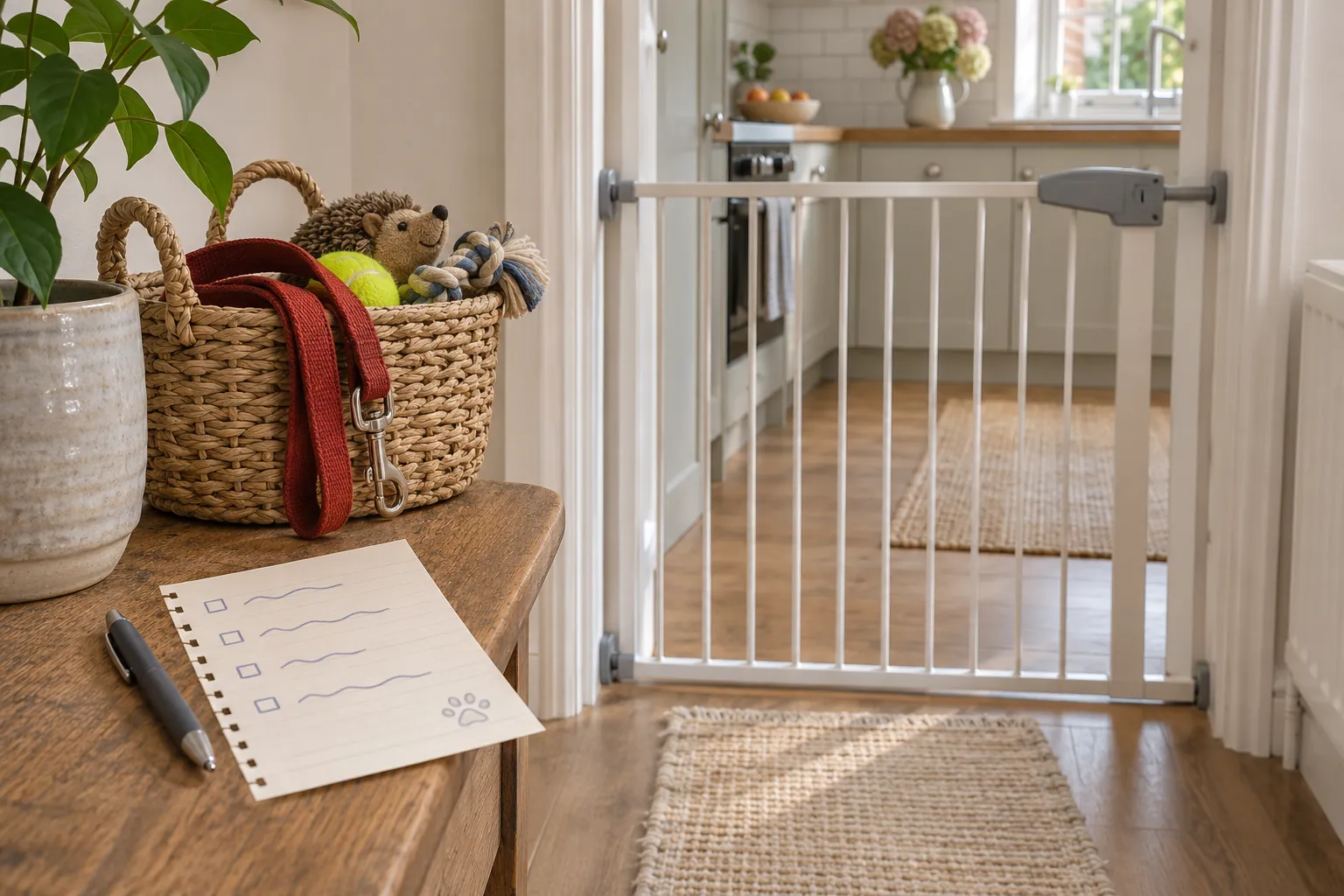
Identify the real cleaning hotspots
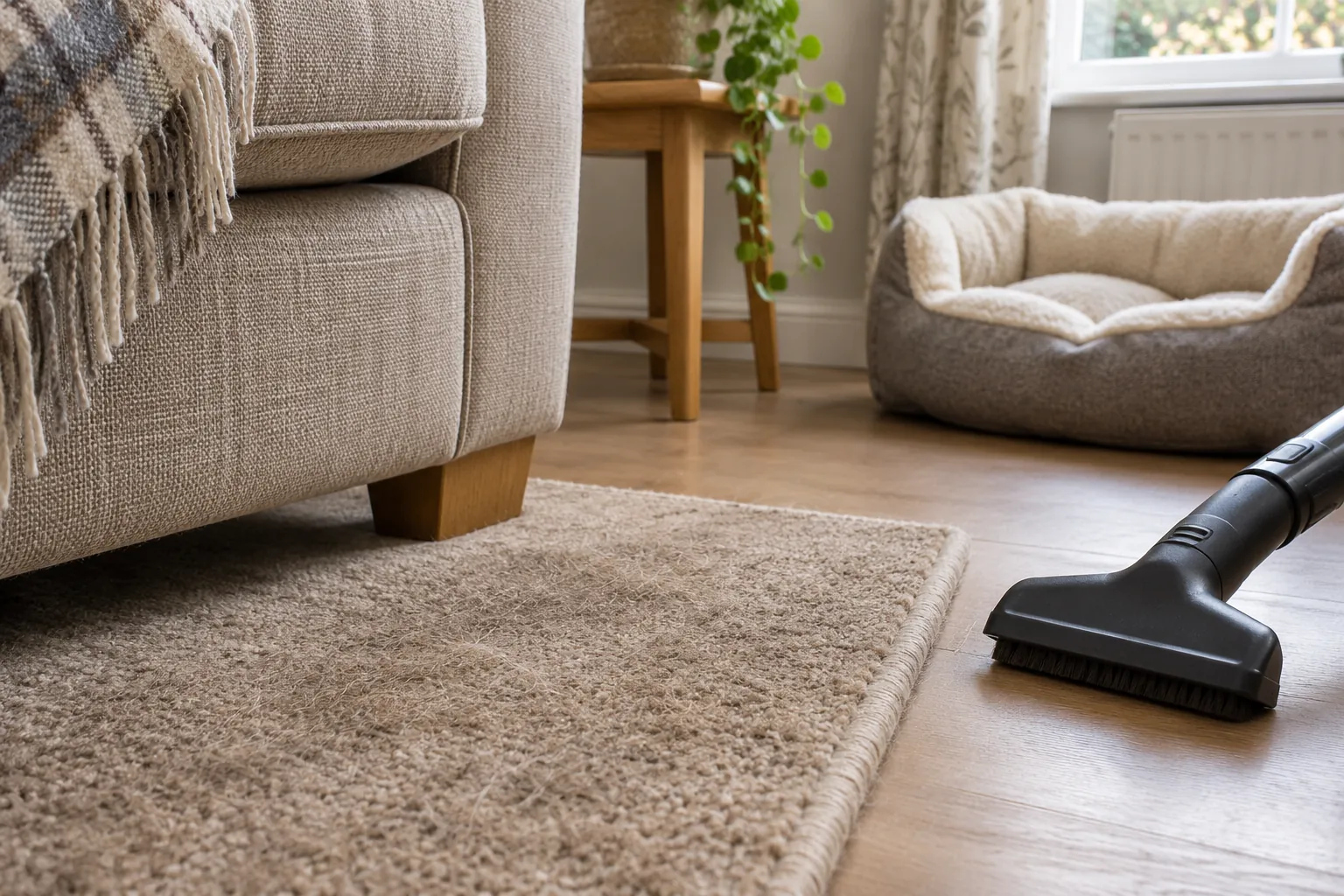
Walk through the areas where pet hair accumulates: a favourite chair, the edges of a rug, the route from the garden or the floor near a bed. Name the materials involved. A hard floor, fitted carpet and upholstered seat call for different tools and care. Ask for the agreed accessible areas to be included in domestic cleaning rather than expecting every hidden corner to be found automatically.
Remove toys, leads and feeding bowls from the floor when practical. Put them back after the surface is dry. Do not move a litter tray or enclosure without deciding how it will be handled and whether that task is within the cleaning scope. The owner should deal with waste or animal-care duties that have not been expressly agreed.
Explain surface and product restrictions
Tell the provider about timber floors, delicate rugs, furniture finishes and any manufacturer guidance you have. Keep cleaning products in labelled original containers and follow their instructions. Do not ask for a product to be mixed with another one because it seems to work better on odours. Fragrance can mask a smell without removing the underlying material, and an unsuitable product may damage a surface or leave residue where an animal rests.
If you have a product preference related to the pet, explain the concern and ask what the provider proposes. Avoid claiming that an unfamiliar product is safe for every animal. Keep pets away from treated areas as instructed by the product and service provider, and do not return bedding or bowls to a damp surface.
Describe accidents accurately
A fresh accident on carpet or upholstery needs a different conversation from routine hair removal. Note when it happened, where it reached and what you have already used. Lift solids carefully and blot a fresh liquid only if the material’s care instructions allow. Avoid soaking, scrubbing or repeated experiments with stain removers. Moisture or odour may have reached a backing or filling that cannot be assessed from the visible mark alone.
For carpet cleaning or sofa cleaning, give the material, approximate area, accident history and any previous treatment. Ask what assessment is possible and what result is realistic. Cleaning cannot guarantee removal of every stain or odour, particularly when the source is below the surface. If an animal repeatedly uses the same spot, address its welfare and behaviour separately rather than relying only on another clean.
Plan access around routines
Feeding, walking and rest times can affect room order. If a kitchen floor must be dry before the feeding bowls return, mention that before work begins. If the pet will be taken out, say when access to its usual room will become available. An ordinary household schedule is easier to follow than a last-minute request to change rooms while equipment is in use.
Check that litter, bedding and toys have a designated place. A cleaner should not have to guess whether a blanket is a pet bed, laundry or a fragile item. State what may be moved and what should remain untouched. In a shared household, give one agreed set of instructions so different residents do not ask for conflicting handling of the animal or its belongings.
Review the visit and adjust
After the appointment, inspect the areas that mattered most. Did the main hair route become easier to maintain? Were the feeding area and floors ready for normal use? If a task was missed, ask whether access, time or the agreed scope was the reason. Change the handover accordingly. A concise dated note is more useful than several older messages with different instructions.
For recurring visits, keep the pet details current. An animal may begin using another room, a new rug may need a different method or a health issue may change the routine. Tell the provider before the next visit. A clear plan for the animal and the surfaces allows the cleaning work to proceed without avoidable surprises.
Keep the time between visits manageable
Use a vacuum attachment suitable for the carpet or upholstery care instructions, and stop if a brush pulls fibres or trim. Work over the accessible route the pet uses most often rather than moving heavy furniture for every stray hair. A washable mat near an entrance may catch some garden dirt, provided it is suitable for the floor beneath and can dry fully. Launder removable pet textiles according to their labels, then return them only when dry.
Look for the cause of repeated mess before adding more cleaning. A leaking water bowl, unstable food container or muddy route through the house may be easier to fix than to wipe up every day. If the pet has an unexplained change in toileting behaviour, seek appropriate veterinary advice; a cleaning article cannot diagnose the cause. Keep any waste handling separate from ordinary dusting and follow sensible hygiene practice.
If an area remains damp or an odour returns quickly, record the location and time rather than covering it with a scented spray. Tell the cleaner about the pattern, and ask whether the material can be assessed safely. There may be limits to what surface cleaning can achieve.