

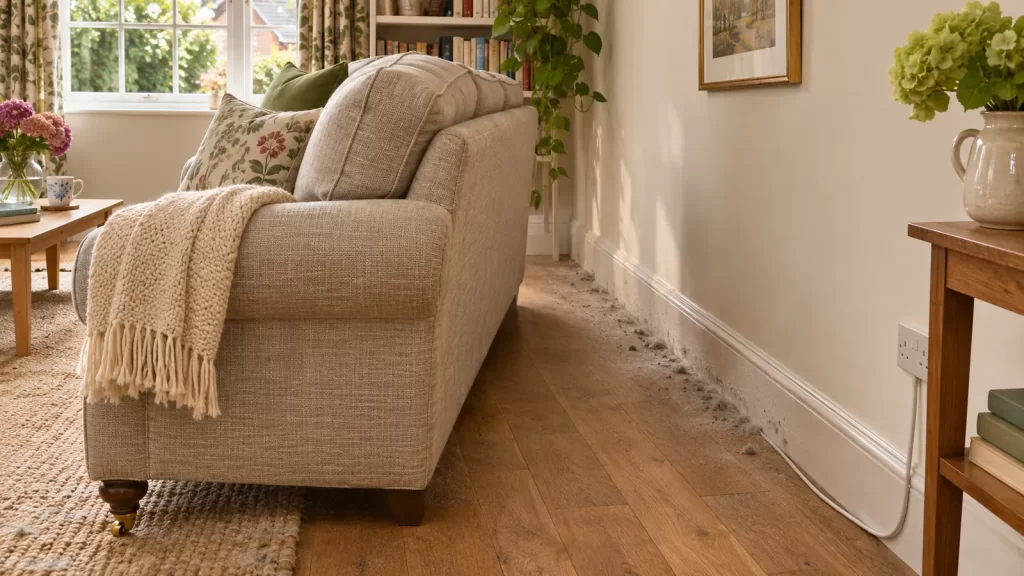
Dust gathers where a vacuum rarely reaches, but moving a heavy wardrobe or sofa can create a bigger problem than the dirt behind it. A useful clean starts by deciding what is safely accessible. Furniture weight, stability, cables, flooring and the available working space all matter. Plan the reach before moving anything, and agree the boundary with anyone helping you.
Look before you lift
Walk around the piece of furniture and inspect how it stands. Is it fixed to the wall? Does it have glass doors, loose shelves or a heavy top? Can a drawer slide open unexpectedly? A large unit may be designed to stay in place. Do not remove a wall restraint simply to reach a strip of skirting board. If it is unstable, leave it alone and arrange appropriate help.
Check the floor beneath and around it. A rigid cabinet dragged across timber, laminate or vinyl can leave scratches or pull at seams. Carpet may resist movement and cause a unit to tip. Furniture sliders can help in some circumstances, but they do not make every item safe to shift. Follow their instructions and consider the load and floor finish. Never ask one person to move something they cannot control.
Measure the available space. A cabinet pulled forward may block a doorway or leave you unable to reach its back safely. Keep exits and stairs clear. If the room is crowded, moving several smaller objects first can create a proper working area without touching the large item.
Trace power and plumbing connections
Look for plugs, extension leads, data cables and wall lights before shifting a desk, media unit or sofa. A cable that disappears behind furniture may be short, trapped or attached to equipment. Do not pull on the lead to discover where it goes. If you cannot see the connection or safely isolate an appliance, leave the unit in position and clean only the accessible edge.
Large kitchen appliances raise additional questions. A refrigerator may have a water connection; a cooker may have a fixed electrical or gas connection. Moving or disconnecting them is not an ordinary cleaning step. Follow manufacturer guidance and use an appropriate professional when a connection needs attention. The same caution applies to radiators and fitted plumbing hidden behind furniture.
Take note of damaged sockets, loose wires or signs of water. Stop work around an electrical or moisture problem and seek the right assessment. Cleaning should follow a safe repair, not conceal an unresolved hazard.
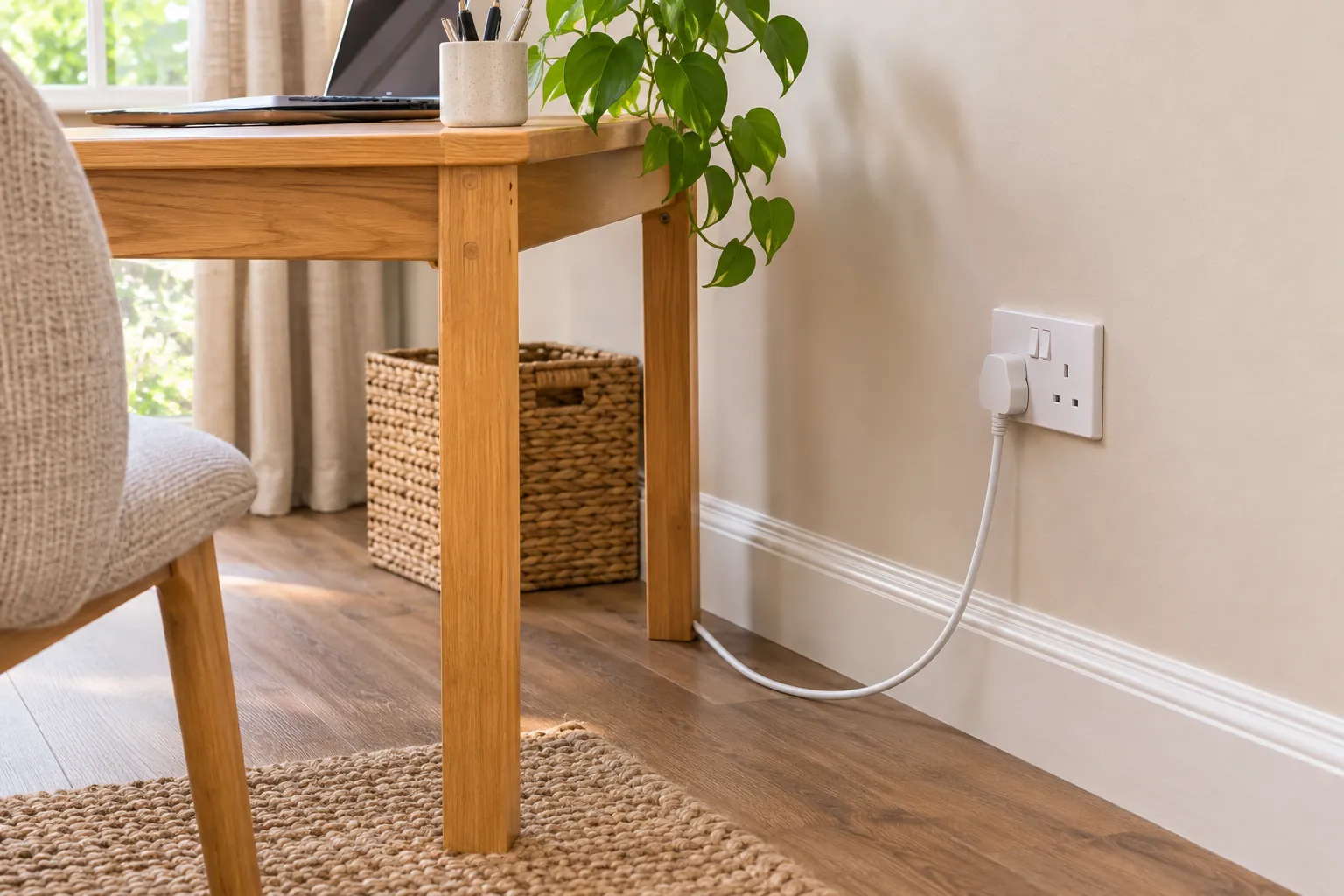
Clean the reachable area first
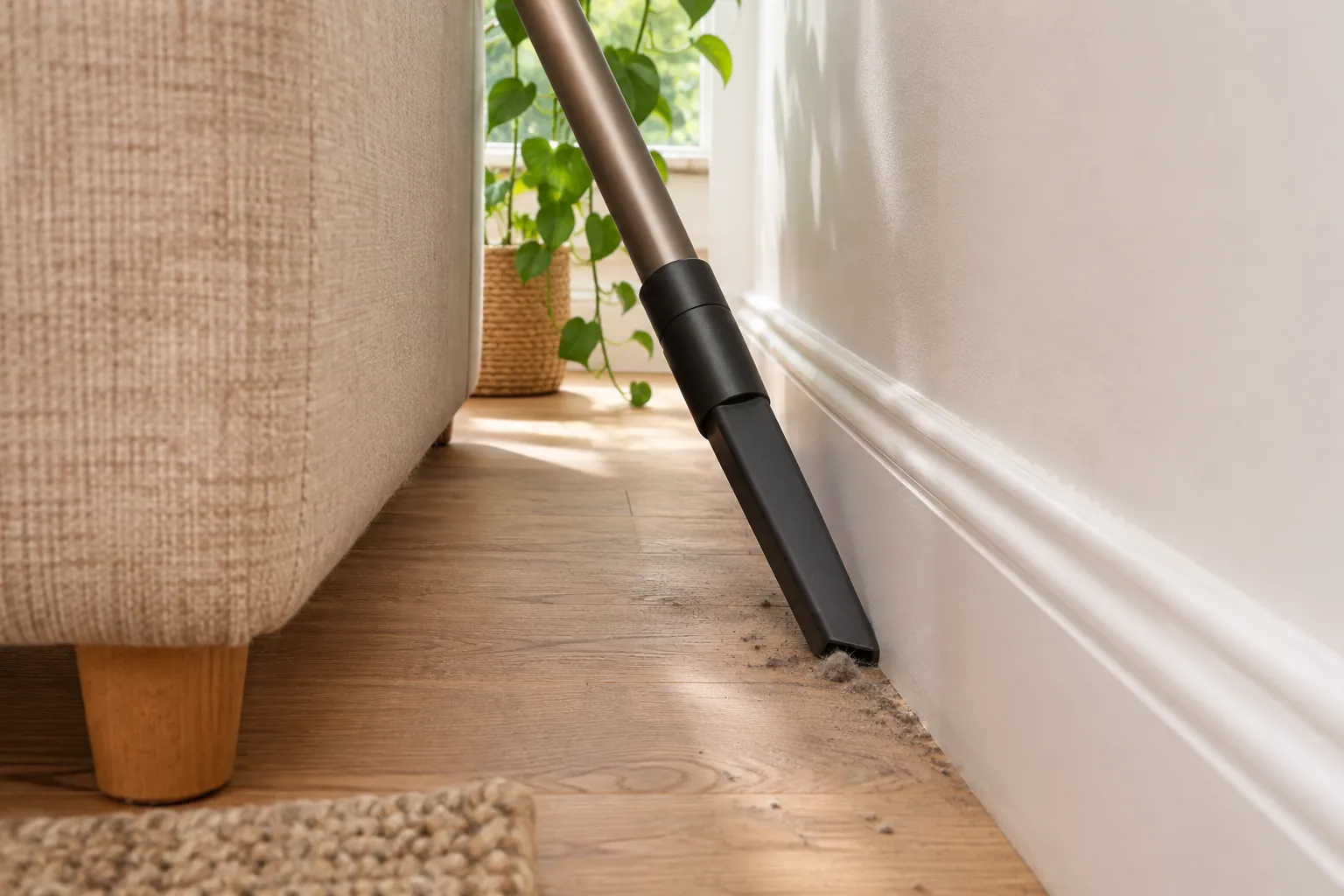
Often you can remove much of the loose dust without moving the furniture at all. Use a suitable vacuum attachment on the visible floor edge and accessible skirting. Choose a tool that fits without forcing it against the wall or upholstery. Avoid pushing dust farther into a narrow gap with a dry brush. If the floor or fabric has care instructions, use the method they allow.
For a sofa that can be moved safely, remove loose cushions and small objects before shifting it. Ask another adult to help if the load is awkward, and agree where the piece will go. Lift or use suitable aids rather than dragging. Once there is space, inspect the wall and floor before cleaning. Loose plaster, mould-like growth or damp staining needs separate attention; do not treat it as ordinary dust.
Work from the wall and skirting towards the exposed floor. Collect loose material, then clean the floor with a method suitable for its finish. Keep water out of electrical outlets and away from timber or laminate seams. Let the area dry before replacing furniture. Check that feet and castors sit properly and that leads are not trapped underneath.
Set a sensible limit for heavy items
There is no need to move every wardrobe, bookcase or bed frame for a useful seasonal clean. Prioritise areas where the dust is accessible, where a spill has occurred, or where an item is already being moved for another reason. Record the places left untouched. That is more accurate than marking the whole room as completed.
If a unit must be moved for decorating or a repair, coordinate the cleaning with that work. Clear the area once, address the underlying issue, clean the exposed surfaces and then return the item when safe. Repeated shifting adds effort and risk without necessarily improving the result.
Do not climb onto furniture to reach the space above it. A stable platform, suitable equipment and a planned method are needed for high surfaces. If safe access is uncertain, omit the task and describe the location during a professional enquiry.
Make returning the room part of the task
Plan where the furniture will stand while the exposed patch is cleaned. The temporary position should be stable and should not trap anyone in the room. Keep screws, shelf supports and removable parts together if the owner has chosen to take a unit apart.
After the floor dries, check the original placement against doors, vents and radiators. Avoid pushing a cabinet hard against a wall to make it fit. Check that anti-tip restraints are restored by someone competent before the room returns to normal use. If the furniture cannot be returned safely, leave it stable and arrange help rather than improvising a temporary wedge. The clean is complete only when the room can be used safely again.
Agree what a cleaner can reach
When arranging spring cleaning, list the furniture you expect to remain in place and the edges you want cleaned. Mention any piece that is loose, wall-fixed or connected to equipment. For a focused one-off clean, send a room list and explain any movement you will complete beforehand. Do not assume a visit includes heavy lifting or appliance disconnection.
If the exposed area is carpeted, ask whether carpet cleaning is appropriate for the particular material and stain. Describe what caused a spill, if known, and what has already been applied. A cleaner can then discuss the scope without guessing from a photograph.
The practical aim is a clean, safe area that can be accessed without damaging furniture or finishes. Move small items deliberately, inspect each hidden space, and stop when the next step would require uncontrolled lifting, disconnection or repair. A clear boundary helps everyone understand what was cleaned and what still needs another kind of help.