

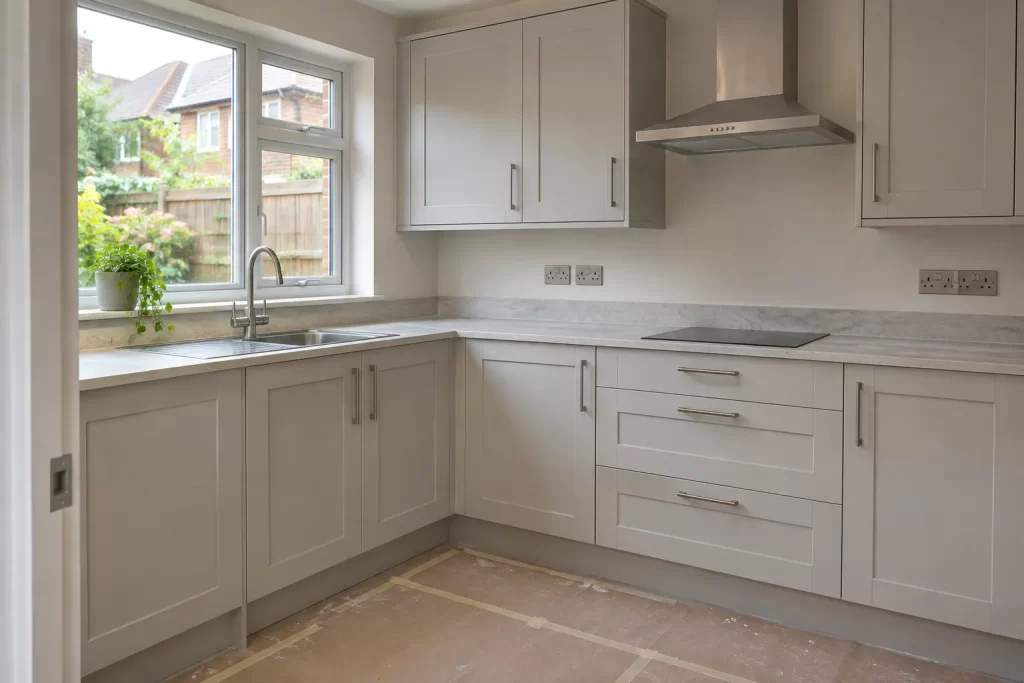
New kitchen units can look ready for use while sawdust remains in corners, protective film is still attached and sealant has not finished curing. Cleaning should follow the installer’s handover, not replace it. Ask what materials were fitted, which appliances were commissioned and what care instructions apply. This makes the first clean more effective and reduces the chance of marking a new surface.
Establish what is finished
Ask the fitter whether any cutting, drilling, trimming or adjustment remains. A final clean done before the last hinge or worktop alteration may need repeating. Confirm who will remove packaging, offcuts and installation waste. Keep the route into the kitchen clear and do not place heavy debris in ordinary household bags without an agreed disposal plan.
Check whether cupboard doors, drawers and appliances open and close properly. Record a loose handle, chipped edge, uneven joint or damaged floor before cleaning. These are installation or repair issues. Wiping them harder will not make them right. Photograph the defect and refer it to the responsible trade while the job details are fresh.
Ask about water and power connections before cleaning around the sink or appliances. Keep cleaning water away from exposed sockets and unfinished fittings. If a unit must be pulled out for a final connection, leave the surrounding floor until that work is complete. This avoids cleaning the same space twice.
Get the finish and curing information
Worktops, cabinet fronts, splashbacks and floors may require different products and cloths. Keep manufacturer care notes for stone, timber, laminate, painted doors and metal finishes. Ask the fitter when new silicone or other sealant can be exposed to water and cleaned. A joint that feels firm may still have a stated curing period. Follow the product instructions rather than guessing from appearance.
Do not use a sharp scraper on a worktop or glass panel without explicit guidance for that surface. Adhesive, paint and silicone spots may need a method different from normal wiping. Photograph stubborn residue before trying a chemical or abrasive. If it was left by the installation, ask whether the fitter will remove it. A general cleaner should not be asked to correct workmanship with an improvised solvent.
Remove protective film with a plan
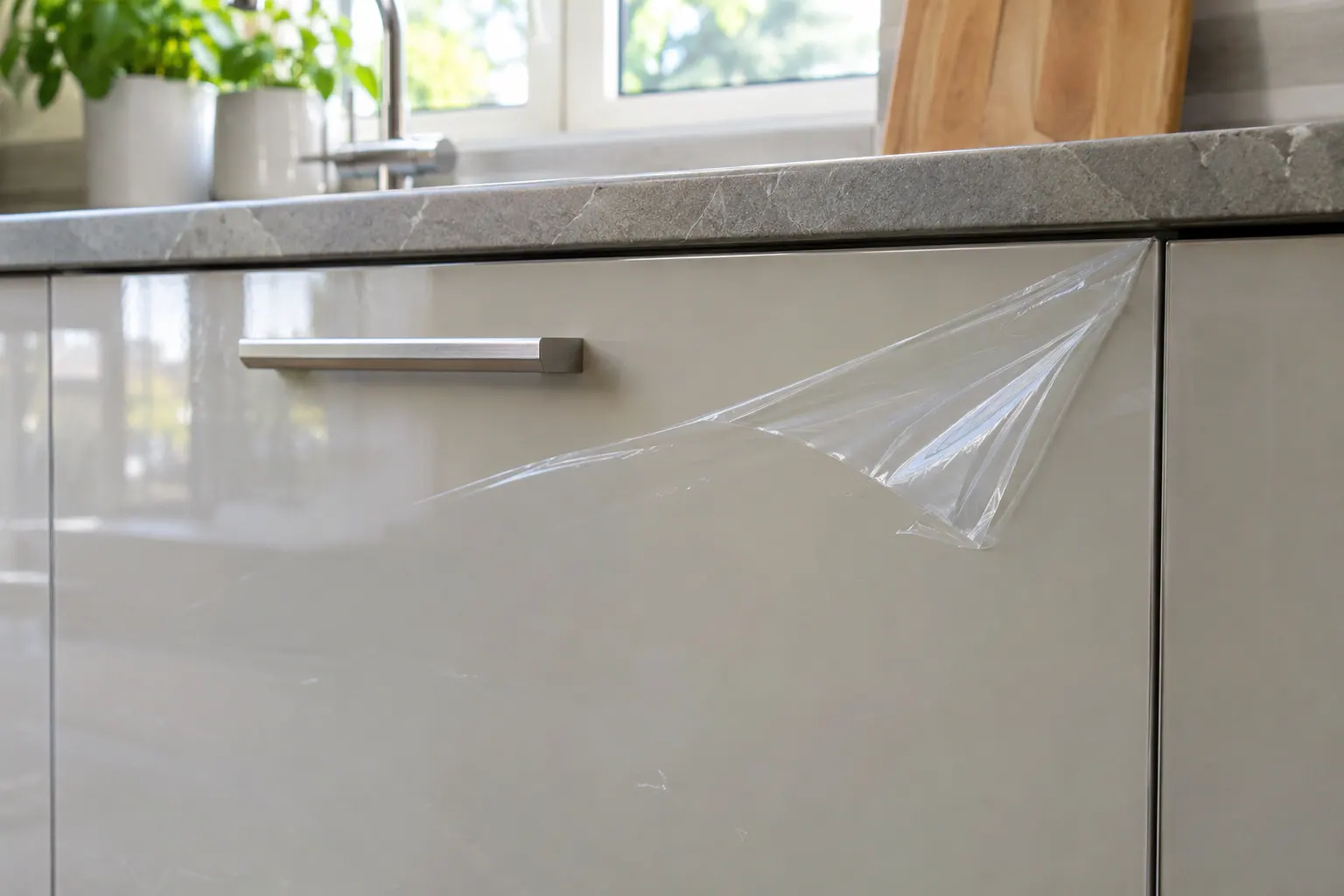
Protective film may cover doors, appliances and metal trim. Ask which coverings the fitter will remove and when. Pulling at an edge too soon can leave adhesive, while leaving film in place against heat or sunlight may create other problems. Follow the manufacturer’s directions. Do not cut film away with a blade near a finished edge. If it tears or reveals a mark, pause and document the area.
After the film has been removed, check for residue with clean hands and good light. Use only a compatible method on the specific finish. Keep the first pass gentle. If it does not respond as expected, ask for advice rather than repeatedly rubbing the same spot.
Pay attention to door edges and handles, where a fragment of film can remain hidden. Do not pull a strip from behind a fixed hinge or appliance if it resists. Ask the fitter to finish removal. When the surface is ready, use a clean cloth so dust from one unit is not dragged across another. Check in ordinary light, since a bright torch can make harmless texture look like contamination.
Check inside the units
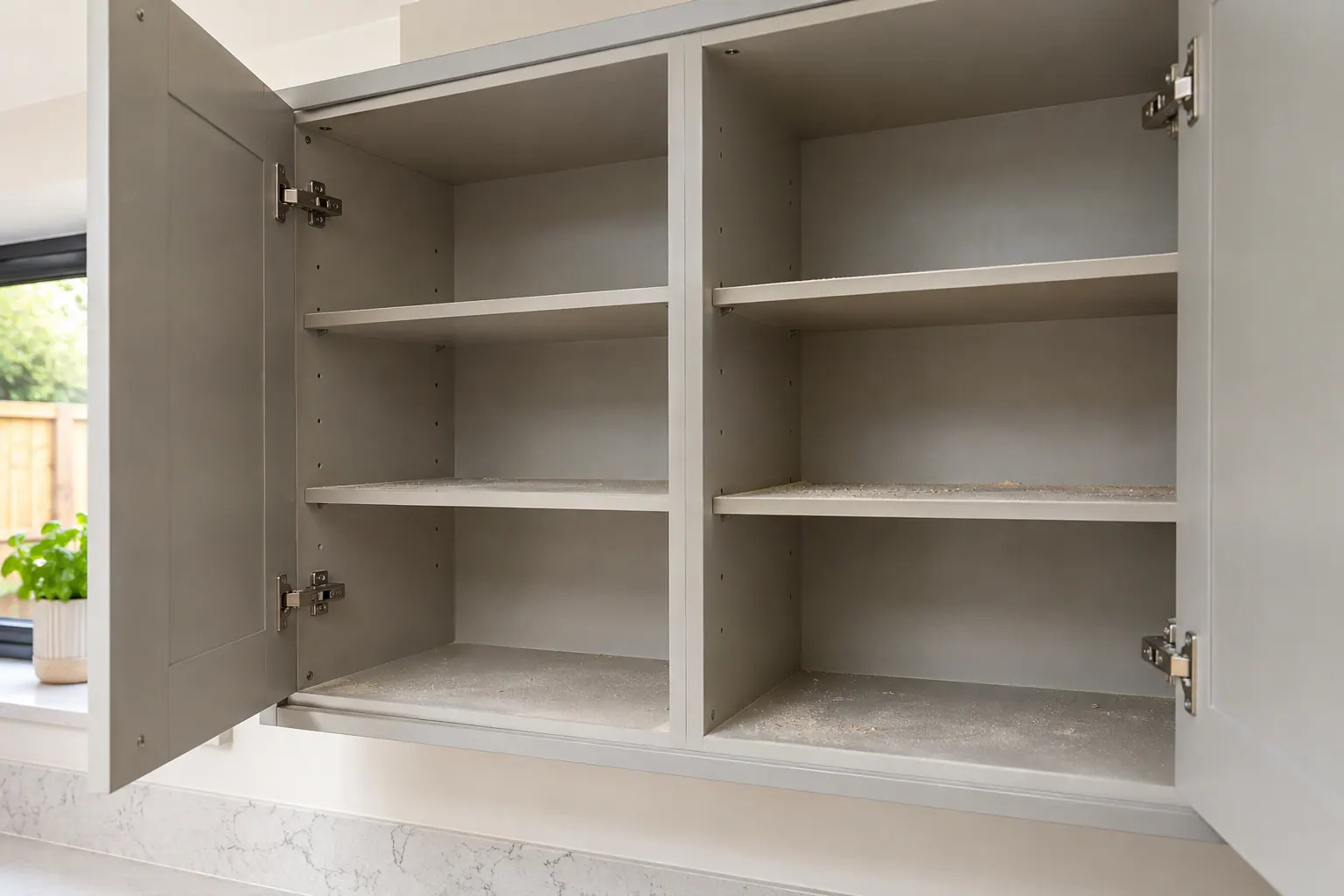
Before filling cupboards, inspect empty shelves, corners, runners and drawer bases for sawdust or small fixings. Do not reach blindly where screws or sharp offcuts may remain. Ask the installer to remove construction debris. Once the material is known and the space is safe, use a suitable method for fine residue and allow surfaces to dry before storing food or utensils.
Open only cupboards included in the agreed clean. A newly fitted kitchen may already contain belongings moved back by the household. Emptying and replacing these items takes time and can create confusion. Say which units are empty, which need attention and which must remain closed. This is especially useful when a cleaner arrives after the fitter has left.
Cutting worktops, tiles or boards can produce dust that needs more care than everyday crumbs. Ask what materials were cut and what controls were used. The HSE’s construction dust guidance warns against dry sweeping building dust. Do not use a domestic vacuum on unknown material. Arrange suitable assessment and equipment before a detailed post-installation clean.
If shelves were cleaned before the final cutting task, inspect them again before loading. Fine particles may settle from cabinet corners or the top of a unit. A staged check is more useful than repeatedly wiping the visible worktop while leaving the source untouched. Keep food and crockery out of the area until surfaces are ready. Do not seal dust behind stored goods because the doors look closed from outside.
Keep appliances separate
Check that appliances have been fitted and commissioned by the appropriate person. Do not disconnect, move or spray into controls to make them appear clean. Ask what may be wiped externally and whether internal cleaning is needed. A new oven with installation dust on its exterior is a different task from removing baked-on deposits in an old appliance.
If several appliances need separate attention, describe each one when enquiring about appliance cleaning. Include make, type, access and any manufacturer’s restrictions. A broken or incorrectly fitted appliance needs a trade to address it first. Cleaning can follow after the equipment is safe and ready for use.
The first use of a new appliance should follow its manual. Do not invent a cleaning cycle or heat a unit simply to remove an installation smell. Check whether transit materials and labels should be removed by the installer or household. If a manufacturer specifies a preparation step, keep it distinct from the cleaner’s task. This prevents a general surface clean from becoming an unplanned appliance commissioning job.
Agree the final pass
Once installation and dust-producing work are complete, list the accessible cabinet fronts, empty interiors, worktop, splashback, sink and floor. State which new finishes and joints must be treated gently or left alone. Ask about after builders cleaning when construction residue remains. For a limited refresh after the fitter’s handover, one-off cleaning may be the right discussion. Confirm the scope and inspect it before loading the kitchen with everyday items.