

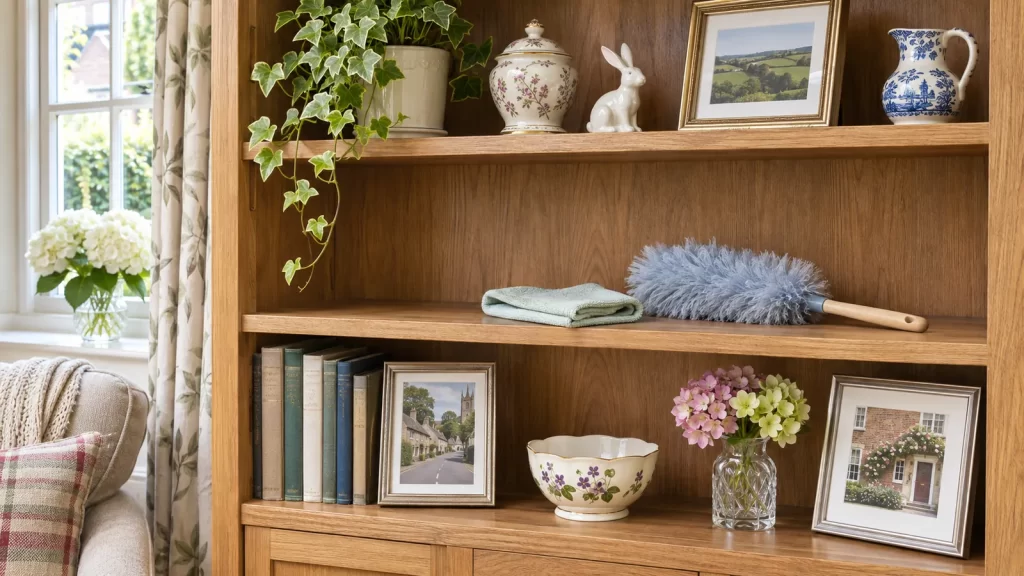
A display shelf can collect a surprising amount of dust, yet a quick wipe risks knocking over something delicate. The safest approach begins before the cloth comes out: decide what can be handled, where it will wait and who will move it. A careful sequence lets you clean the shelf without turning a collection into an unplanned sorting or repair job.
Agree what may be touched
If the collection belongs to someone else, ask which pieces they prefer to handle themselves. Sentimental value is not visible from an object’s size or material. Note anything loose, repaired, unstable or unusually heavy. A decorative item with a glued handle may look sound until it is lifted. Leave uncertain pieces in place and clean around them until their owner can advise.
Check whether the shelf itself is secure. A leaning bookcase, loose bracket or cracked glass panel needs attention before cleaning. Do not steady an unstable unit with one hand while trying to move ornaments with the other. Keep children and pets away from the working area if there is a risk of items falling.
Photograph the arrangement if you want to return pieces to their original positions. This is especially useful for a dense collection, but it does not replace a clear place to set items down. Choose a clean, level table with enough space for each object. Lay down a soft, suitable protective cloth if the objects and table finish allow it. Avoid balancing pieces on a chair or the floor.
Work in small groups
Move only the objects from one shelf or a short section at a time. Lift each by its strongest supported part, using both hands when appropriate. Do not pull a figurine by a thin arm, a cup by its handle or a framed photograph by a loose stand. Keep lids with their own containers. If a piece is too awkward to hold securely, stop and ask for help.
Sort by position rather than by value or colour. A simple left-to-right order helps you put everything back without a long decision session. Keep unrelated clutter out of the temporary work area. If an item needs repair, place it aside with the owner’s agreement; cleaning a damaged joint is not a substitute for fixing it.

Remove dust without spreading it
Start at the upper shelf so displaced dust does not land on a finished lower one. Use a soft cloth or tool suitable for the shelf finish. A timber veneer, painted surface, glass shelf and metal bracket may need different care. Follow manufacturer instructions where available. Avoid excessive moisture around joints, unsealed edges and electrical lights built into a cabinet.
Lift loose dust gently from accessible corners. Do not force a vacuum nozzle against a fragile frame or ornament. A suitable brush attachment can help on a sturdy surface, but an unsecured small piece can be sucked towards the tool or struck by it. Work slowly enough to see where the dust is going. Change a dirty cloth before wiping a clean area.
Be cautious with the objects themselves. Painted ceramics, gilding, photographs, books and old finishes may be damaged by water or ordinary cleaning products. Dust only if the object can tolerate it and the owner agrees. For valuable, antique or unfamiliar materials, seek specialist conservation advice. A household clean should never involve testing an unknown solvent on a treasured item.
Pay attention to the shelf structure
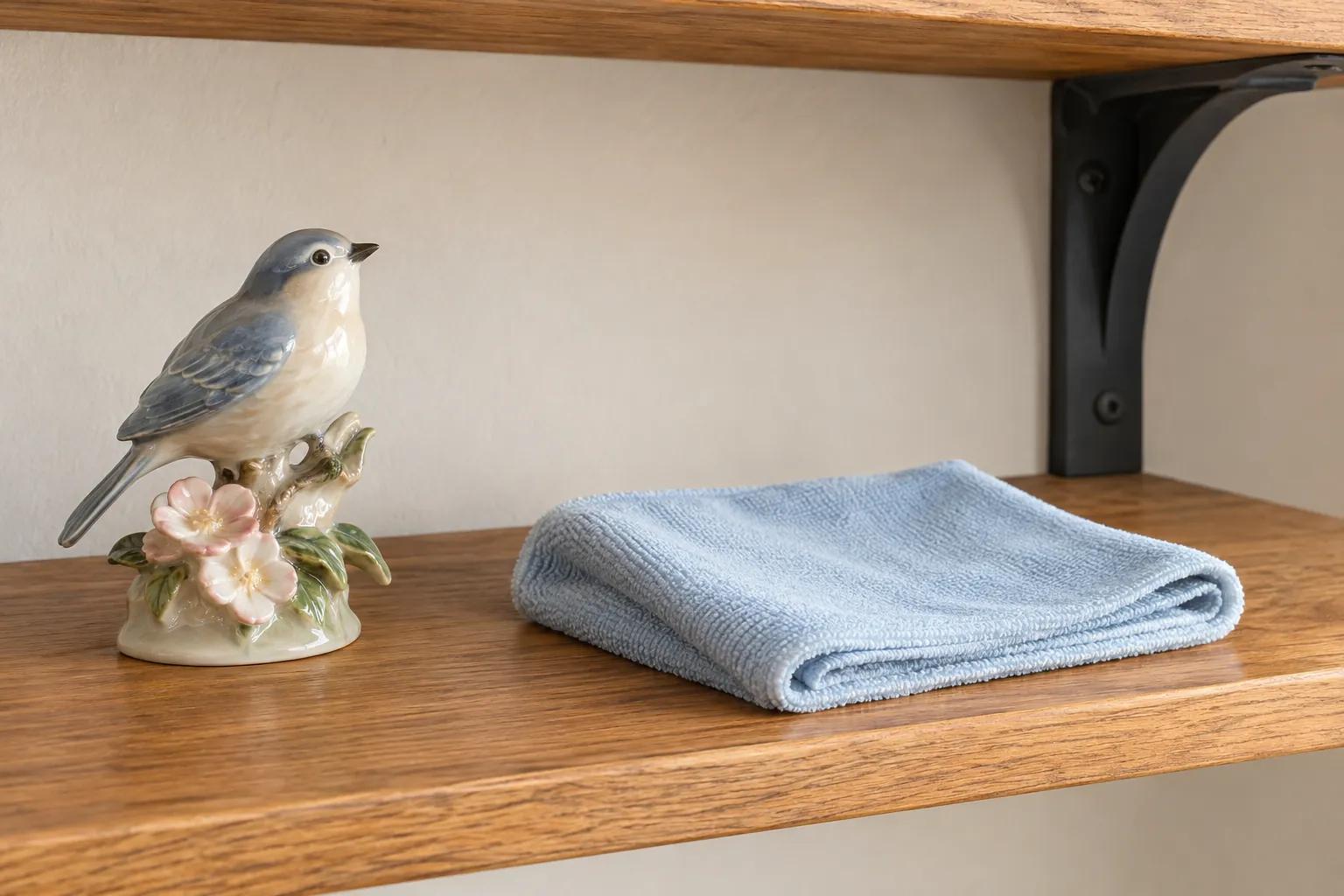
With a section clear, inspect the rear edge and corners. Dust may hide a loose fixing, a water mark or an insect problem. Record what you find without scraping at a stain. If the back panel is soft, damp or marked repeatedly, address the cause separately. Do not replace objects against a wet surface.
Clean the front edge and accessible supports, then let the shelf dry completely if a damp method was used. Return objects one at a time, checking that each stands securely and does not overhang the edge. Avoid crowding the shelf beyond its safe capacity. Put heavy pieces where the unit is designed to support them, following its instructions.
If the display has glass doors, clean the accessible panes with a product compatible with any coating and frame. Keep liquid out of hinges and joints. Do not remove a door or climb onto furniture to reach the top. Note inaccessible areas for a separate safe-access plan.
Think about the room around the display
A newly cleaned shelf can collect dust again if nearby work is still under way. Finish decorating, drilling or repairs before returning a collection to its place. Dust the accessible wall or frame above the display first, then the shelves, then the floor below. This order avoids putting loose debris back onto a finished surface.
do not move a cabinet closer to a radiator or into a damp corner merely to make floor cleaning easier. Return it carefully to a safe, agreed location.
Consider a realistic maintenance rhythm. A sparse shelf may be easy to dust regularly, whereas a dense arrangement takes longer and requires more handling. The owner can reasonably choose to leave a few items on display and store others, but that is their decision. Record which sections were completed so a later visit can focus on a different area without repeatedly moving the same fragile pieces.
Make expectations clear for a visit
For spring cleaning, explain whether you will remove ornaments before the visit or want the cleaner to work around them. Name the shelves that are included and point out fragile finishes. A one-off clean can concentrate on the surrounding room if the collection itself is excluded. Agree that boundary before work begins.
If you are preparing a written task list, use plain descriptions: “Dust the cleared lower shelves” is easier to follow than “clean all ornaments”. Include any restrictions on products, handling or access. A photograph can help identify the shelves, but an in-person inspection may still change what can be done safely.
The best result is a clean display that still looks and feels like the owner’s arrangement. Handle a small section, inspect the material, clean only what is suitable, and return each piece to a stable position. Leave conservation, repair and high-level access to the right specialist rather than hiding those jobs inside an ordinary cleaning visit.