

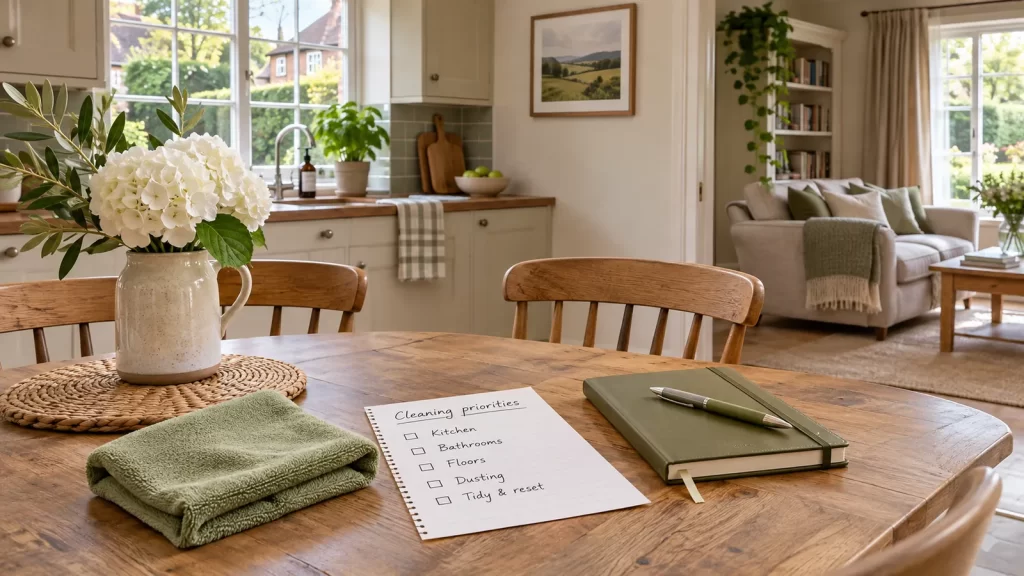
A routine works because people know what to expect. It still needs to change when the home changes. A visiting relative, a new working pattern or a room that is used more heavily can shift the work that matters most. Review the priorities before they become a source of frustration.
Notice what is repeatedly left unfinished
Look at the result of several visits, not one unusual week. Are the kitchen and bathroom completed while optional rooms are left for another time? That may be a sensible priority. If the essentials are repeatedly missed, the agreed scope may be too large for the available time or the working areas may be difficult to reach.
Write down the specific task and room. “The place is still dusty” is less useful than “the accessible skirting behind the dining chairs has not been included”. Check whether that task was actually part of the agreement. Ask what prevented it: access, timing, materials or a different interpretation of the instruction. The answer determines whether to revise the checklist, clear the area or arrange more time.
Respond to a change in household use
A spare room that becomes a home office needs a different plan from an occasionally opened guest room. A new pet may put more hair on the main floor route, while a family member recovering at home may need a bathroom available earlier. Explain what has changed and what outcome matters now. Avoid adding the new work to an already full list without removing or rotating something else.
For regular cleaning, choose the tasks that protect the daily routine and place the rest in a separate rotation. Name any room that must be cleaned first, and explain access restrictions. If your schedule changes, agree how keys or entry arrangements will work before the next appointment.

Separate temporary work from the standing routine
Guests, a celebration or a burst pipe can create an exceptional week. Do not automatically rewrite the long-term plan around a one-time event. Describe the extra work and ask whether it can be accommodated by replacing optional tasks. If it is substantially different, discuss a one-off cleaning visit with its own scope and timing.
Similarly, internal appliance work, upholstery treatment or waste collection should be identified separately. These jobs may require different equipment, preparation and time. An occasional task does not become part of every visit simply because it was mentioned during an appointment. Keep the recurring plan clear for both household and provider.

Review the surfaces as well as the tasks
New flooring, resurfaced worktops or recently painted cabinetry can change the appropriate method. Give the cleaner the manufacturer’s care information where possible. Point out loose fittings, cracks, a stain already treated with another product or areas that remain damp. Do not ask for stronger chemicals as the first response to a mark that might be wear or damage.
If one area has accumulated substantial soil while the rest of the home needs normal upkeep, ask about a separate deep cleaning scope. It can be more honest to deal with a backlog deliberately than to expect the routine appointment to cover it without losing the everyday essentials.
Make changes in a way people can follow
Send one short updated list before the next visit. Put must-do tasks first, optional tasks second and exclusions last. Cross out old versions or remove them from the home. Conflicting notes on a fridge and in a message can waste time, particularly when different household members have different expectations.
If you are not present, identify who can answer questions and approve changes. A cleaner should not have to choose between competing instructions from residents. For a shared household, agree priorities together before sending them. If the room or product restrictions are complicated, a brief walk-through may be more useful than a long paragraph.
Check the result after the change
After the next visit, compare the outcome with the revised list. Was the higher-priority work completed? Did a displaced optional task matter more than expected? Ask a specific question rather than giving a vague verdict. Sometimes a better sequence is enough: the bathroom may need to be done before people leave for work, while the living room can wait.
Keep a record of occasional jobs and when they were last done. This prevents a rotating task from disappearing entirely. A simple dated note is sufficient; there is no need to turn the visit into a lengthy administration exercise. Review again when the household changes, not every week by default.
Know when a different visit length is needed
Changing priorities can solve a small mismatch, but it cannot create extra time. If the same essential rooms are repeatedly rushed after you have cleared access and agreed a realistic order, ask what amount of work fits the appointment. A larger property, additional occupants or a newly used room may require a longer visit. The provider can explain the available options; do not assume that a task can be squeezed in by using a stronger product or skipping drying time.
Consider what you can reasonably do between visits. Returning belongings to their places and dealing with a fresh spill promptly may leave more time for the agreed cleaning tasks. That does not mean you must clean the house before the cleaner arrives. It means the service can focus on the surfaces you asked to be cleaned instead of sorting an unexpected obstruction. If you want help with sorting, describe it as a separate need.
Tell the provider about a proposed change early enough to discuss it. A request made as the cleaner leaves has little value for the visit just completed, while a detailed instruction sent after the next appointment starts may not be seen. Keep the request very specific: the room, task, reason and priority it replaces. Ask for the agreed version to be reflected in the next visit. This makes it easier to decide later whether the adjustment worked, and it gives everyone the same starting point.
The best cleaning priorities reflect the home people actually live in. When a routine stops fitting, describe the new need, agree what can move down the list and check the result after the next visit. A modest adjustment made early is usually easier to manage than an ever-growing set of instructions.