

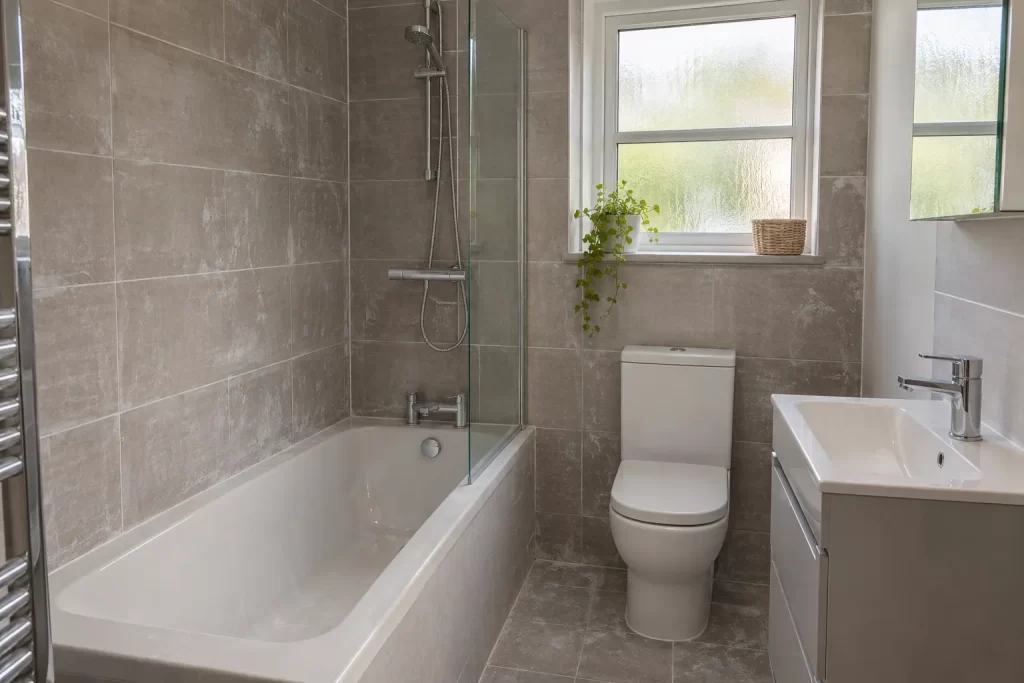
A newly fitted bathroom has several surfaces that look washable but may not yet be ready for cleaning. Grout, sealant, paint, glass and metal fittings each have their own care requirements. Before asking for a post-build clean, get a handover from the installer and separate construction residue from defects. That protects the finish and makes the bathroom easier to use safely.
Ask for a proper handover
Confirm that drilling, cutting, grouting and sealing are finished. Ask when each area may be used, cleaned and exposed to water. Follow the manufacturer’s and installer’s instructions rather than relying on a general waiting period. The shower may be ready at a different time from a painted wall or a new floor. Keep the product names and care information with the job record.
Ask the trade to remove tools, packaging, tile offcuts and agreed waste. Do not fill a domestic bin with sharp debris or heavy rubble without a suitable plan. Check that access to the toilet, basin and shower is clear. If another trade still needs to return, agree whether cleaning should wait until their work is complete.
Keep the commissioning information for the fan, heated towel rail and any powered fitting. A newly fitted bathroom should not be treated as a collection of surfaces only. If a switch or appliance is unfinished, have the installer or appropriate trade confirm its condition. Do not spray water or cleaner into openings to remove dust. The safe first clean begins after the room is properly handed over.
Inspect before treating marks
Look at the grout lines, tile edges, sealant and fittings in good light. Photograph anything that appears unfinished, cracked, loose or misaligned. Cleaning cannot correct poor sealing, a leaking connection or a chipped tile. Report those issues to the installer before a cleaner is asked to work around them. A visible mark may be adhesive or grout residue, but it may also be part of the surface.
Do not scrape hardened material from glass, acrylic, enamel, stone or metal by guesswork. A blade or abrasive pad can scratch a finish or remove a coating. Ask what created the deposit and which removal method the manufacturer permits. If a trade caused the mark, clarify whether they will correct it. Keep defect work distinct from ordinary post-build cleaning.
Treat grout haze carefully
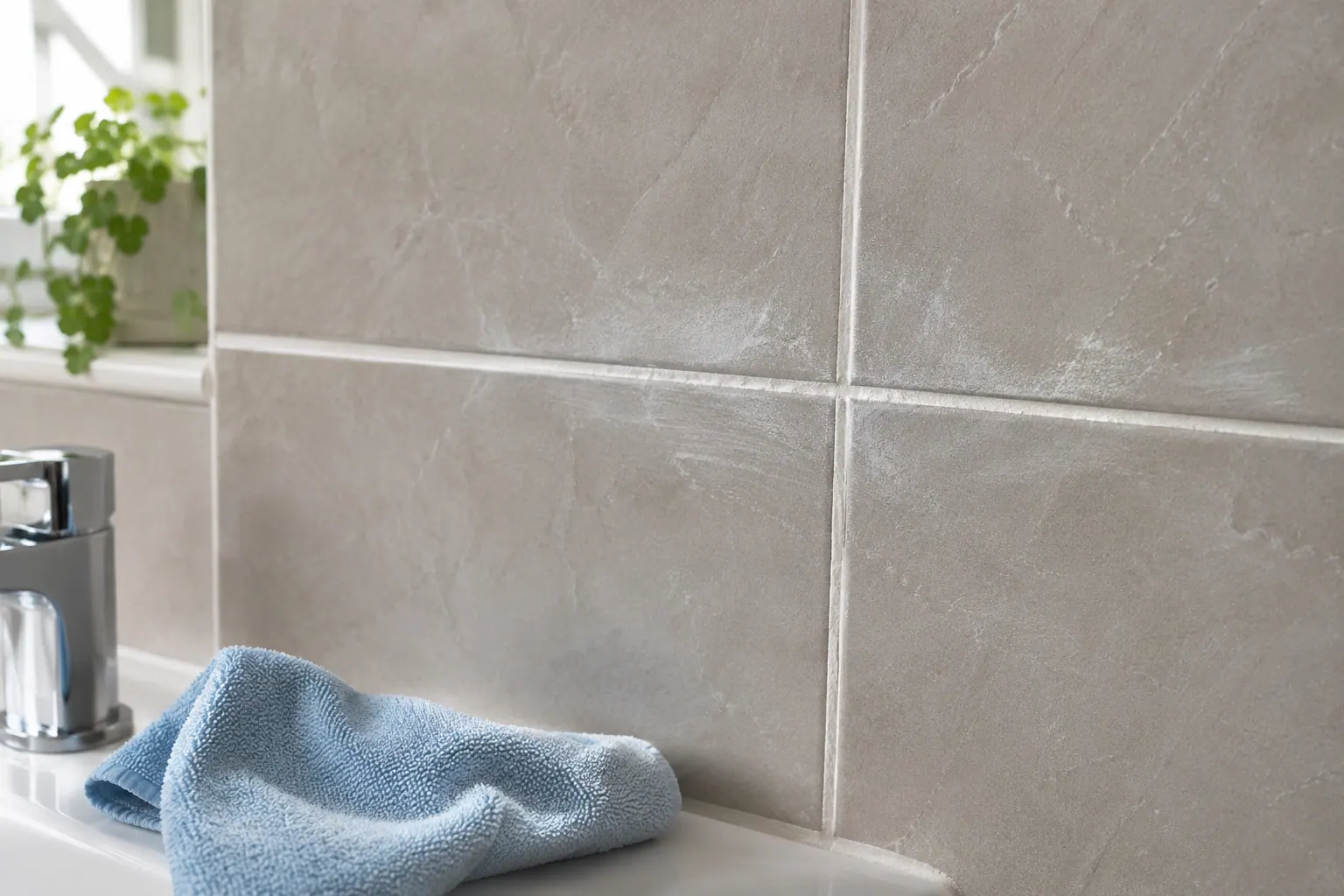
A fine film on tile after grouting can be tempting to remove with a strong product. First identify the tile and grout, read the product instructions and confirm that curing is complete. Natural stone, decorative coatings and some metal trims can react badly to a method suitable for plain ceramic tile. Do not assume vinegar or another household acid is harmless. Stop if the finish changes colour or texture.
If you cannot identify the surface or the residue, ask the installer for guidance. Photograph a small area and record any product already used. Repeated experiments can make later assessment harder. A cleaning visit should be planned around an agreed method, not an improvised attempt to remove every pale patch with the strongest available liquid.
Glass screens can show fingerprints, dust and installation labels at the same time. Check whether the manufacturer has supplied instructions for coatings and adhesive removal. Wipe only what is appropriate for the stage of installation. A scraper that seems harmless on ordinary glass may damage a treatment or nearby trim. Leave a firmly stuck label for a method agreed with the installer rather than forcing it off during a timed visit.
Keep water where it belongs
Check that taps, drains, shower screens and the toilet work as intended before deep cleaning. If a connection leaks, switch off or isolate it as appropriate and contact the responsible trade. Do not keep wiping a wet cabinet or floor while the source remains active. New cabinetry and flooring can be damaged by pooled water. Let the installer confirm the repair and any drying needed before the area is cleaned.
Follow the instructions for newly applied sealant. Washing or wetting it too soon may interfere with the finish. Avoid pressing a cloth into fresh joints simply to make them look tidy. If the line is uneven or has gaps, report it as installation work. A cleaner should not be expected to remove and replace sealant during a bathroom cleaning visit.
Ventilation matters during and after the work. Confirm that the fan has been fitted and commissioned where relevant, and ask how it should be maintained. Do not take apart an electrical fan or spray into its housing. If moisture continues to collect after normal use, the cause needs assessment rather than repeated surface wiping.
The floor deserves its own check. Identify whether it is tile, vinyl, timber or another finish and obtain the first-clean instructions. Grout, adhesive and floor coating may have different restrictions. Keep heavy buckets and abrasive tools off a vulnerable surface. Once cleaning is appropriate, work towards the exit and let the floor dry before replacing mats or allowing normal traffic. A wet surface can hide a slip risk.
Describe the actual cleaning scope
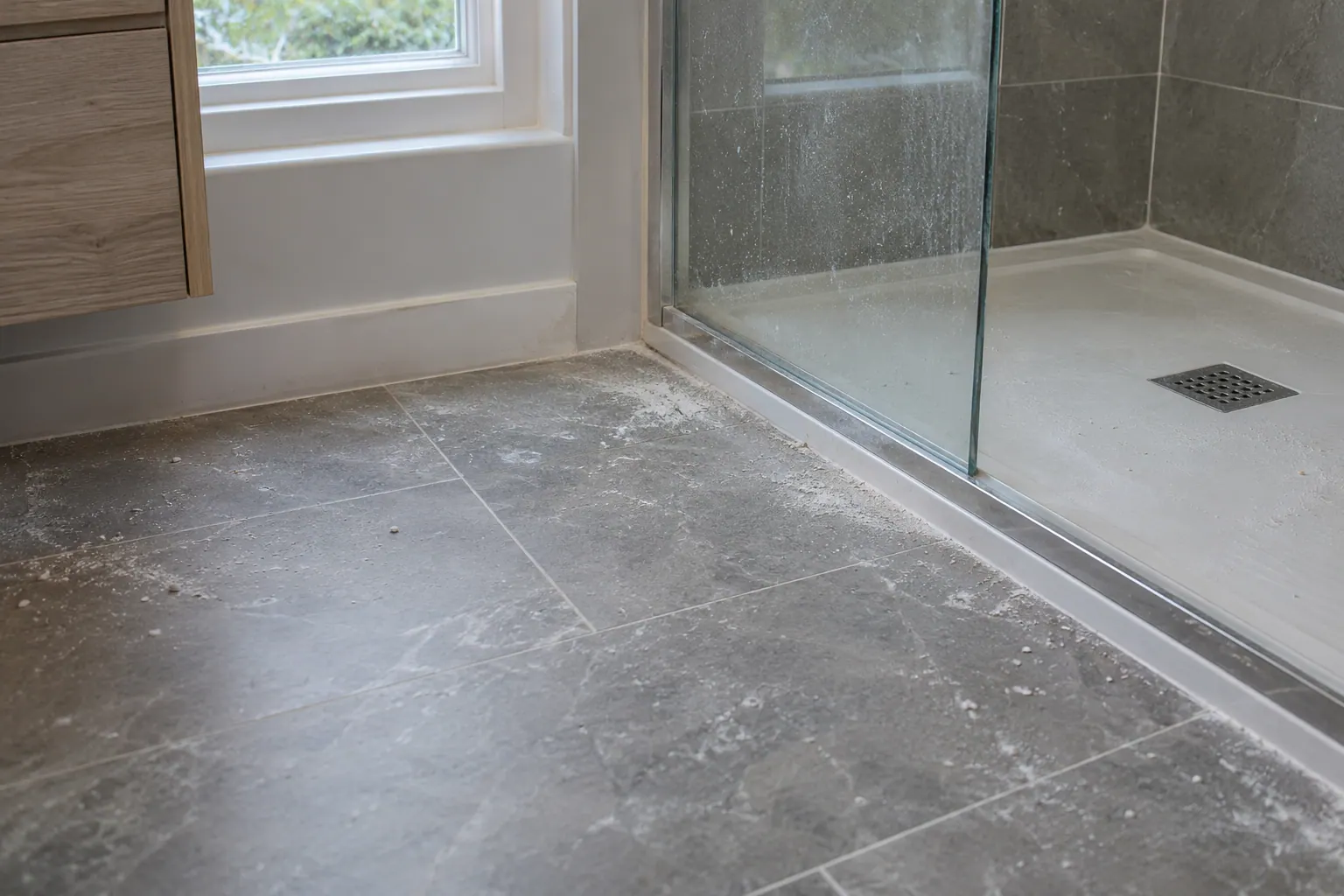
List the accessible tiles, basin, toilet, bath or shower, screen, cupboard fronts and floor. Say whether empty cupboards are included. Point out new stone, specialist coatings or manufacturer restrictions. Ask the contractor what dust was produced during cutting or drilling; unknown building dust needs suitable assessment and equipment, not dry sweeping. The HSE’s construction dust advice explains why source and method matter.
Clean reachable higher ledges before the lower fittings and floor once the materials are ready. Keep cloths and products appropriate for each finish, and do not mix cleaning substances. Allow the floor to dry before normal use. If an area must remain untouched while it cures, mark that exclusion clearly in the brief so nobody interprets it as a missed task.
Check the finished bathroom against the agreed scope and refer unresolved defects back to the installer.
For a bathroom left with building residue, discuss after builders cleaning after the installer has handed over the room. If only a small, fully finished space needs attention, ask whether one-off cleaning fits the agreed tasks. Give the materials, curing instructions and unresolved defects up front. A careful plan is more useful than trying to make a new bathroom look finished before its fittings and finishes are ready.