

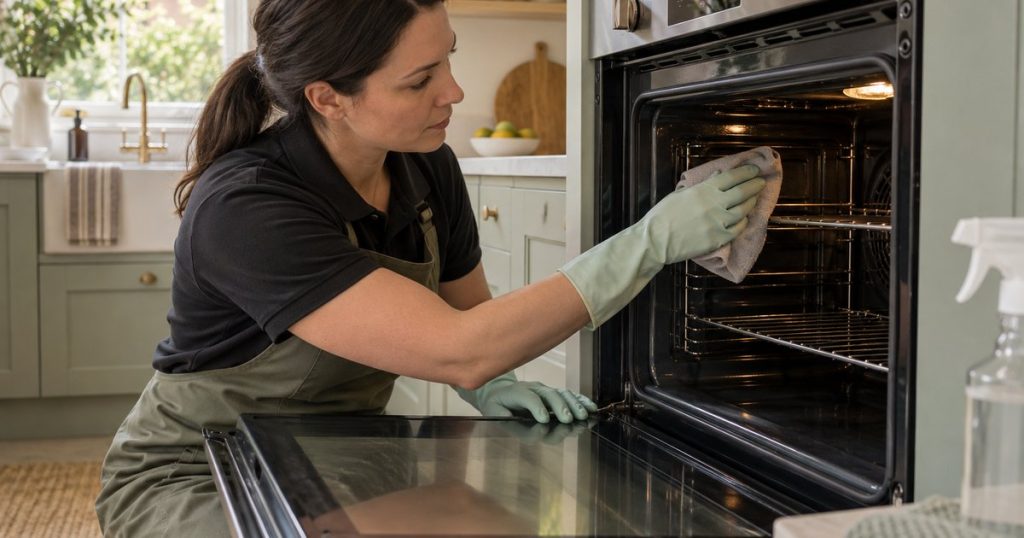
A kitchen combines food preparation areas, appliance finishes, electrical fittings and different surface materials. Treating everything with one spray is a poor shortcut. Plan by area and finish, with separate decisions about internal oven work and other specialist tasks.
Clear a working area
Put food, utensils and personal items away before working on a surface. Lift loose crumbs and choose a product compatible with the finish. Stone, timber, painted fronts and stainless steel may need different methods. Keep cloths used around toilets out of the kitchen cleaning kit and change dirty cloths before moving to another area.
Read product restrictions
Check instructions, dilution and compatible surfaces. Natural does not mean suitable for every finish. Never mix cleaning substances or combine leftovers in a bottle. The HSE guidance on cleaning substances explains safe product use. Keep original labels readable and store products as instructed.
Give each appliance a scope
Internal appliance cleaning may need preparation, cooling time and manufacturer-specific methods. Avoid spraying hot surfaces or flooding controls, vents and seals. Identify the appliance make and type. A range cooker, microwave and fridge need different discussions rather than a general request to clean all kitchen appliances.
Book the tasks you need
For baked-on deposits, discuss oven cleaning and which removable parts are included. If several appliances need attention, list them when enquiring about appliance cleaning. A household visit can then focus on the accessible kitchen surfaces included in its own agreed checklist.