

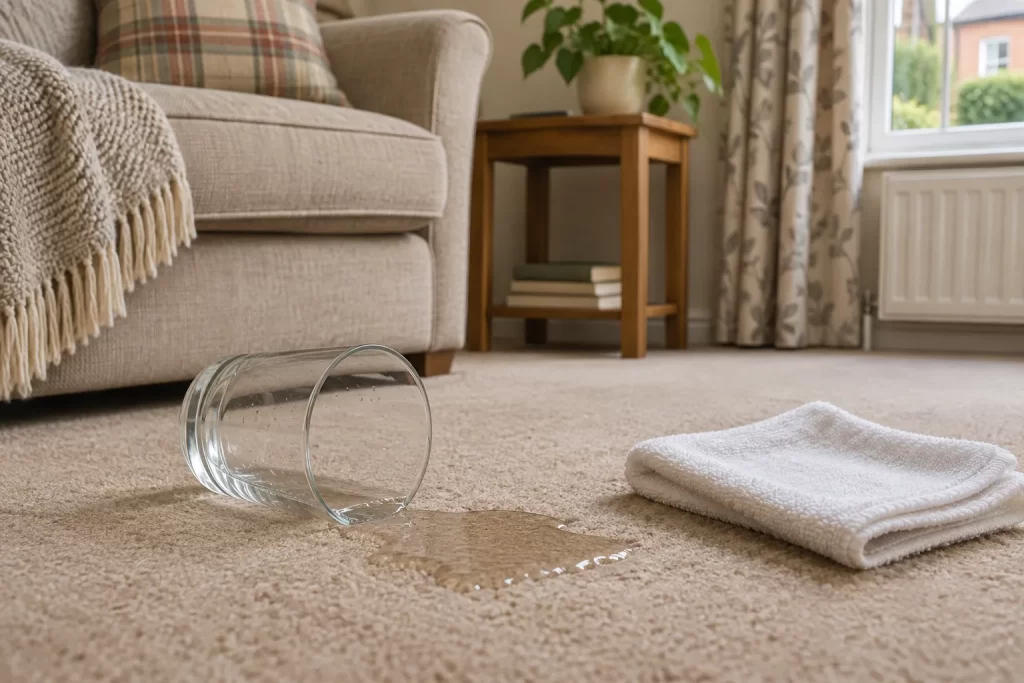
A drink tipping onto carpet calls for a calm response, not a cupboard full of stain removers. The first aim is to keep the spill from spreading while you find out what the carpet can tolerate. Fibres, dyes, backing and any previous treatment affect the safest next step. Work gently and keep a record of what happened.
Make the area safe before touching the stain
Move people away from the spill so it is not walked into a larger area. Keep children and pets away from a wet patch. If a glass has broken, deal with the sharp pieces first, using suitable protection; do not press them into the pile with a cloth or vacuum an area until you know it is clear. If the spill reached an electrical lead or socket, stop and address that hazard before cleaning.
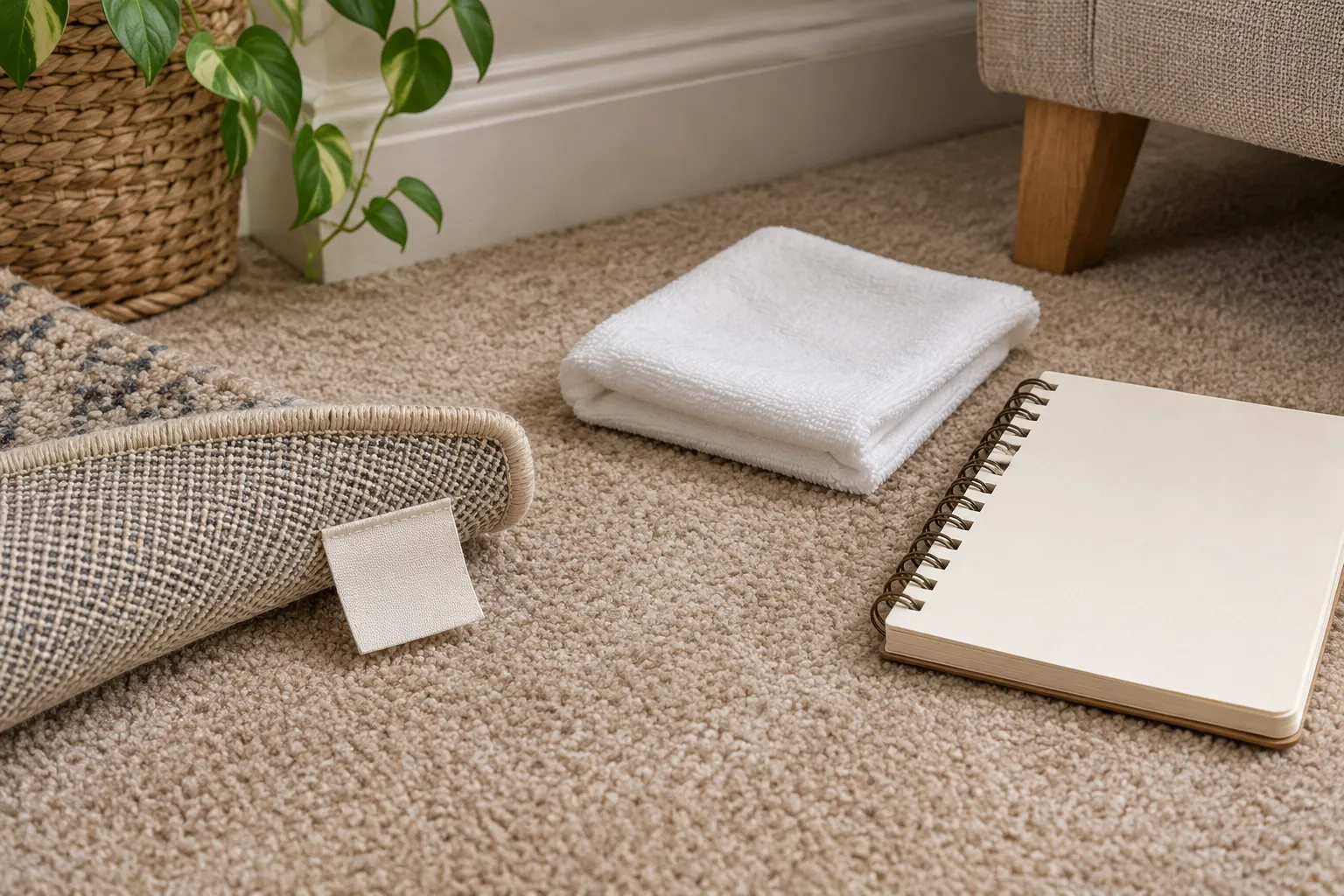
Check whether the carpet is fitted, a loose rug or a mat. A loose item may have a care label on its underside. Do not lift a large soaked rug alone or drag wet material over timber flooring. Protect the surrounding floor from moisture if you can do so without spreading the spill.
Lift material rather than rubbing it in
If there are loose solids, lift them carefully with a suitable blunt implement or clean absorbent material. Avoid scraping the pile. For a fresh liquid, place a clean, colourfast absorbent cloth or paper over the area and apply gentle pressure. Work from the outer edge towards the centre to limit spread. Replace the absorbent material as it becomes wet. Do not rub, scrub or twist the fibres.
Blotting is a first response, not a guarantee that the stain will disappear. Stop if colour transfers from the carpet, fibres lift or the area changes unexpectedly. Avoid adding large amounts of water. Moisture may pass through the backing and into underlay, where it is harder to assess and dry. A visible patch can become smaller while the material beneath remains wet.
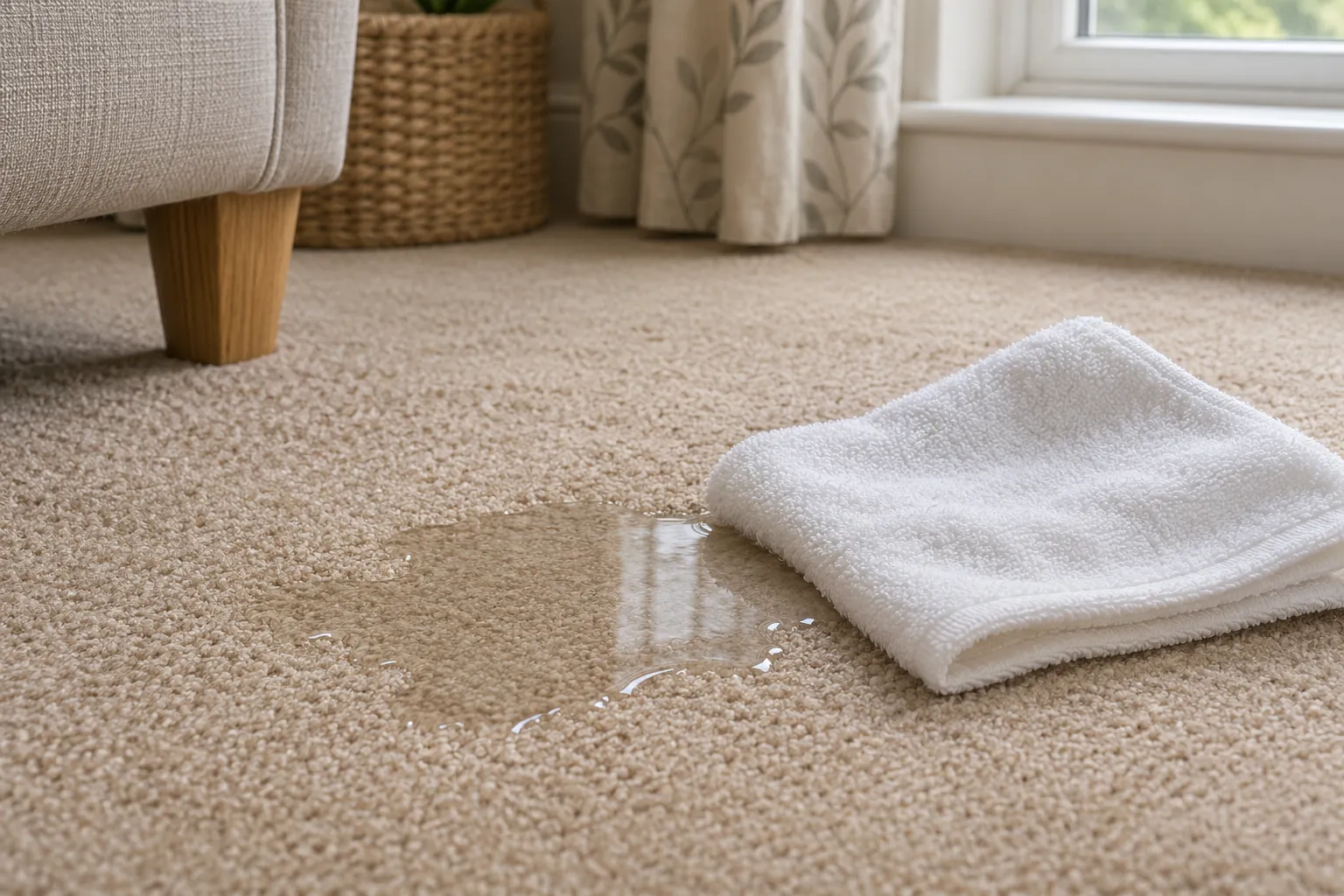
Check the care information before adding a product
Read the carpet or rug manufacturer’s instructions where available. A product that suits one fibre or dye may not suit another. Never mix products, and do not use bleach, strong solvents or a homemade recipe simply because it appears in a general online tip. If a label recommends a test in an inconspicuous place, follow its instructions and stop if the finish changes. Unknown fibres or prior treatments are reasons to seek advice rather than experiment.
Be cautious with heat. A hairdryer, steam tool or hot water can affect some stains and materials and may make the problem worse. Do not assume a dry surface means the backing is dry. Keep the area ventilated in a way that is safe for the room and its occupants, and avoid normal use until the carpet is appropriately dry.
Record what spilled and what you did
Write down the substance, approximate amount, time and location. A photograph before and after first response can help describe the area. Note any product used, including its name and concentration, and whether water was added. This is useful information for a carpet cleaning enquiry. A cleaner cannot infer the spill from colour alone, and previous treatments can affect the next method.
If the source is unknown, say so. Do not guess that a dark mark is coffee or a pale ring is only water. The age of the mark, fibre and previous cleaning history matter. If the spill involved bodily fluids, chemicals or another material that could present a hazard, explain that clearly before arranging work. Ordinary stain treatment may not be appropriate.
Know when to stop at first aid
Some spills are larger than the visible mark. Liquid can travel beneath furniture or through a rug to the floor below. If the area remains wet, develops an odour or affects a broad section, seek an assessment. Repeatedly soaking the same patch can leave residue, encourage a returning mark or damage the backing. Scrubbing a stubborn edge can create a permanently different texture even when the colour improves.
A one-off incident does not automatically require cleaning the whole home. If other rooms also need attention, discuss a separate one-off cleaning scope and keep specialist carpet work clearly identified. Give the provider an accurate account of what needs attention, rather than assuming a general room clean includes a stain treatment.
Make the follow-up practical
Keep furniture and foot traffic off the affected area until it is dry. If the spill came from a leaking plant pot, pet bowl or appliance, fix the source before treating the same patch again. Check nearby skirting and flooring for moisture. Report building or plumbing damage to the person responsible for the property; carpet cleaning will not correct the cause.
Describe the spill, not just the colour
Water, a sweet drink, cooking oil and paint present different questions, even when the fresh marks look similar. Plain water can carry soil from the pile or backing as it moves. A sticky drink can leave residue after the visible liquid is lifted. An oily substance may resist a water-only response. Paint may require information about the product and whether it has cured. None of these differences is a reason to try several household chemicals in sequence.
Keep the packaging or take a clear picture of its label if that can be done safely. This gives specialists useful information rather than a guess about the stain. If a product has spilled from an unmarked container, do not handle it as an ordinary drink accident. Identify it first and follow safety guidance.
Note the size and location of the spill. A small patch at the surface is a different enquiry from liquid that ran under a sofa or reached a doorway. Ask whether furniture movement or an inspection of the backing is possible, and what access would be needed. Do not promise that the stain can be fully removed from a photograph. The sensible next step depends on the material and the condition found on site.
Fresh spills are easier to describe when you act methodically. Protect the area, lift material gently, check the carpet guidance and record each step. If the stain persists or moisture may have reached beneath the surface, ask for an informed assessment before trying another product.