


A carpet mark can appear to vanish while the pile is damp, then show again the next day. That does not always mean the first clean was careless. Moisture, residue, fibre wear and soil below the visible surface can produce similar looking results. Understanding the pattern helps you decide what information to give a cleaner and when to stop treating the spot yourself.
Observe what returns
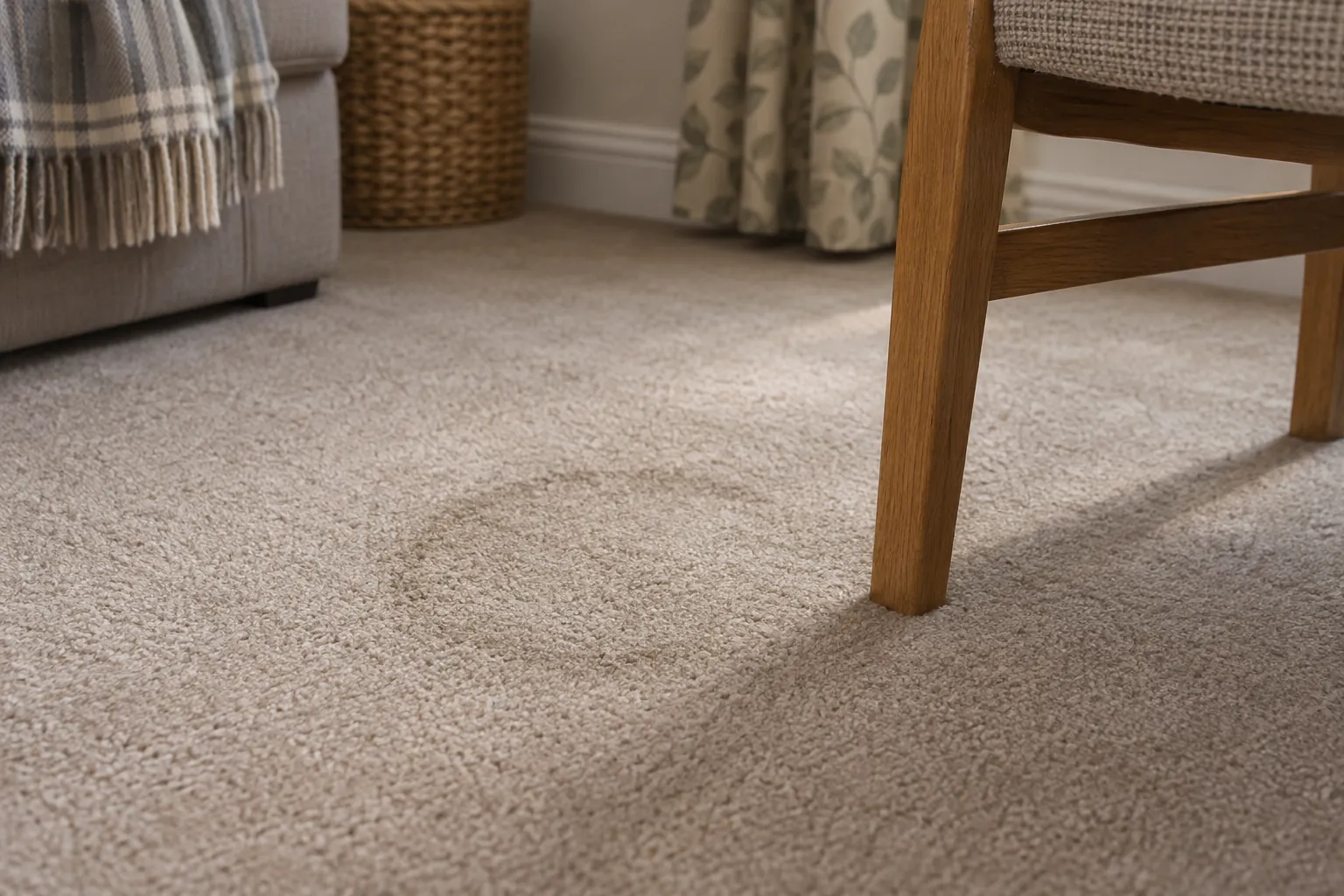
Look at the patch in ordinary daylight after the carpet has dried. Is it the same colour and shape as the original mark, a pale ring around it or a different texture? Has it appeared in exactly the same place several times? Take a photograph with a nearby reference point and note when it was taken. Avoid rubbing the pile to compare colours, since that can change the way the fibres reflect light.
Record whether the carpet feels damp, sticky or stiff. An odour that returns when the room warms may be relevant. These observations do not diagnose the cause, but they are more useful than saying that the stain “came back”. If the area is persistently wet, investigate the source and any effect on the floor beneath before planning another surface clean.
Consider material below the pile
Liquid can move through a carpet into its backing or underlay. As a damp area dries, dissolved material may move towards the visible surface again, sometimes called wicking. This is one possible reason for a returning mark, not a certainty that can be established from a photograph. The extent of the original spill, carpet construction and drying conditions all matter.
Repeatedly adding water can make the situation harder to assess. It may spread residue or leave material beneath wet for longer. Do not lift a fitted carpet or pull at its edge without an appropriate assessment. A large spill, leak or flood may require a different response from ordinary stain cleaning, especially when the underlay or subfloor is affected.
Ask what product residue remains
A stain remover or detergent can leave residue if it was used incorrectly or could not be removed adequately. The area may then attract more soil during normal use. A sticky patch on a busy walking route can darken again, even if the original spill was partly removed. Note every product used, how much, whether it was rinsed according to the label and whether another treatment followed.
Do not layer a second chemical over the first in the hope that one will cancel the other. Mixing products can be unsafe and may affect the carpet. Follow the manufacturer’s care information and ask a specialist about compatibility if the history is uncertain. When arranging carpet cleaning, give the product names and sequence as accurately as you can.
Distinguish colour from pile change
Flattened pile, fibre damage, fading or dye change may remain visible after soil has been removed. A cleaned spot can look lighter than its surroundings because the rest of the carpet is still soiled. The reverse is also possible: a worn area may look darker from one direction. Examine the patch from several viewing angles without scrubbing it. Note whether the texture feels different.
Cleaning can address suitable soil; it cannot restore fibres that have been abraded or a colour that has changed permanently. This distinction matters when setting expectations. A professional assessment may narrow the likely cause, but a guaranteed result should not be inferred from a brief description or photograph.
Check for a continuing source
A plant pot, radiator, window or appliance may be adding moisture or soil to the same area. A pet may return to a previous accident location. A doorway may bring in grit every day. If the mark follows a leak or damp wall, repair and drying take priority. Repeated cleaning of the visible patch will not resolve a building defect or an ongoing source of contamination.
Keep the area accessible and explain any earlier water damage. If the problem is part of a wider room reset, a one-off cleaning visit can be scoped separately from specialist carpet assessment. Name the affected carpet explicitly so the correct questions can be asked before the appointment.
Prepare a clear enquiry
Give the carpet material if known, the size of the patch, the original spill, previous products, drying history and any recurring moisture. Say whether the stain has changed shape or returned after a particular treatment. Ask what can be assessed on site and whether the proposed method is suitable for the carpet and its condition. Arrange access around furniture without moving heavy items yourself.
Until then, avoid further soaking, heat or aggressive brushing. Keep people off a wet patch and allow safe ventilation. If the surface remains damp unexpectedly, treat that as a moisture issue needing attention, not merely a cosmetic stain.

Compare the whole area, not one spot
A photograph taken while the carpet is wet can mislead. Damp fibres often look darker, and light from a window changes across the day. Compare the affected patch with nearby carpet only after both are dry and in similar light. Look for a boundary where furniture protected the pile from wear, or where a previous cleaning reached.
Do not create a test patch with a new product to prove the point. If you have care information, check whether the fibre, backing or stain-resistant finish places limits on wet cleaning. Keep that information for the person assessing the mark. A loose rug can have different layers from a fitted carpet, and its care instructions may call for another approach entirely. Describe what you know rather than assuming every carpet in the room is the same.
Drying time cannot be promised from a general rule. Room temperature, airflow, pile, backing and how much moisture was used all affect it. Ask the cleaner what access and ventilation are needed after treatment and when the area may be used normally. If the patch remains damp beyond the expected period, report that promptly. The observation may be more important than the visible colour, especially if moisture could have reached the floor below.
A returning mark is a clue, not an invitation to scrub harder. Record its pattern, stop adding products and describe what happened beneath and around the visible area. That gives a carpet specialist a sounder basis for recommending the next step.