

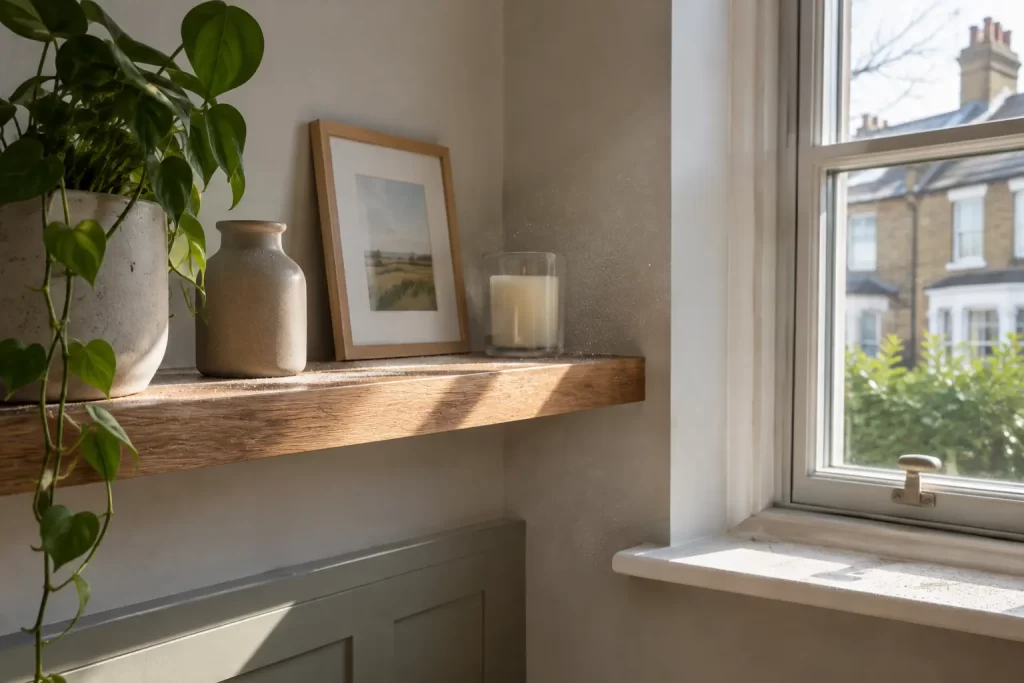
You wipe a shelf after building work, return an hour later and see another pale film. That does not automatically mean the first clean was careless. Fine particles can remain on overlooked ledges, inside fittings or in the air while work continues. The useful response is to identify the source and review the cleaning method, not to keep brushing the same surface without a plan.
Ask whether dust is still being made
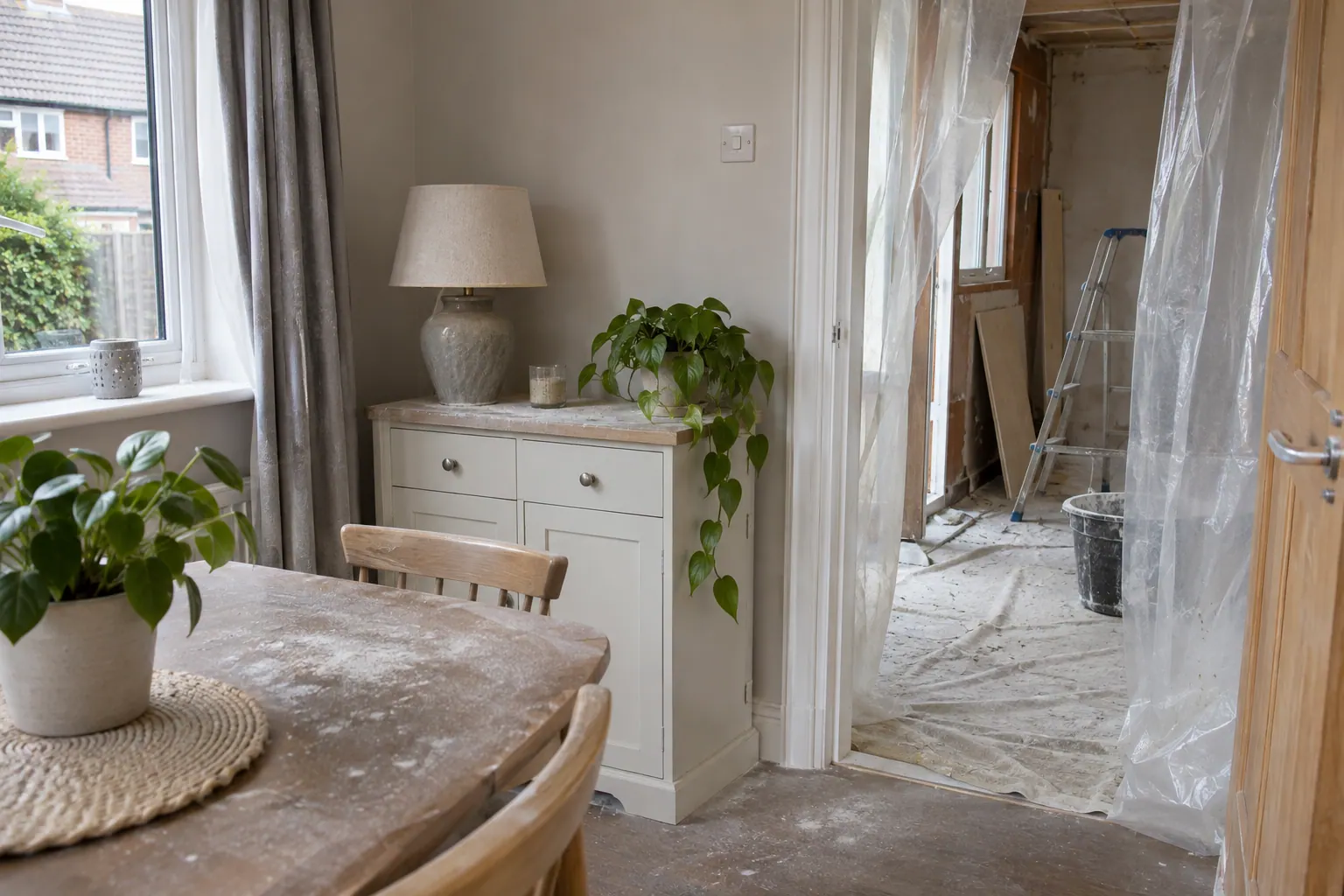
Find out if anyone is sanding, drilling, cutting or moving dusty materials elsewhere in the property. Dust can travel through an open doorway or a shared air route and settle after the room has been cleaned. Agree that dusty work and waste removal finish before a detailed clean begins. A final visit cannot remain final while the source is active.
If bags or sheets of dusty material are still being carried through the room, the floor may need another pass. Keep routes and handover times clear. The aim is to avoid treating ordinary cleaning as a substitute for controlling dust where it is produced.
Ask where extraction equipment was used and whether doors were kept closed while cutting. You are not auditing the contractor’s entire process; you need enough information to identify a continuing source. A newly opened cupboard full of residue can release particles each time it is used. If the work area adjoins a bedroom or kitchen, include the threshold and nearby reachable surfaces in the inspection.
Understand what the dust may contain
Ask what materials were worked on. Plaster, timber, concrete and unknown older materials are not interchangeable. The Health and Safety Executive’s guidance on construction dust notes that dust from building tasks can pose health risks. It also warns that dry sweeping can raise dust levels. If the material is unknown or there is a suspected hazardous substance, stop and seek competent advice before attempting household cleanup.
Do not use a normal household vacuum simply because the nozzle fits a gap. The equipment must be suitable for the assessed dust, and emptying it can also release particles if handled badly. Ask the contractor what controls and collection method were used during the work. A suitable after-build cleaning plan should account for the material and the people who may be exposed.
Look beyond the obvious shelf
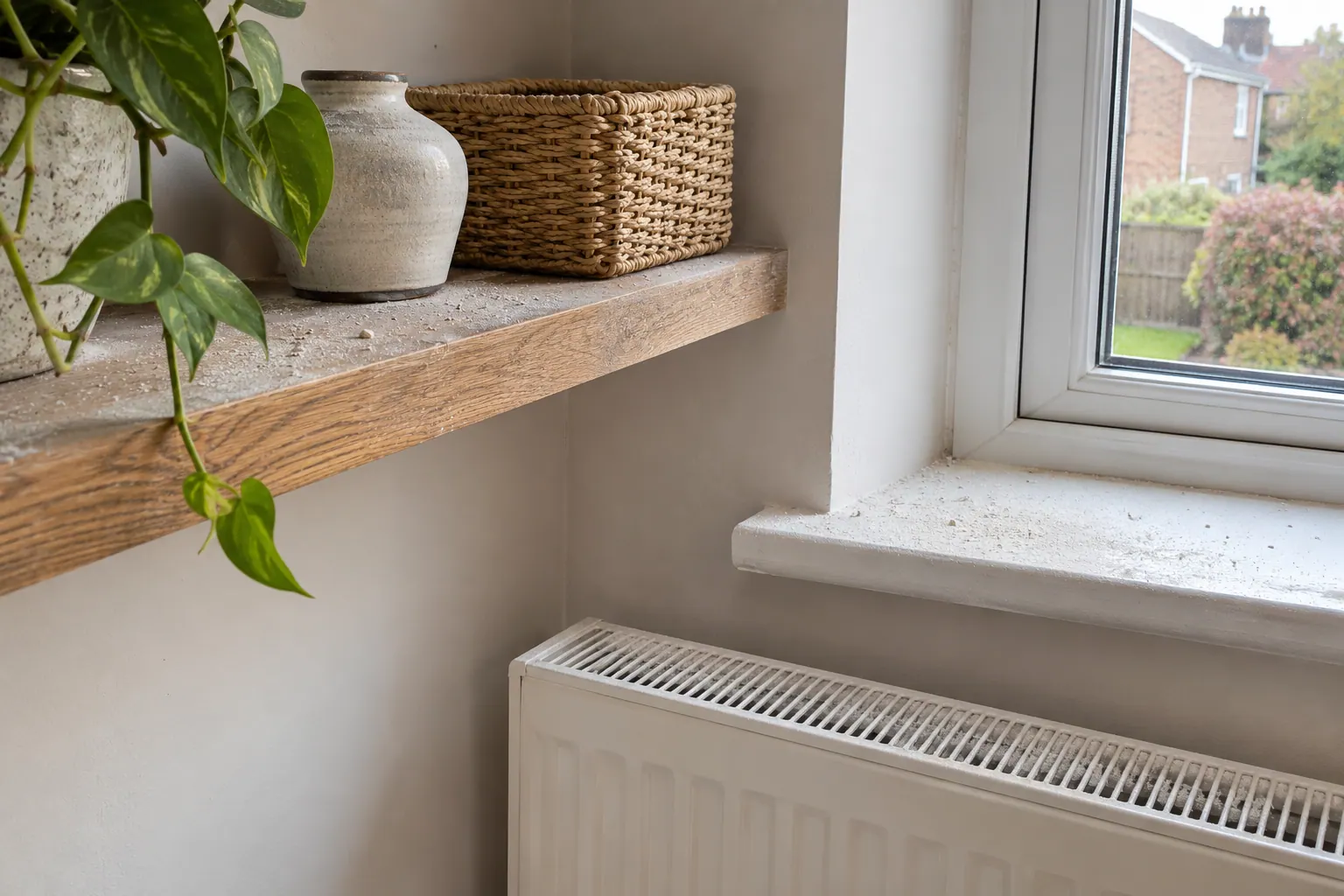
Dust can rest on the top edges of doors, reachable light fittings, window reveals, cupboard lips and the backs of accessible surfaces. A later draught or movement may shift it onto a cleared shelf. Inspect these places with good light, without climbing on furniture or opening electrical fittings. Make a list of what is safely reachable and what needs a separate access plan.
Check the spaces where clean and dusty areas meet. Door frames, thresholds and nearby corridors may be missed if the brief named only the new room. If a cupboard was left open during work, its empty shelves may need attention; if it stayed closed, do not assume the inside is dirty. A specific scope helps avoid both omissions and needless handling of stored belongings.
Use a simple location record instead of photographing every square centimetre. Note whether the film appears on horizontal surfaces, beside a vent, along a door edge or throughout the room. Check at similar times of day in consistent light. That makes a new deposit easier to distinguish from a patch missed on the first pass. It also gives a cleaner a practical starting point for a second inspection.
Review the first cleaning pass
Ask what method was used and whether the cloths or equipment were changed when loaded with residue. A dirty cloth can leave a fine film. Dry brushing can put particles back into the air. Depending on the assessed material and finish, suitable extraction or carefully controlled damp methods may be appropriate. Follow the surface manufacturer’s guidance; too much water can harm new timber, laminate or unsealed finishes.
Work from reachable higher surfaces towards lower ones and the floor. Inspect after the first pass when the room has been still for a while. If dust returns, note where it appears first. A pattern near a vent, door or newly installed unit may point to a remaining source or hidden ledge. Record the observation before repeating the same wipe.
Ventilation needs thought. Opening windows can be useful where safe, but a strong draught may move loose dust from an unfinished area into a clean one. Ask the contractor how the work zone was separated and whether ventilation equipment has been checked. Do not remove filters or open ductwork as part of a household clean. Those components need an appropriate maintenance plan.
Do not use a fan to blow dust off a shelf. It moves particles into another part of the room and can carry them towards people nearby. Keep children and pets out of the work area until the dust issue is understood and the room is ready. If soft furnishings were left uncovered, inspect their care labels and condition before brushing them or attempting wet treatment. Fabric needs its own method.
Set a sensible endpoint
Once dust-producing work has ended, the material is understood and accessible surfaces have been cleaned with a suitable method, check the room in normal light. Keep a note of any residual film and where it appears. A single trace on a high inaccessible surface is a different issue from repeated dust across a child’s bedroom floor. Discuss the remaining area and access rather than declaring every mark the same problem.
If the room is being occupied, explain what was checked and what remains unresolved. Do not promise that a room is free of all airborne particles because a shelf looks clear. A visible inspection can show whether residue is recurring on accessible surfaces, but it cannot measure exposure or identify every substance. Where there is a genuine concern about material or health, seek competent assessment rather than relying on repeated domestic cleaning alone.
For a planned response to post-build residue, describe the work and dust source when asking about after builders cleaning. If the source is resolved and only a limited room remains, a one-off cleaning visit may be suitable. Confirm what the visit can safely cover. The priority is to stop new dust, collect existing residue appropriately and inspect before calling the room finished.