

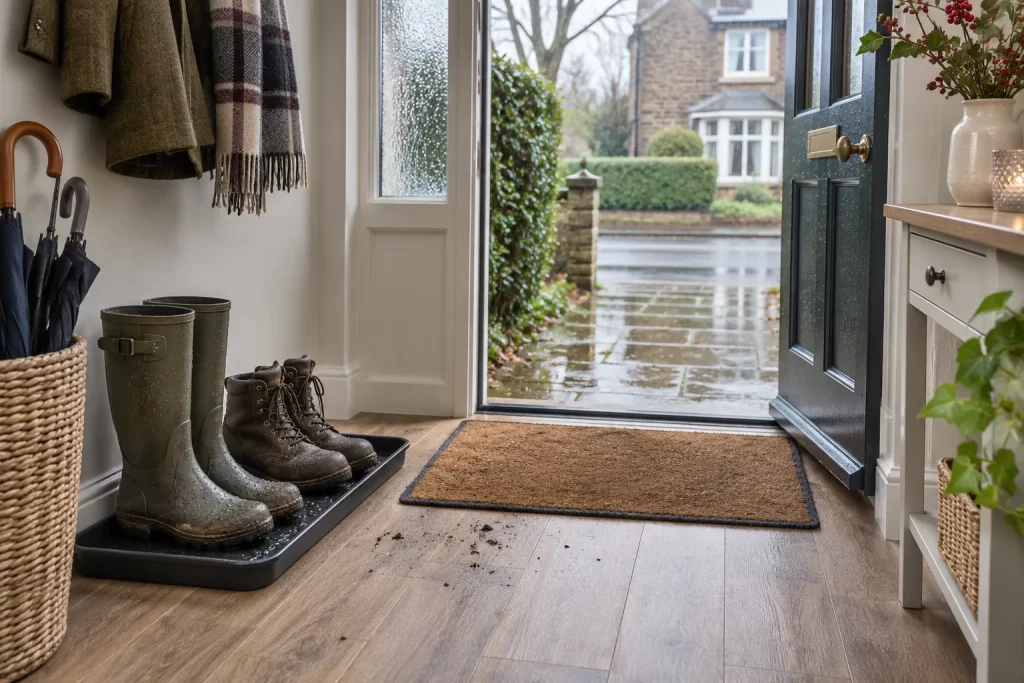
An entrance takes the first hit from wet shoes, grit, leaves and dripping coats. By late winter, the dirt may have moved beyond the doormat to the threshold, skirting, lower walls and floor joints. Cleaning it well means collecting abrasive grit before wiping and respecting the floor material. A small, repeatable routine is more useful than flooding the area in one ambitious session.
Start with the source of the dirt
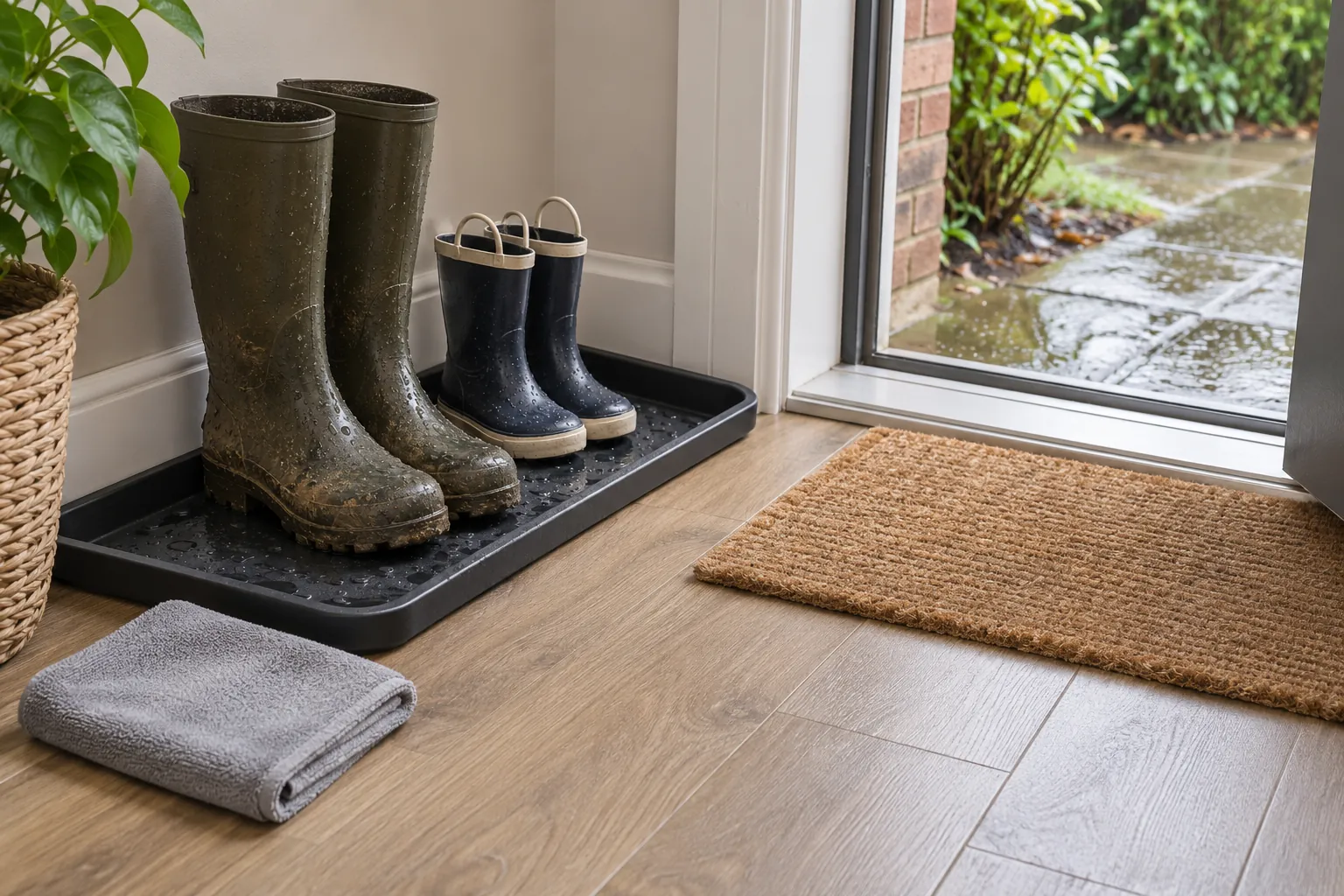
Look at the route from the outside door to the first place people stop. Are shoes left on a mat, or does everyone walk across the same patch of floor? Does a wet umbrella drip beside a painted wall? Notice the areas that become dirty again immediately after cleaning. A boot tray, suitable mat or place to hang damp coats may reduce the mess, but choose items that do not block the door or create a trip hazard.
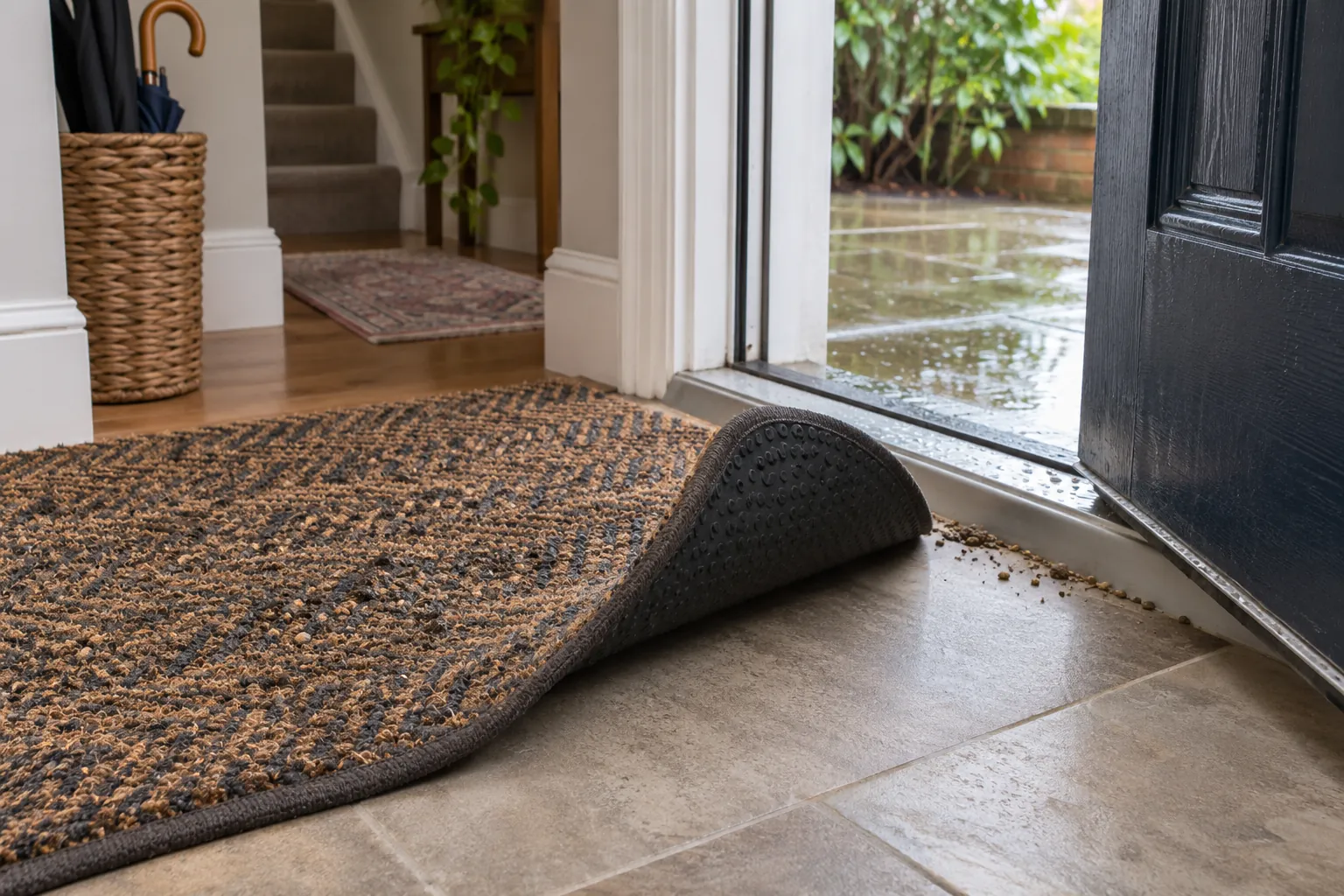
Take mats outside or to an appropriate area before cleaning beneath them. Follow their care labels: some can be shaken and vacuumed, others need washing or professional attention. A saturated mat can hold moisture against the floor and conceal a damaged finish. Let it dry thoroughly before replacing it, and check that it lies flat.
Sweep or vacuum loose grit with equipment suitable for the flooring. Work around edges where small stones collect. Wiping across gritty material can scratch a hard surface; rubbing it into carpet can drive it deeper. Empty the vacuum or change the collection method if the material is wet and the equipment is not designed for it.
Inspect the threshold and door
The threshold has several materials close together: a door seal, frame, floor edge and possibly metal trim. Remove loose dirt gently and choose a method compatible with each surface. Avoid pouring water into joints or under a door. A failed seal, loose strip or recurring leak needs repair rather than stronger cleaning.
Wipe accessible lower door panels and handles with a suitable product, following its directions. Check painted surfaces before using anything abrasive. If the door has glazing, keep glass products off finishes they are not intended for. Clean only what you can reach safely; an outer pane at height is a separate access question.
Take note of dark marks that return quickly, softened timber or a musty smell near the frame. These can point to moisture entering or remaining in the area. Record when they appear and ask the appropriate person to investigate. Do not hide the issue under another mat.
Match the floor method to its finish
For sealed tile, collect grit before using a compatible floor product. Rinse or dry as the product and surface instructions require. Grout and tile can have different finishes, so avoid assuming one abrasive method suits both. Leave the walking route clear until the floor is safe to use.
Timber and laminate require particular care around seams and edges. Excess water can enter joints and affect the boards. Use the manufacturer-approved method, with a cloth or mop that is not dripping, and dry any remaining moisture promptly. If a board is swollen or lifting, cleaning will not restore it; identify the source and consider repair.
Vinyl, stone and other hard floors also have specific restrictions. Some stone finishes react badly to acidic products, while a damaged seal changes how liquid behaves. Check the material and care guidance before trying a stronger cleaner. When the finish is uncertain, test only as the manufacturer recommends or seek material-specific advice. A hard floor cleaning service can discuss the scope once the surface is identified.
If the entrance is carpeted, remove dry loose soil with a suitable vacuum setting. Blot a fresh spill only if the care guidance allows it. Do not soak an old dark patch or use several stain removers in succession. Describe the fibre, backing if known, and previous treatments when asking about carpet cleaning.
Deal with walls and storage carefully
Lower walls may show scuffs from bags, shoes and pushchairs. Lift loose dust first and check the paint finish before wiping. Flat or aged paint can mark or transfer colour. Try a small inconspicuous area where appropriate and stop if the finish changes. A scratch through the paint is a repair, even if a wipe improves the surrounding dirt.
Wipe accessible skirting and the outside of shoe storage without emptying every compartment. Store damp footwear where it can dry safely rather than closing it inside a cupboard. Keep cleaning substances in their labelled containers and away from children and pets. Never combine leftover products to make a stronger mixture.
If the entrance is part of a shared hallway, check who is responsible for the common area before arranging work. Keep bags, buckets and wet mats out of shared escape routes. A useful clean should improve the route into the property without making it harder for anyone to pass.
Before cleaning, move items you can lift securely. A packed shoe rack or umbrella stand may be unstable when shifted. Set belongings on a dry surface and return them once the floor is finished. Check whether water has collected underneath containers, where it can be missed during mopping. If the base of a cabinet is soft or the wall behind it remains damp, pause and report the condition before replacing the furniture.
Make the next clean easier
Once the surfaces are dry, replace the mat and observe the route for a few days. If grit gathers at one edge, adjust where shoes are removed. If water repeatedly crosses the threshold, investigate drainage or the door seal. Simple observations help you choose between maintenance and cleaning instead of repeating the same wipe without changing the cause.
For a wider seasonal reset, include the entrance in a spring cleaning visit and specify the floor type, mats and lower surfaces. Mention existing damage and moisture before the appointment. A clear scope helps protect the finishes and keeps the work focused on removable dirt.
The final check is practical: the door opens freely, the mat sits flat, the floor is dry and no product residue is left where people walk. Keep grit collection frequent during wet weather, then reserve more detailed work for when the area is safely accessible. That gives the entrance a cleaner start without treating every worn edge as a stain.