


A freshly decorated room may look finished before its surfaces are ready for ordinary cleaning. Paint, filler, sealant and flooring products can have different care and curing instructions. Ask what was used and when the work ended before reaching for a cloth. A short handover from the decorator can prevent a well-meant clean from marking a new finish.
Confirm the work is complete
Find out whether sanding, drilling, cutting or touch-up painting is still planned. If so, agree a final handover date rather than cleaning between trades. Fresh dust will otherwise land on surfaces you have already finished. Ask the contractor to remove tools, offcuts and agreed waste. Cleaning a room is easier when it is no longer a work area and access to the floor is clear.
Check the room in daylight if possible. Look for unfinished edges, exposed cables, loose fittings and wet areas. Record anything that needs a trade to return. Do not push a cleaner to work around unstable fittings or an active electrical job. A paint splash on a socket cover and a faulty socket are different issues; the latter needs appropriate electrical attention.
Agree who is responsible for the final sweep of the work area. The decorator may have left a protective sheet for a reason, or may intend to return and remove it. Ask before lifting it. Check whether furniture has been put back and whether the cleaner can reach the surfaces named in the brief. A room still crowded with tools offers less useful cleaning time than an empty, completed one.
Get the product information
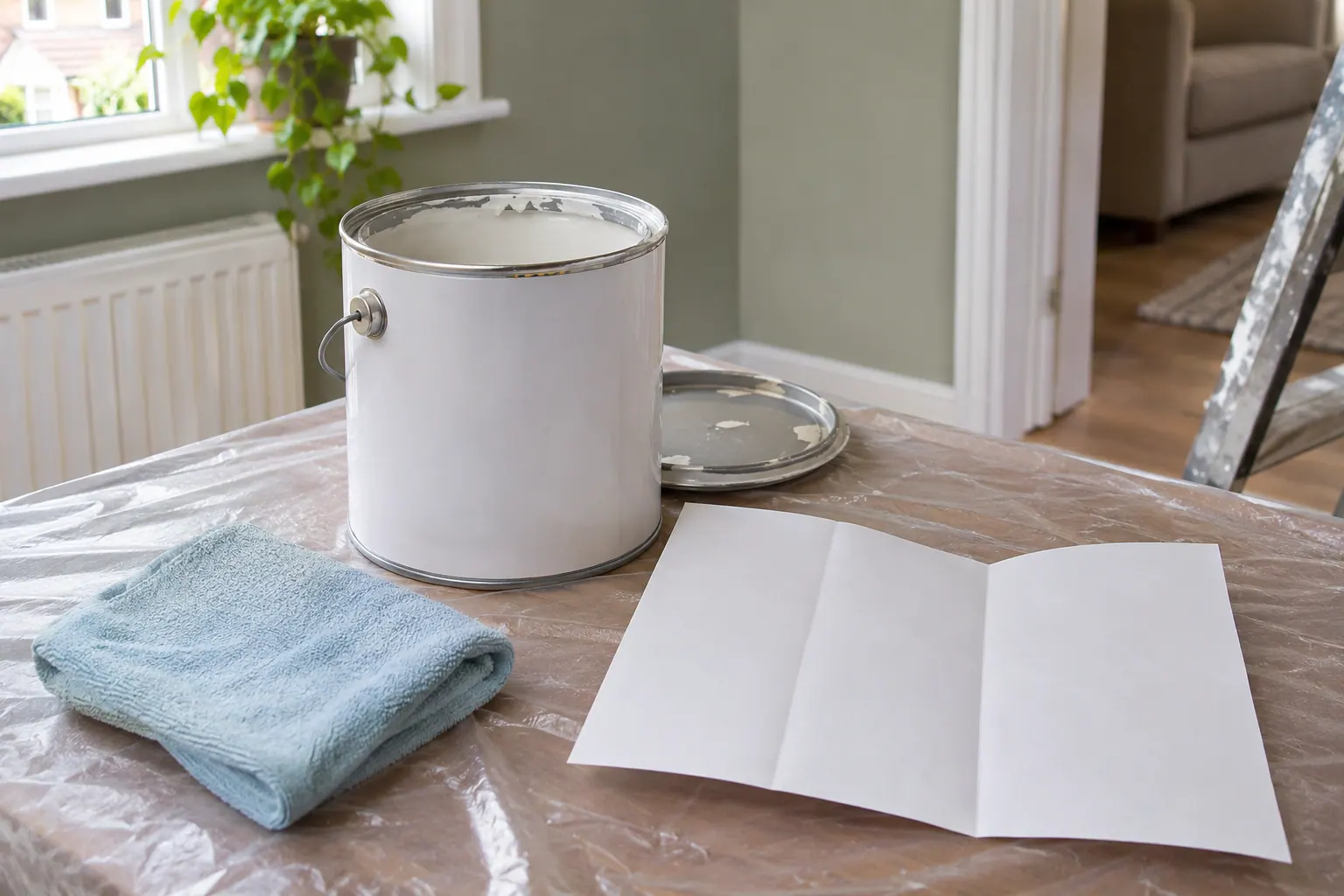
Keep the paint and finish names, manufacturer’s instructions and application dates together. Ask when the surfaces may be cleaned and what method is allowed. A surface that feels dry to a fingertip may still have restrictions on washing or abrasion. Avoid assuming that every water-based paint or sealed floor behaves the same way. If instructions are missing, ask the decorator or supplier before testing a product in a prominent place.
Newly painted walls often need only a visual check and careful removal of loose dust at first. Do not scrub a mark simply because it stands out against fresh colour. Rubbing can change the sheen or remove paint. Note the mark’s position and ask whether the decorator should correct it. Cleaning is not a substitute for a touch-up that was part of the original job.
Painted woodwork can be especially tempting to wipe because fingerprints show clearly against a new coat. Check its instructions first. Avoid pressing a damp cloth into edges, hinges or joints while the finish is still restricted. If a door sticks after painting, that is an adjustment question for the decorator. Forcing it and then cleaning a scraped edge only hides the symptom briefly.
Identify the dust before lifting it
Ask which materials were cut or sanded and whether the work area was isolated. Fine building dust is not always ordinary household dust. The Health and Safety Executive’s construction dust guidance explains that some building tasks create potentially harmful dust and that dry sweeping can raise it into the air. Do not dry-brush unknown powder or use a domestic vacuum that is not designed for the material. Seek a suitable assessment and equipment when the source is uncertain.
Once the dust and method are understood, clean accessible surfaces in a sensible order. Ledges and high reachable areas come before lower surfaces and the floor. Change cloths or extraction equipment as needed so residue is collected rather than spread. Avoid dragging a dusty object across a new floor. Check after the first pass for dust settling from fittings, gaps or open storage.
Protect the new finishes
Remove protective coverings only when the installer says it is appropriate. Tape and film can leave adhesive or lift a delicate coating if pulled carelessly. If the contractor is responsible for removing them, leave that task in the handover. Photograph any residue before trying to clean it. Do not use a scraper on new glass, tile or worktop without a method approved for that exact surface.
Treat paint spots and hardened filler as separate questions. Their removal depends on both the deposit and the material underneath. A stronger solvent, blade or abrasive pad may create a permanent mark. Ask the trade that made the deposit how they intend to deal with it and confirm the care information for the finish. A general cleaning appointment should not quietly become defect correction.
Check the flooring before anyone wheels equipment or places furniture on it. Follow the installer’s guidance on foot traffic, cleaning and protection. A damp mop may be unsuitable for a new timber or laminate finish. Use protective pads where recommended when furniture returns, and lift rather than drag small items. Leave heavy moves to people with the right help and access.
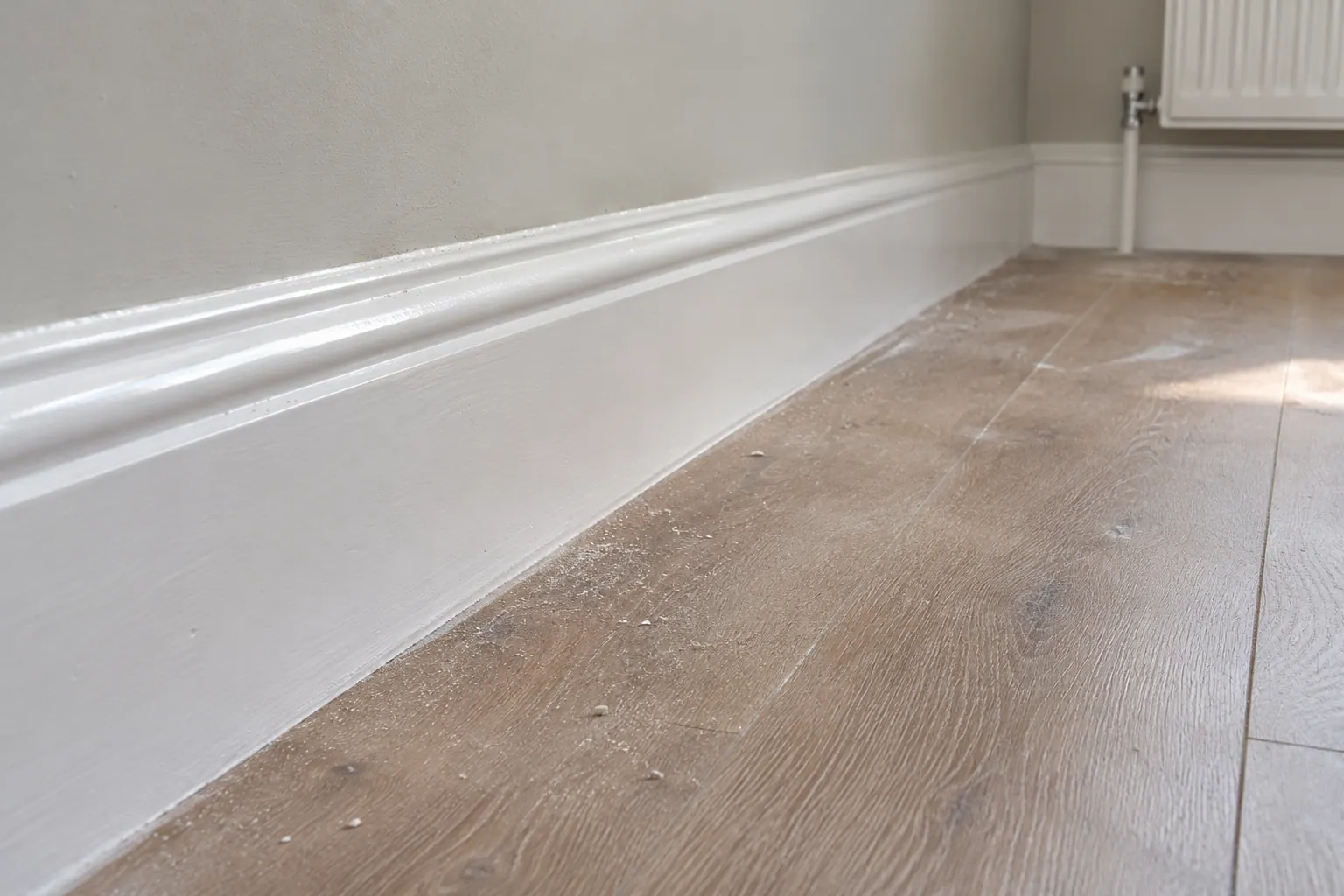
Look at skirting and thresholds where several finishes meet. Dust can collect there, but so can fresh caulk or adhesive. A gentle method may be enough for loose material; a hardened ridge may need the installer to finish the detail. Do not pick at a joint with a fingernail or tool. The edge is often the easiest place to damage an otherwise sound new surface.
Decide what the clean includes
Write down the room, materials and accessible surfaces: perhaps window sills, skirting, doors, cupboards and floor. Say whether cupboards are empty and whether inside shelves are included. Include the dust source and the date building activity ended. Mark wet paint, fresh sealant and defects as exclusions until their care or repair is resolved. This makes it easier to choose the right time for the work.
After cleaning, compare the room with the handover notes rather than expecting every visible mark to be dirt. Check reachable ledges, the floor and the agreed cupboard interiors. A useful final record distinguishes collected dust, untouched curing areas and defects awaiting the trade. It also helps you decide when the room can be furnished normally.
If the room followed substantial building activity, discuss an after builders clean with those details. For a smaller room refresh after the decorator has handed it over, ask about one-off cleaning. Confirm the scope rather than assuming either visit includes paint removal or repairs. The most useful result is a clean room with its new finishes intact.