

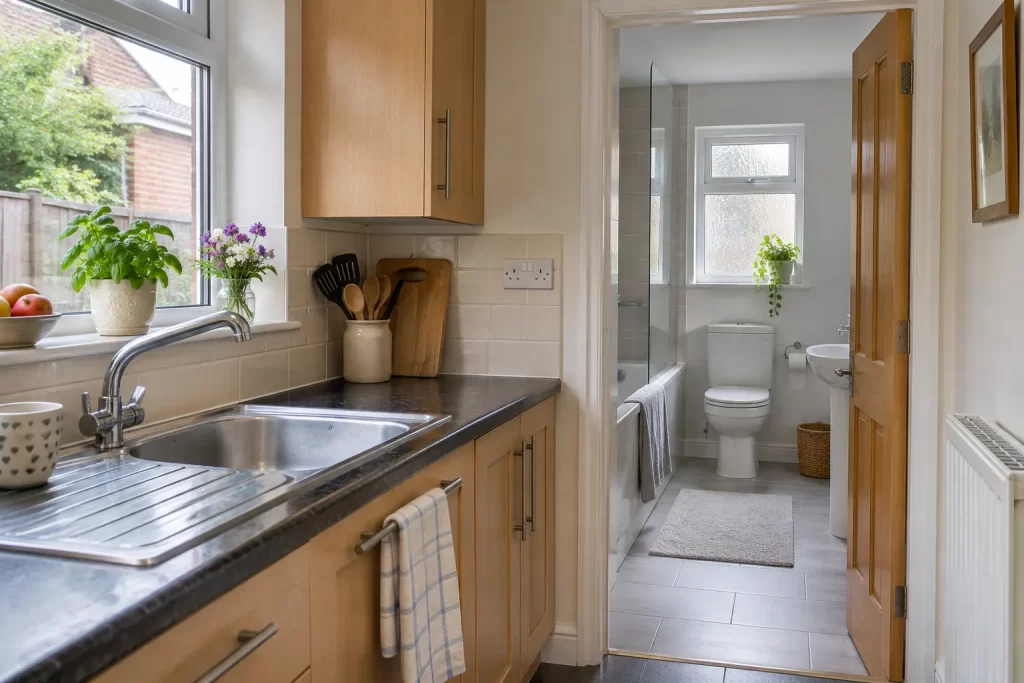
When the kitchen and bathroom need attention but the rest of the home is manageable, a two-room booking can be easier to describe than a request to clean everything. The useful question is what can be reached and cleaned safely in the time available. A precise brief helps the cleaner plan equipment and gives you a fair way to check the result.
List the rooms and their condition
Start with the number of kitchens, bathrooms, shower rooms and toilets. A family bathroom with a separate shower takes different work from a small cloakroom. Say whether the rooms have had regular upkeep or contain built-up residue. Mention any recent decorating, new fittings or surface damage. Photographs can clarify unusual features, but they do not replace a written list of priorities and exclusions.
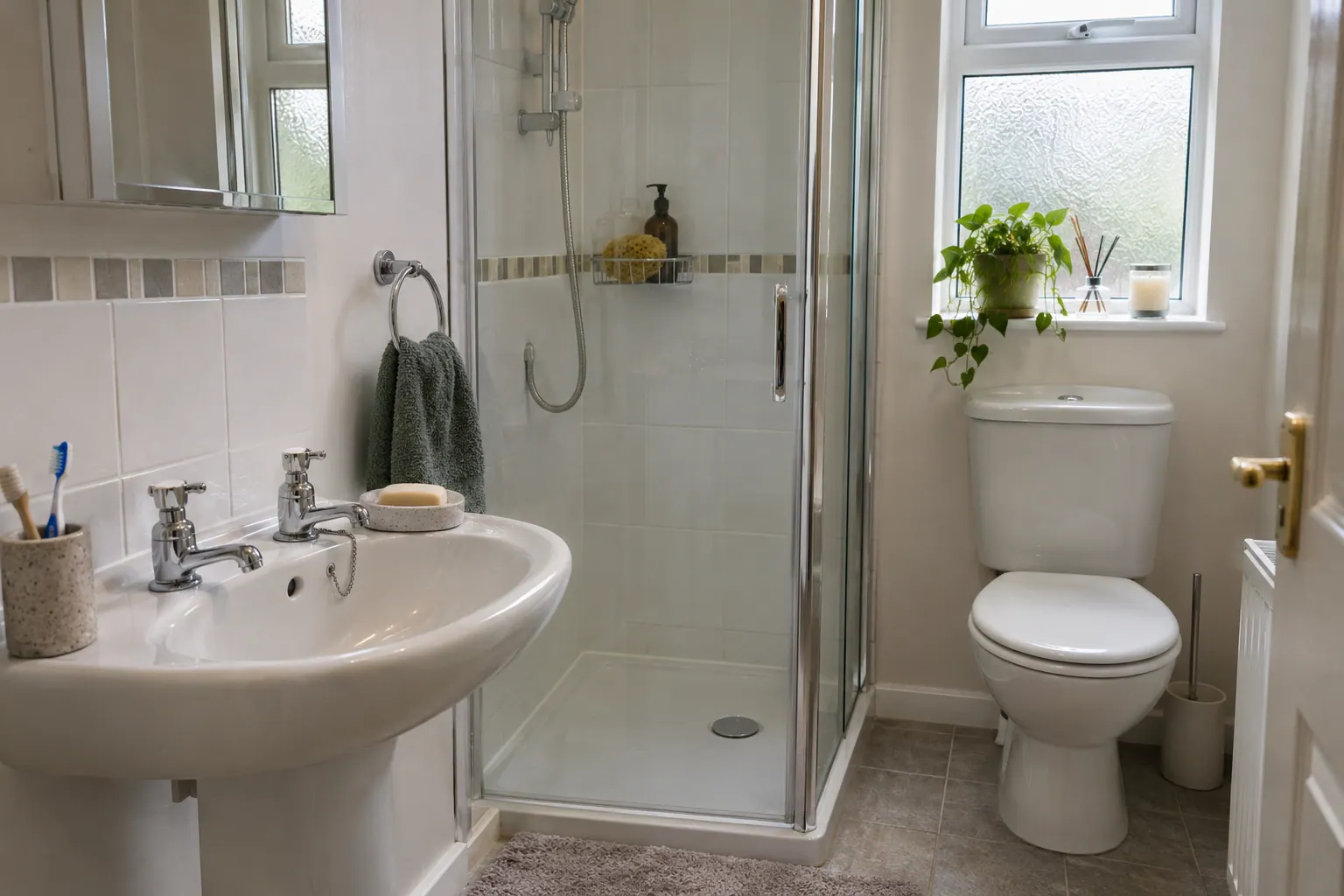
Walk through each room and mark the surfaces you want included. In the kitchen, this might mean accessible worktops, the sink, splashback, cupboard fronts and floor. In the bathroom, name the basin, tap, toilet, bath or shower enclosure, tiles and floor. Specify whether internal cupboards are empty and included. A phrase such as complete kitchen clean can mean different things to different people.
Note how many people use the rooms and whether there is an immediate reason for the visit, such as guests arriving or a handover. You need not disclose private household details. The purpose simply helps rank work. A kitchen that must be ready for lunch might take priority over a bathroom that will not be used until evening. Agree when the rooms must be available again.
Make surfaces accessible
Move food, dishes and personal items from the areas to be cleaned. Put medication, documents and valuables somewhere safe. Keep a clear route to the rooms and a place for equipment. If you cannot move an item, describe it rather than expecting a cleaner to shift heavy furniture or disconnect an appliance. Access affects what can be completed in a visit.
Check material care information. Stone, timber, painted fronts, stainless steel and delicate bathroom finishes may require different methods. Tell the provider about any sealant that is loose, a coating that is peeling or a surface that has reacted to a product before. Cleaning can remove appropriate residues; it cannot restore a failed finish. Do not mix products in preparation for the visit or leave unidentified bottles by the sink.
If you know the manufacturer or finish, have that information available. A photograph of the care label or a link to the instructions can be more useful than guessing a material by appearance. Tell the cleaner if a surface has recently been sealed or painted, because curing and product restrictions may apply. Do not test an unfamiliar chemical shortly before the appointment; any reaction could complicate the planned work.
Separate ordinary surfaces from specialist tasks
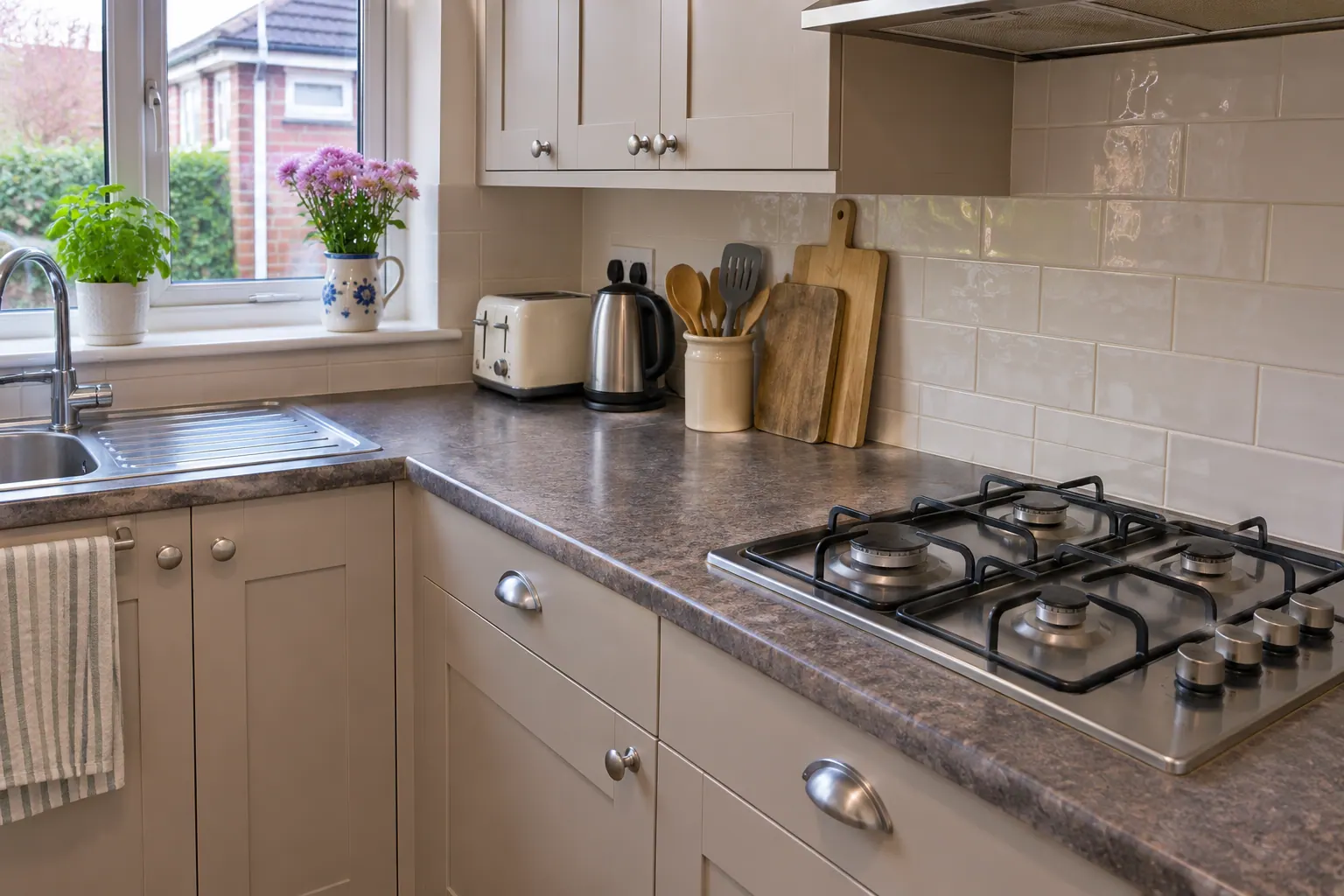
The outside of an oven, an accessible hob surround and worktops are different from cleaning inside an oven. Baked-on deposits, removable trays and door glass may need a dedicated oven cleaning service. If that is a priority, describe the model and what needs attention. Avoid assuming it is included in a general kitchen visit.
The same distinction applies to fridges, microwaves and other appliances. An internal clean may require emptying, cooling, unplugging or manufacturer-specific precautions. List each item when asking about appliance cleaning. Do not ask anyone to spray controls, vents or damaged electrical fittings. An appliance that does not work properly needs a repair assessment before cleaning becomes the main concern.
In bathrooms, distinguish surface residue from maintenance. A leaking tap, blocked drain, cracked tile or recurring damp patch needs attention beyond wiping. Photograph and report these problems to the responsible person. Repeatedly scrubbing a patch that comes back can damage the finish without addressing the cause.
Mould-like marks deserve particular care. Do not cover them with a stronger product and assume the underlying moisture has gone. If the cause is unknown, ask for an appropriate assessment. Explain the location and extent before anyone starts cleaning. This protects time for work that is genuinely within scope and avoids presenting a recurring building issue as an ordinary bathroom stain.
Rank the tasks by value
If the visit has a time limit, put essential work first. You might prioritise the toilet and shower, then the basin, kitchen sink, food surfaces and floors. Another household may need the kitchen first because food preparation is difficult. Explain the reason for the order and identify anything that can wait. This is more useful than an unranked list of every possible task.
Ask how the two rooms will be checked at the end. Is the goal accessible surface cleaning, a deeper treatment of built-up residue, or preparing a property for visitors? The answer affects the scope and time. Request clarification about what the service excludes, such as moving stored goods, specialist stains, internal appliances or waste collection. Keep any extra work as a separate agreed line rather than adding it during the visit.
Decide whether you want the cleaner to spend time on visible, regularly used surfaces or on less accessible edges and corners. Either can be a sensible priority, but the choice changes what will be finished. Ask how many hours or people are planned if that information is offered, then match the list to the agreed capacity. Do not turn a limited visit into a promise of a full property transformation.
Give a concise handover
Send the room count, priority list, materials, current condition, access details and any safety concerns. Note which products have already been used on a stubborn mark. If a surface is wet, damaged or unstable, say so before work begins. Keep pets and people away from active cleaning areas as agreed, and allow floors to dry before normal use resumes.
At the end, walk through the agreed list while the scope is fresh in everyone’s mind. Keep the booking notes for future visits so you can refine the brief, especially if the time allocation was too small for the priorities you set.
A one-off cleaning visit can be scoped to the kitchen and bathroom priorities you have identified. Confirm the agreed tasks and timing with the provider. That simple preparation gives the visit a clear purpose and avoids treating specialist appliance work, repairs and inaccessible cupboards as surprises on the day.