

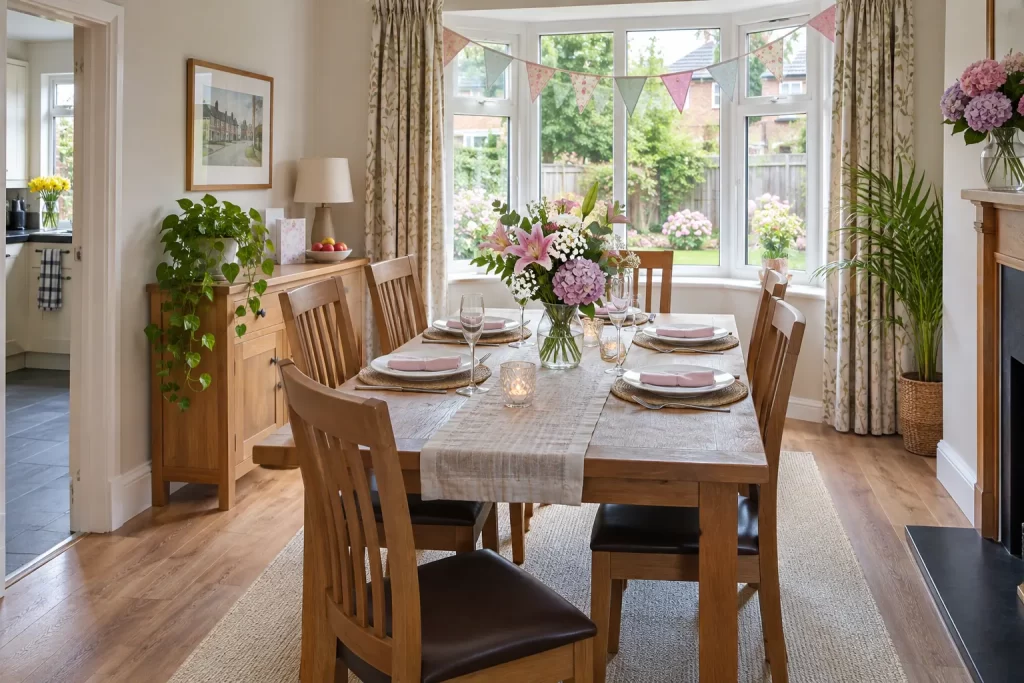
A family celebration gives the home a deadline, but every room does not need the same level of attention. Start with the route guests will take and the places they will use, then work backwards from the time food, furniture and people will arrive. Cleaning too early can mean repeating a task after catering or decorating. Cleaning too late leaves damp floors and no time for a final check.
Map how the space will be used
Write down where guests will enter, leave coats, sit, eat and use the bathroom. Include children or relatives who may need an unobstructed route. Check that furniture arrangements do not block doors or stairs. Mark any loose fitting, trailing cable or damaged surface for separate attention. A clean room is not ready for guests if movement through it is awkward or unsafe.
Choose two or three areas that need to look and function their best. The entrance, main gathering room and guest bathroom are common priorities, but your plan may differ if the event is outdoors or food is served in the kitchen. Describe the actual tasks rather than saying that the whole property needs to sparkle. This makes the work easier to schedule and review.
Think about numbers without making the home feel like a venue plan. More visitors mean more coats, cups and trips to the bathroom. Set aside a practical place for coats and leave a bin that people can recognise. If someone uses a walking aid, check the width of the route after chairs have been arranged. Cleaning is easier when furniture placement is settled before the final pass.
Work backwards from the event
Allow time for specialist work to finish and dry before furniture is moved into place. Carpet or upholstery methods and drying periods depend on the material and conditions, so ask for the proposed method rather than assuming a fixed number of hours. Keep a flexible window between any wet cleaning and the arrival of guests. Decorations, table settings and food should be placed after dusty or damp tasks are complete.
Schedule ordinary surface cleaning after any repairs, painting or deliveries that might create fresh dust. If a contractor is still drilling or sanding, detailed cleaning will need to be repeated. Keep the date of the final handover clear. Do not ask cleaners to work around unfinished building activity without discussing the materials and possible hazards first.
If you are borrowing chairs or bringing in a caterer, ask when they need access. A table delivered after the floor is washed may leave packaging and marks. Put unpacking and furniture placement before the final floor clean. Where there is no spare day, reserve a short check after deliveries rather than trying to protect a finished surface from every later activity.
Window cleaning can make a noticeable difference where daylight falls on the gathering space. Check access and scope beforehand. Upper panes, conservatory panels and internal glass are not interchangeable tasks. If you want a window cleaning visit, identify the panes and any gates or parking restrictions, then leave safe access to the provider’s assessment.
Give busy rooms a sensible order
In the kitchen, clear food and utensils before wiping accessible worktops. Lift crumbs, use products compatible with each finish, and keep cloths for food areas separate from bathroom cloths. Check the bin lid and surrounding floor. Avoid flooding appliance controls or using one product on every material. Internal ovens and other appliances need their own agreed scope; a quick household visit should not quietly expand into dismantling equipment.
In the bathroom, clear personal items, clean the basin, toilet and shower or bath area, and finish with the floor. Provide fresh hand towels, paper and an accessible bin. If taps drip or a lock sticks, arrange repair rather than trying to disguise the issue with extra cleaning. Let cleaned floors dry before guests need to use the room.
For the main room, return belongings to their places before dusting. Use a suitable method on furniture finishes and avoid spraying electronics. Vacuum or clean the floor only after tables and shelves are done. Leave a clear place for drinks and plates. A room with a comfortable route and usable surfaces works better than one in which every object has been rearranged for a photograph.
Check soft seating for crumbs and visible marks before guests arrive. Use an appropriate attachment for dry debris if the care guidance allows it. Avoid a last-minute wet treatment on upholstery; it may remain damp when people need to sit down. If a stain needs specialist work, note its history and plan that work earlier or accept that the item should be covered or moved safely out of use.
Protect the final hour
Plan to stop substantial cleaning before the event begins. Use the final hour for a walk through: check the entrance, bathroom supplies, dry floors, bin capacity and places to sit. Remove products and equipment from guest areas. Do not use a strong scent as a substitute for locating an odour. If a damp patch or leak appears, report and investigate it rather than trying to cover it before people arrive.
If other people are helping, give each person one defined area and a finishing time. Make that finishing time clear to everyone. Share information about delicate surfaces and products already used. Avoid simultaneous wet work on the only route to the bathroom. The goal is a usable home at the right moment, not a last-minute race in every room.
After the celebration, expect a different kind of cleaning. Put food away promptly, collect waste and check for spills before they set. Do not schedule the preparatory visit so tightly that there is no capacity for the next day. If a provider is returning, make a separate brief for the aftermath; guest preparation and post-event residue are different jobs, even when they involve the same rooms.

Agree a realistic cleaning brief
For event preparation, a one-off cleaning visit can focus on the spaces guests will use. State the date, event time, rooms, access and priority surfaces. If you need ongoing upkeep before and after family gatherings, discuss domestic cleaning separately. Confirm what is included, especially specialist surfaces, appliances and waste, so the final visit has a clear purpose and enough time to be useful.