


The morning after a party can make an ordinary flat feel much larger than it is. Glasses are scattered, bins are full and a sticky patch appears wherever someone steps. Start by making the space safe to move through, then deal with waste and spills before trying to finish the floors. This sequence prevents the same mess being carried from room to room.
Make a safe first pass
Put on suitable footwear and look for broken glass, sharp decorations, cables and blocked exits. Keep children and pets away from any area with fragments. Collect large pieces carefully using appropriate tools, then deal with smaller pieces according to the surface and your equipment instructions. Do not reach blindly under furniture or press bare hands into a bin bag. If a breakage involves an electrical fitting, switch off and seek qualified help where needed.
Open windows for fresh air when safe, but do not leave a vulnerable opening unattended. Turn on enough light to see marks clearly. A tired person working in a dim room is more likely to miss a spill or mistake a damaged finish for dirt. Take photographs of unusual damage before cleaning if you may need to explain it to a landlord or insurer; keep that record separate from the cleaning task.
Separate the waste streams
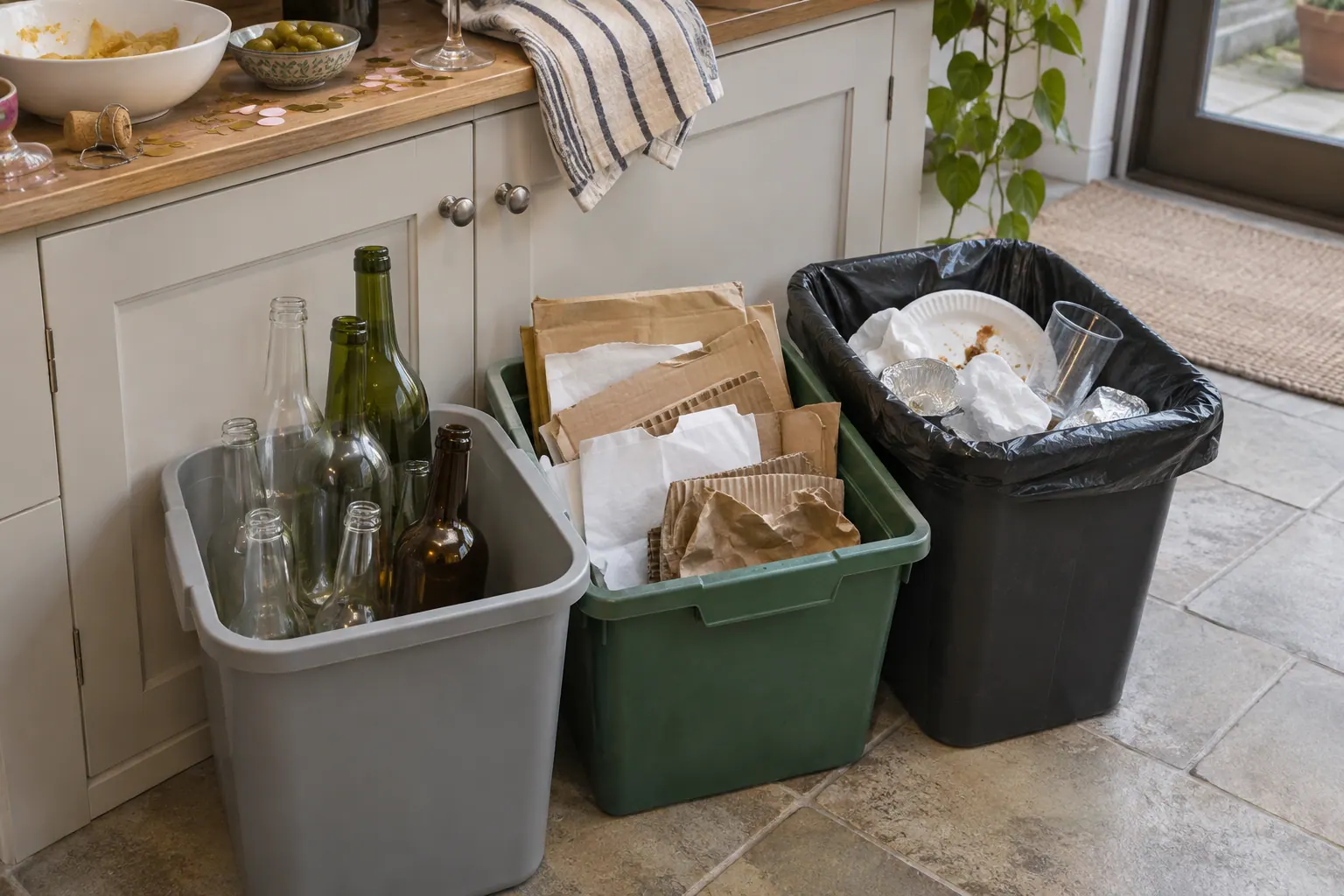
Gather empty food packaging, napkins and disposable decorations before touching wet surfaces. Sort glass and other materials according to your local collection rules. Check whether bottles still contain liquid before moving them. Tie bags at a weight you can carry comfortably and keep stairs and shared corridors clear. A bag waiting by the door should not obstruct an exit or another resident’s route.
Leftover food needs prompt attention. Put food that is safe to keep into suitable storage and dispose of the rest. Wipe the table after clearing it, not while plates and cups still cover the surface. If the volume of waste is beyond the usual collection, discuss the items and access with a rubbish removal service rather than leaving bags in a communal area. Confirm what can be collected; never assume all materials are accepted.
Check under the table and beside seating for plates or cups before they become a source of odour. Empty ashtrays only when their contents are completely cold, and follow the relevant disposal rules. Do not pour leftover drinks into a plant pot or onto flooring. If a rented flat has shared bins, keep the area tidy for neighbours and avoid placing loose glass where someone else could reach into it.
Treat spills according to the surface
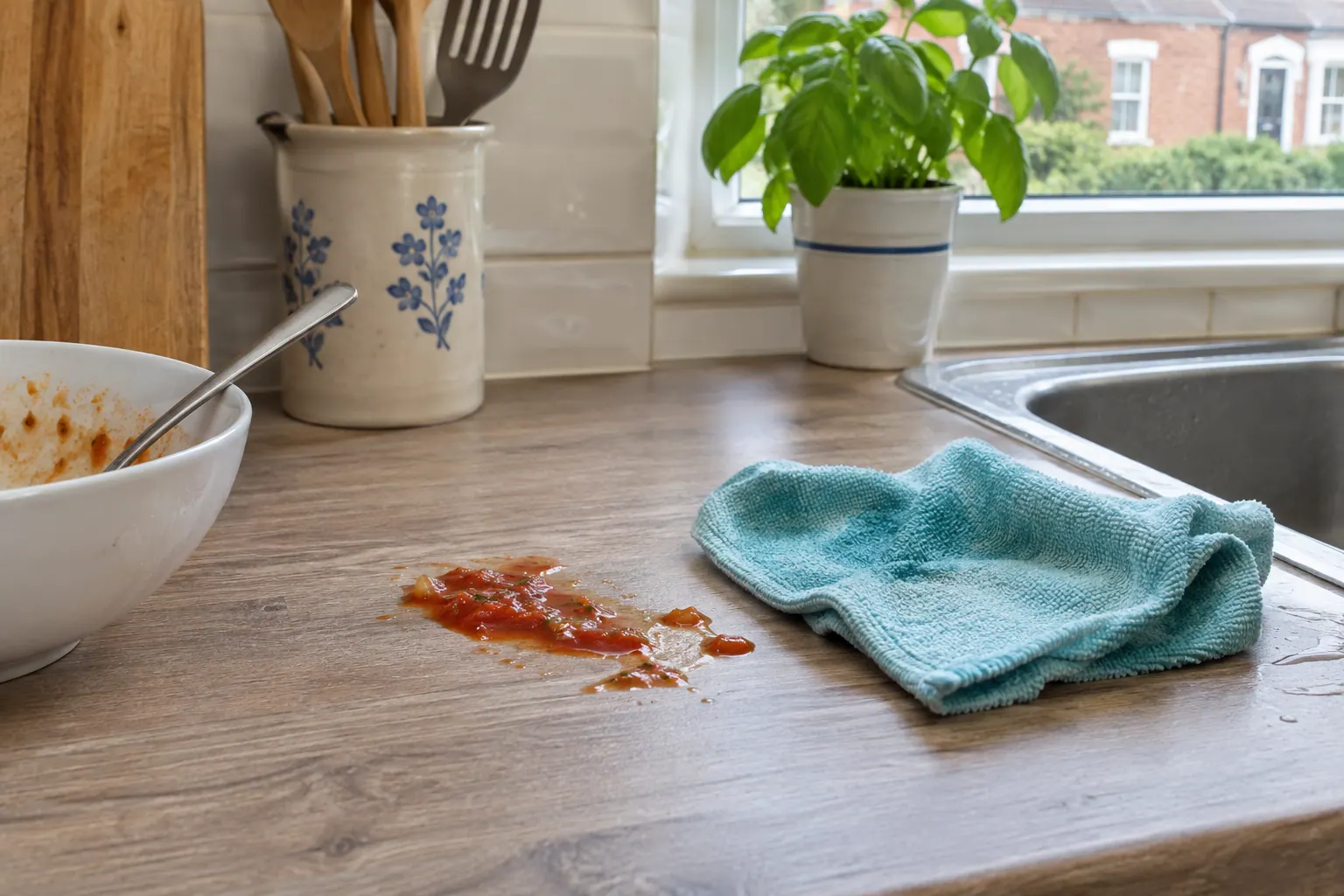
Identify a spill before applying a product. A sticky drink on a sealed worktop and a coloured drink on a carpet require different responses. Remove loose material gently. On a compatible hard surface, use the manufacturer’s care guidance and wipe with a suitable product. Avoid flooding timber, laminate, electrical sockets or furniture joints. Dry the area and check whether a slippery film remains.
For a fresh carpet spill, blot with a clean, absorbent cloth if the carpet care instructions allow it. Work without aggressive rubbing, soaking or homemade mixtures. Record what was spilled and any treatment already attempted. If the mark remains, a carpet cleaning enquiry is more useful when you can describe the fibre, stain history and size of the area. No cleaner can promise removal from a photograph alone.
Upholstered chairs may hide crumbs and damp patches along seams. Use only a suitable vacuum attachment for dry debris and check the fabric care information before treating a mark. If covers are removable, do not assume they are machine washable. The construction and dyes matter. Set aside anything needing specialist assessment rather than turning one stain into a larger ring.
Check walls and painted doors for splashes with good light. A gentle wipe may be permitted by the paint manufacturer’s guidance, but repeated rubbing can change the sheen. Mark a chip or scratch as damage rather than insisting it should disappear with cleaning. If decorations were attached with tape, remove them cautiously and stop when adhesive begins to lift paint. A repair should be planned separately from the cleaning appointment.
Clean from surfaces to floors
Once rubbish and spills are contained, clear and wipe accessible tables, worktops and handles. Use separate cloths for the kitchen and bathroom. Follow product directions and allow surfaces to dry as instructed. Wash or replace dirty cloths before they spread residue. Then vacuum or sweep appropriate floors and finish with any suitable damp cleaning. The floor is the last step because every earlier task can drop crumbs or water onto it.
In the bathroom, collect stray items first and clean the used fixtures. Empty the bin, check the basin and toilet, and leave the floor until the surfaces are complete. A damaged seat, blocked drain or loose fitting needs repair. Treating it as a cleaning problem wastes effort and can make it worse.
Keep a dry route through the flat while cleaning the remaining floor. Change the water or cleaning pad when it becomes dirty. A sticky film that survives one suitable pass may need a different compatible method, not a stronger mixture. Let the surface dry before replacing rugs or furniture.
Decide what needs another visit
Step back when the flat is safe, waste is out and everyday surfaces are usable. Make a separate list for persistent odours, textile stains, damaged fittings and any area you could not access. Odours can come from a hidden spill, but they may also point to moisture or a waste problem. Locate the cause before adding fragrance.
If friends have offered to help, give them clear, limited tasks such as collecting intact bottles or washing reusable dishes. Keep chemical products with someone who has read their labels. Do not ask a guest to identify an unknown spill or handle sharp waste without suitable equipment. A short, orderly second pass is often more effective than several people cleaning the same table while the floor remains unsafe.
For a larger reset, book one-off cleaning with a clear list of rooms, materials and remaining marks. Explain whether waste has already been removed and whether floors will be ready to clean. A defined handover keeps a post-party visit focused on cleaning while repairs and specialist work receive the right attention.