

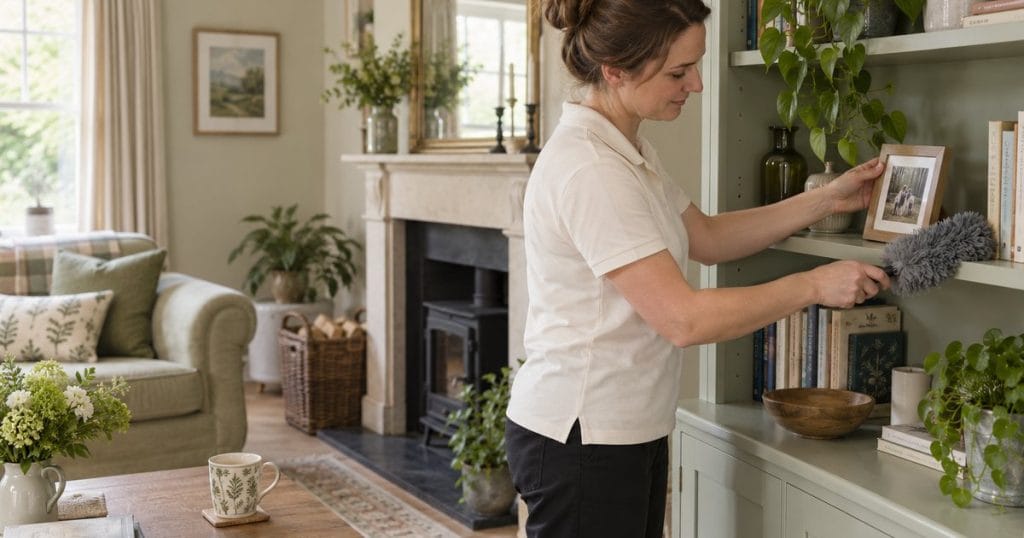
The instruction to clean everything leaves too much room for different expectations. A useful checklist describes the rooms, accessible surfaces and priorities. It also identifies what should be left alone. Use it for your own routine or when preparing for a booked visit.
Name the task and surface
Replace kitchen with wipe accessible worktops, clean the sink and wipe cupboard fronts. In a bathroom, list the basin, toilet, shower area and appropriate floor care. Distinguish vacuuming from moving furniture or treating upholstery. Describe the material where it affects the method, particularly stone, timber and delicate finishes.
Put essentials first
Mark essential tasks above optional work. A home with two bathrooms may need a different balance from a flat with a heavily used kitchen. Explain if a room is occupied or must be ready first. Time spent searching for instructions is unavailable for cleaning, so keep the list in one agreed place.
Record access and exclusions
Identify fragile objects, loose fittings, damage and cupboards that must stay closed. Remove private documents from working areas. High-level access, heavy lifting, appliance disconnection and waste collection should not be assumed to be standard tasks. Agree extras before they are added to the list, including how much time they require.
Match the list to the visit
For an agreed household routine, explore domestic cleaning. A specific room or occasion may suit a one-off visit. Put specialist jobs on a separate line so scope, equipment and time can be confirmed instead of quietly absorbed into a general appointment.